




An Unusual Trailer-Mounted Concrete Pumper
Most pumpers are mounted on straight trucks, some with multiple axles, but this large, heavy one is better carried on a long 10-axle rig.

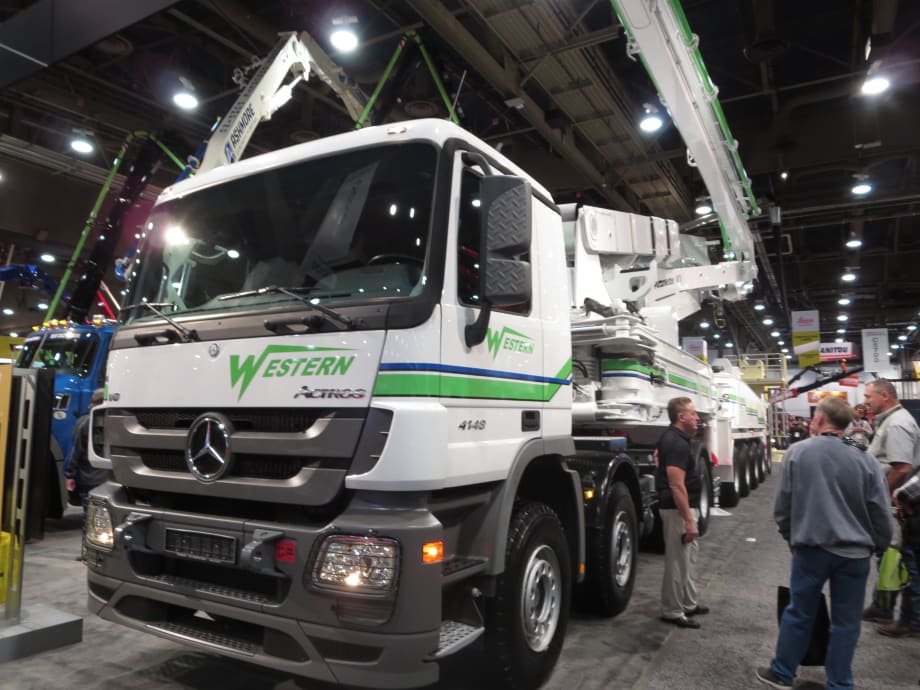
M-B Actros is common in Europe but seldom seen in the U.S. A conventional-cab Mack will be built and outfitted to pull the pump trailer to work sites in Texas.

Trucks are always a prominent part of the annual World of Concrete show in Las Vegas, and to me the most impressive ones are the chassis carrying concrete pumper bodies. The bodies are big and bulky, and exhibitors extend their multi-section booms toward the tall ceiling and sometimes far away, over adjoining booths.
Pumper bodies are also heavy, so chassis toting larger units need six, seven or more axles to support the loads. Almost invariably they are straight trucks, but while roaming a section of the show on Tuesday I came upon a tractor-trailer unit displayed by Putzmeister America. Its body was a 70 M (M for meters, or about 227 feet, the maximum vertical reach of the five-section boom), and it was mounted on a five-axle semitrailer hitched to a four-axle tractor. This must be something new, I thought.

The unit is being bought by Western Concrete Pumping, based in southern California, and was built by Putzmeister of Germany. It recently arrived by ship and was hauled to Las Vegas for the show, said Steve Delamarian, Western’s VP of business development. The tractor, a Mercedes-Benz Actros cabover – a popular model in Europe but not seen here -- couldn’t legally run in California because its diesel isn’t emissions-certified. So it had to be hauled up to ‘Vegas.
With the M-B gone, the pump trailer, which weighs about 150,000 pounds, couldn’t be towed by just any other tractor. So it was trucked up to ‘Vegas aboard onto a high-capacity lowboy, said Dave Wright, a Putzmeister product manager. When the show is over, he will store the trailer nearby, then strip the tractor of specialized equipment before shipping it back to Germany (or maybe the Middle East, for which it was built, because its engine meets Euro 2 emissions specs and the European Union is now at Euro 5).
Meanwhile, he’s ordered an American-built tractor to mate to the trailer. It will be a conventional-cab model; a specs sheet shows a Kenworth C500B, but Wright said it’ll be a Mack Granite. It will have twin steer axles and a live tridem (aka “tri-drive”). That will be sent to a Fontaine Modification facility near Putzmeister America’s plant in Sturtevant, Wis., where the equipment from the M-B will be installed. Then the Mack and the 70 M pump trailer will be sent to Texas, where Western will put it to work.
Gross combination weight for the rig is 175,300 pounds, according to its specs sheet (Delamarian estimated the GCW with the M-B cabover at 178,500 pounds). Three of its five axles hydraulically self-steer, with wheel cut electronically controlled based on sensor readings at the fifth wheel.
Road-ready, the pump trailer looks bigger than it is. The specs sheet says it’s about 50 feet long (46 feet, 10 inches from its kingpin to its rear), 98 inches wide and 13 feet, 2 inches high. Overall length with a conventional-cab tractor is 70 feet, 4 inches .

When set up to work, outriggers are deployed, of course. And a pair of pull pins, one on either side of the fifth wheel, lock the trailer’s nose to the tractor, Wright explained. The nose rises as outrigger feet push into the ground, and the tractor’s weight acts as ballast to further stabilize the pumper as it churns away. The unit's pumps are powered by a large pony engine, a Deutz diesel rated at 500 hp.
The unit is capable of pumping 200 cubic yards an hour, but a contractor who happened by said in actual operation it’d handle 100 to 110 yards. That’s still a lot of work, and it’s doable because while one mixer truck is off-loading into the big rear-mounted hopper, another can back into position and get set up.
This vehicle is unusual but not unique. Wright said several others have been built for Europe. And in the ‘90s, his company built some trailer-mounted concrete pumpers with smaller bodies for customers who preferred that configuration.
Articulation of a tractor-trailer makes it more maneuverable than a long straight truck in some situations. But in this case, the long vehicle length on 10 axles spreads out weight enough so it can run in bridge-formula states like California without a special permit for each trip. So far it’s the biggest rig I’ve seen at the concrete show.
More Blog Posts
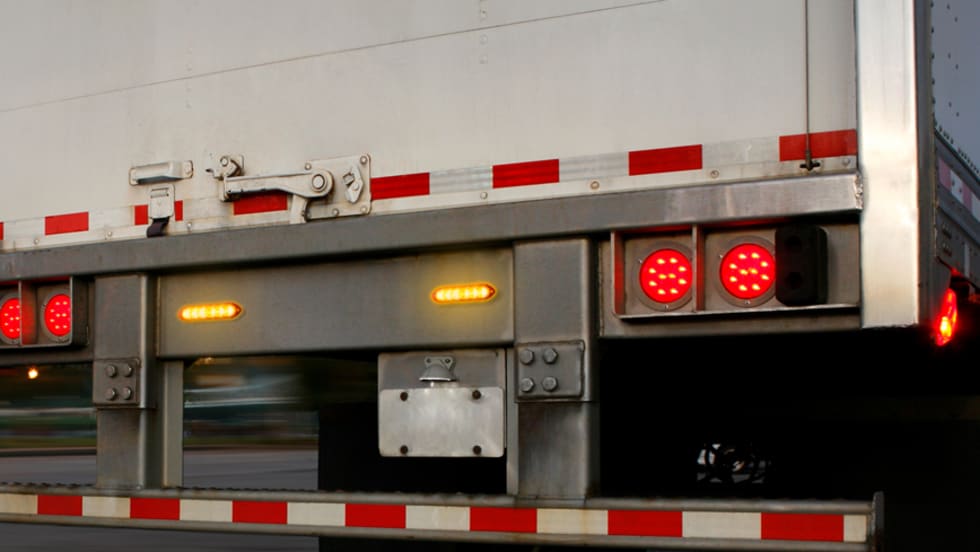
Pulsing Back-of-Trailer Lamps Aim to Prevent Crashes
Can the addition of a pulsing brake lamp on the back of a trailer prevent rear-end collisions? FMCSA seems to think so, if its exemptions are any indication.
Read More →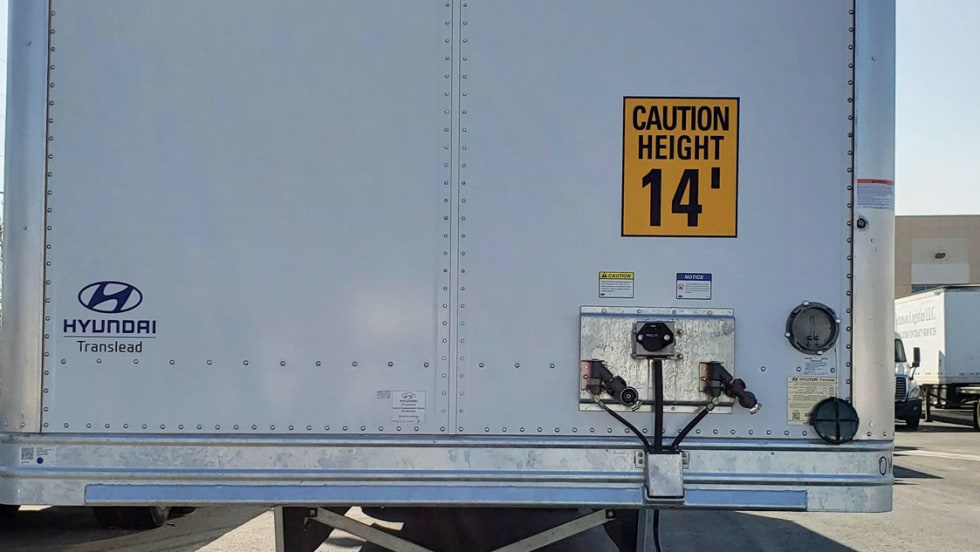
Designing a 14-Foot Trailer
Trailers are 13 feet, 6 inches high, right? Not for Hub Group, which developed a special 14-foot-high trailer spec for a dedicated customer based in California. Learn more in the Trailer Talk blog.
Read More →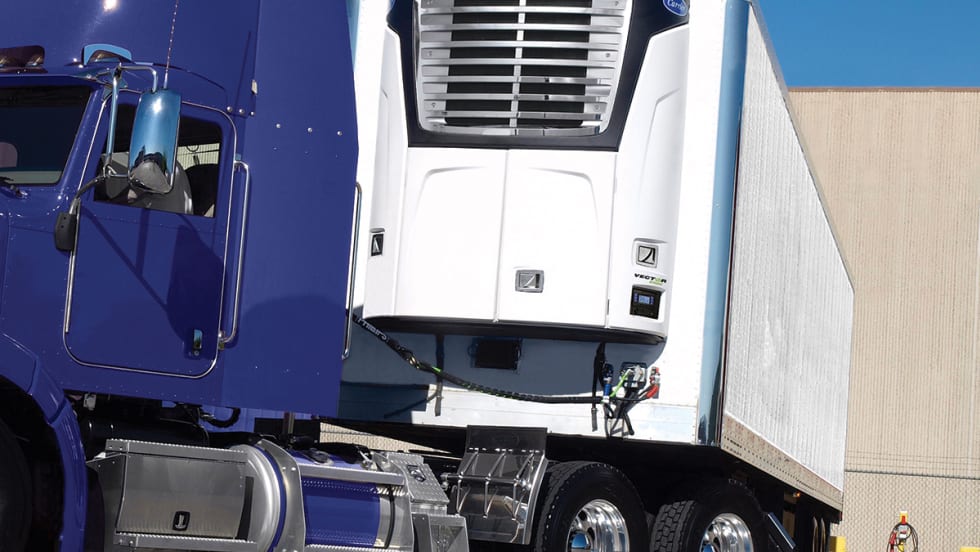
CARB Comes for Reefer Trailers
A new round of emissions control regulations decreed by the California Air Resource Board will begin affecting refrigerated trailer and TRU design and operations next year.
Read More →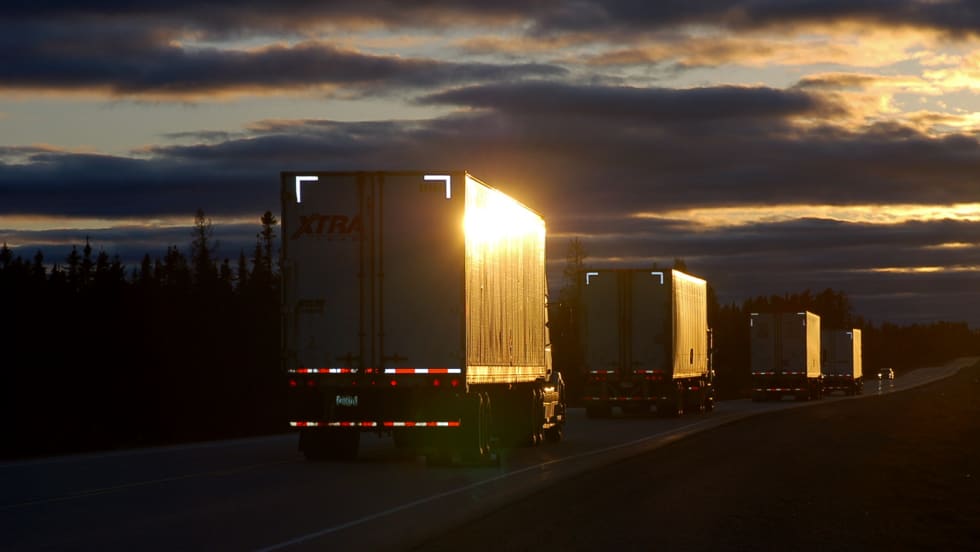
5 Ways Data Analysis Maximizes the Value of Trailer Telematics
Are you getting the most out of your trailer telematics investment?
Read More →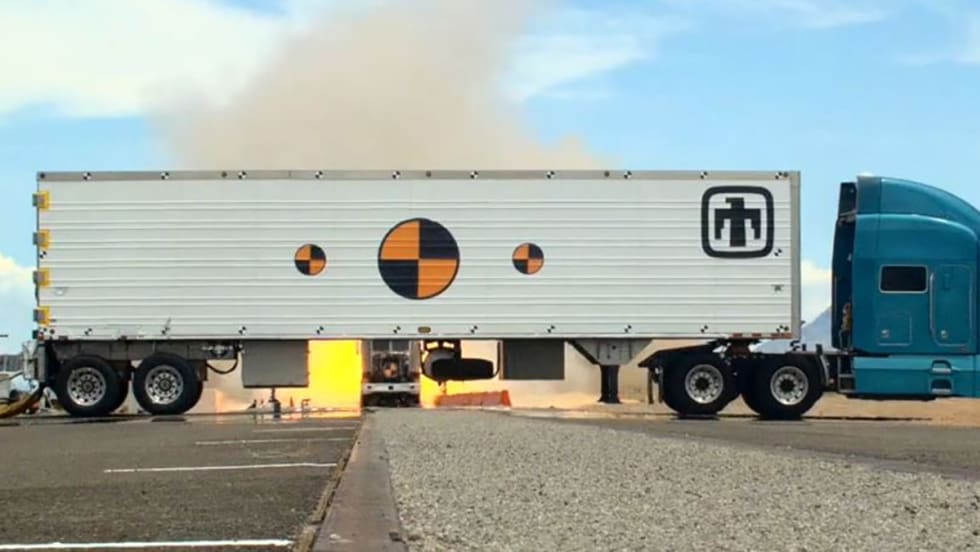
Can You Guess What's in That Trailer?
You don’t always know what’s in the trailers that pass you on the road. But some of those trailers are carrying something a little more dangerous that frozen food or new bedding…like, maybe, a nuclear weapon. But this isn’t an ordinary trailer; this is a trailer specifically made to not only carry this type of payload, but protect it at all costs.
Read More →
How Trailers Are Harnessing 'Free' Energy
Can trailers play a more active role in sustainable transport beyond aerodynamic add-ons or low-rolling-resistance tires? Some companies think so.
Read More →
Wrapping a Trailer for COVID’s Everyday Heroes
“We don’t only deliver freight. We deliver awareness.” That’s what Jim Barrett, president and CEO of Road Scholar Transport, likes to say about the Dunmore, Pennsylvania-based carrier’s “awareness fleet.” Its latest trailer wrap honors the everyday heroes of the pandemic.
Read More →
How a Tanker Fleet is Using Unorthodox Trailer Lighting to Fight Rear-End Collisions
Groendyke Transport watched the number of rear-end collisions with its trailers rise steadily until it tried an unorthodox and then unapproved method of alerting following drivers that its trucks were applying brakes and slowing down.
Read More →
The Role Trailers are Playing in COVID-19 Funerals
In places such as New York City and Detroit, overwhelmed hospitals and mortuaries are using refrigerated trailers to store the bodies of people killed by COVID-19.
Read More →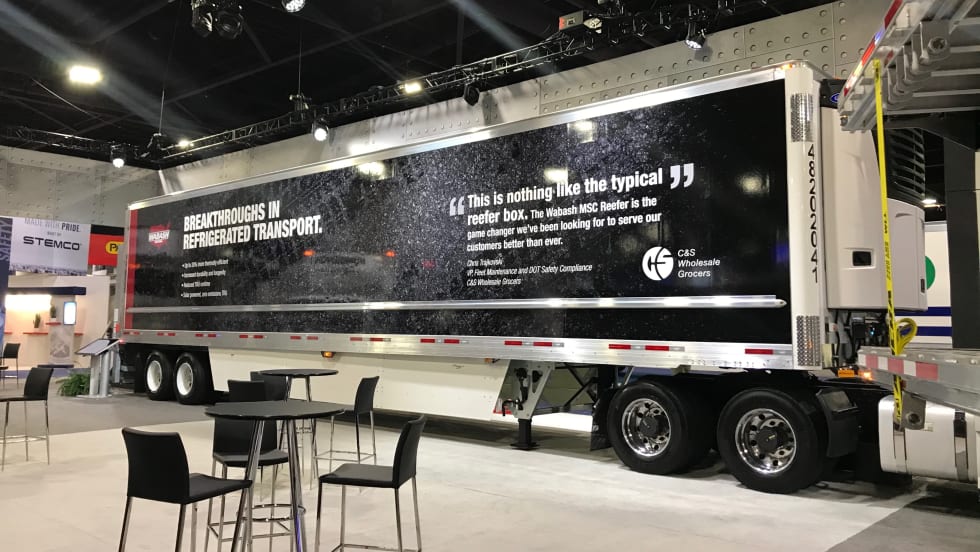
Reefer Trailer Aims to Help Reach Zero Emissions
Wabash National is partnering with C&S Wholesale Grocers to test a new type of zero-emissions refrigerated trailer.
Read More →