




‘Steer Cars’ and ‘Jeeps’ Bring Up the Rear of Long-Beam Hauls
Last week we ran a news story about the hauling of long, heavy concrete beams for reconstruction of the Interstate 5 bridge over the Skagit River in northwestern Washington. You may recall that a section of the aging steel truss bridge tumbled into the water on May 23 when an oversize load hit an upper support beam.

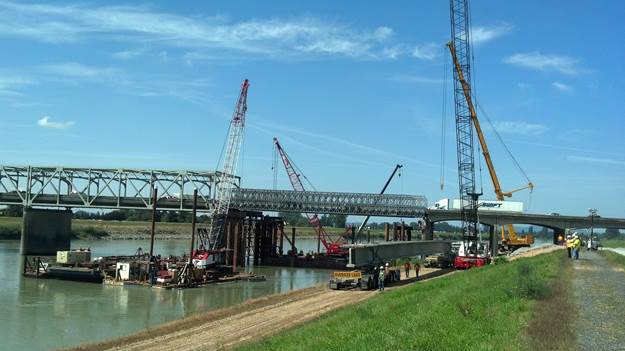
A 162-foot-long, 168,000-pound concrete beam has arrived at the job site aboard a 14-axle rig. I-5 bridge over the Skagit River is being rebuilt after a section was knocked down by an oversize load aboard a semi. Photos by Washington state Department of Transportation.
Last week we ran a news story about the hauling of long, heavy concrete beams for reconstruction of the Interstate 5 bridge over the Skagit River in northwestern Washington. You may recall that a section of the aging steel truss bridge tumbled into the water on May 23 when an oversize load hit an upper support beam.
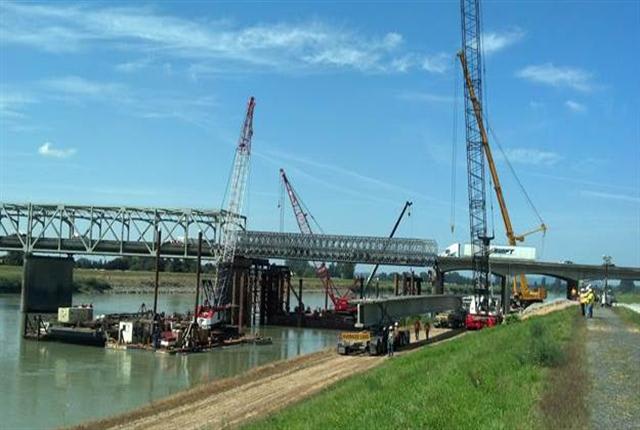
A 162-foot-long, 168,000-pound concrete beam has arrived at the job site aboard a 14-axle rig. I-5 bridge over the Skagit River is being rebuilt after a section was knocked down by an oversize load aboard a semi. Photos by Washington state Department of Transportation.
A photo in our story showed a special trailer that carried one end of a beam, and that got me curious. So I called V. Van Dyke, Inc., in Seattle, a specialized carrier that hauled the eight beams to the work site.
Barry Hunt, the company’s general manager, explained that what looks like a trailer from the rear is actually a “jeep” hitched to a “steer car.” The three-axle steer car has a driver’s cab and a fifth wheel, so it’s sort of a non-powered tractor. Its driver steers the front axle, “just like on a truck,” and the four-axle jeep -- a short, gooseneck semitrailer -- follows along.
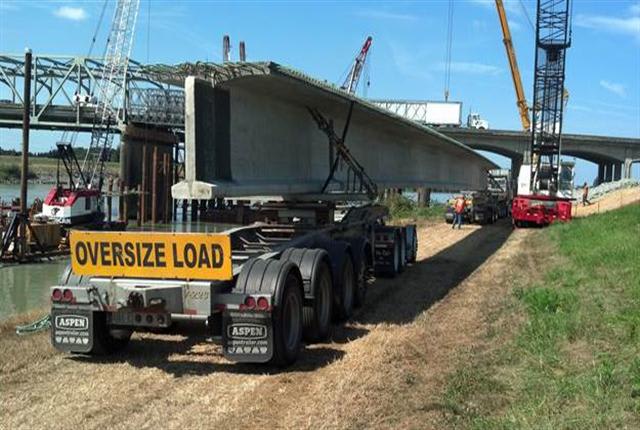
Rear of load is supported by a “steer car” and “jeep” owned by V. Van Dyke, Inc., of Seattle, which hauled eight beams from Tacoma. WashDOT photo.
Of course, so does the rear of the load, which rests on a swiveling bunk atop the jeep. The front end of the load rests on another jeep, this one with three axles, pulled by a four-axle tractor. Fourteen axles limited the rig’s weight to 20,000 pounds or less per axle, he said.
Concrete Technology in Tacoma cast the beams for this job. From there it was a three-hour run to the job site; three beams were hauled on each of two days last week and the last two were delivered on a third day. Each beam is 162 feet long and weighs 168,000 pounds, according to the Washington Department of Transportation, which is overseeing the project.
The agency posted a big batch of photos on Flicker: http://www.flickr.com/photos/wsdot/sets/72157634573080718/with/9502633733/. Some show the rigs going through 90-degree turns, cruising down streets, and being unloaded at the work site.
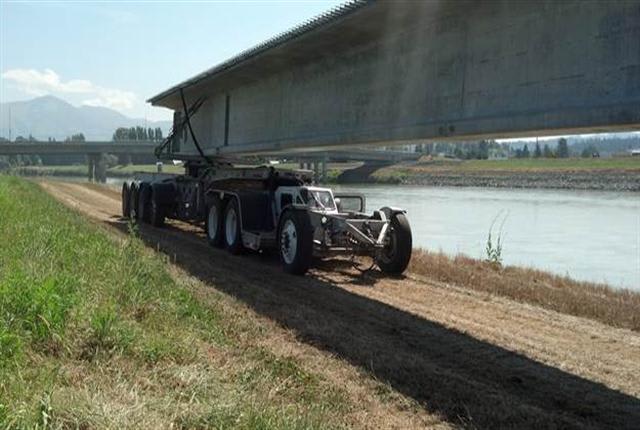
Van Dyke’s shop built 11 three-axle steer cars like this one. It’s hitched to a four-axle jeep with a swiveling bunk for the load. WashDOT photo
The carrier’s own shop built 11 of the steer cars, Hunt said. The two latest ones have auxiliary engines to run power steering pumps, but the others are non-powered and the steering is “armstrong.” Long umbilical cords from tractors supply electrical power and air to rear equipment. Aspen Custom Trailers in suburban Edmonton, Alberta, built some of the jeeps used in the haul.
All of V. Van Dyke’s 14 tractors are Kenworth T800 Heavy Haul models with extra large radiators to cool their Big Power engines while climbing grades at low road speeds.
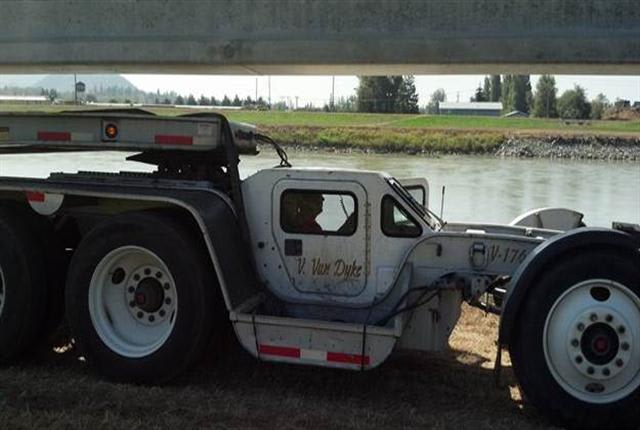
Rear driver sits in low-slung cab and steers the car’s front axle, as he would in a truck. Latest cars have power steering from an auxiliary engine, but most have “armstrong” manual steering. WashDOT photo.
This haul was typical of the company’s business, which also includes moving long, heavy steel beams. It takes care and skill. “The drivers are all long-time employees,” he said, and “very experienced.” Hunt himself has been in this business for more than 30 years
How fast did these big-beam rigs travel? “Normal highway speeds,” Hunt said. “For something this big, about 50 miles an hour.”
More Blog Posts
Pulsing Back-of-Trailer Lamps Aim to Prevent Crashes
Can the addition of a pulsing brake lamp on the back of a trailer prevent rear-end collisions? FMCSA seems to think so, if its exemptions are any indication.
Read More →
Designing a 14-Foot Trailer
Trailers are 13 feet, 6 inches high, right? Not for Hub Group, which developed a special 14-foot-high trailer spec for a dedicated customer based in California. Learn more in the Trailer Talk blog.
Read More →
CARB Comes for Reefer Trailers
A new round of emissions control regulations decreed by the California Air Resource Board will begin affecting refrigerated trailer and TRU design and operations next year.
Read More →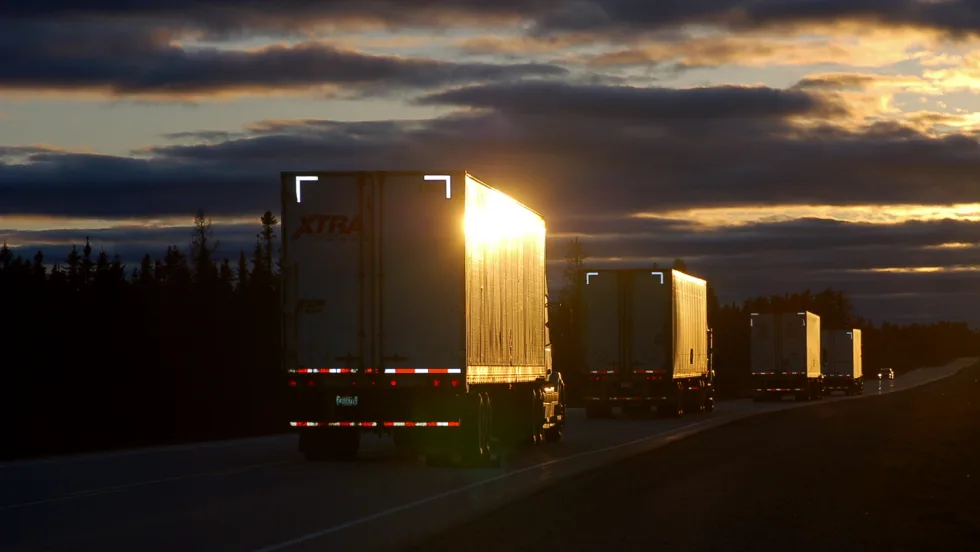
5 Ways Data Analysis Maximizes the Value of Trailer Telematics
Are you getting the most out of your trailer telematics investment?
Read More →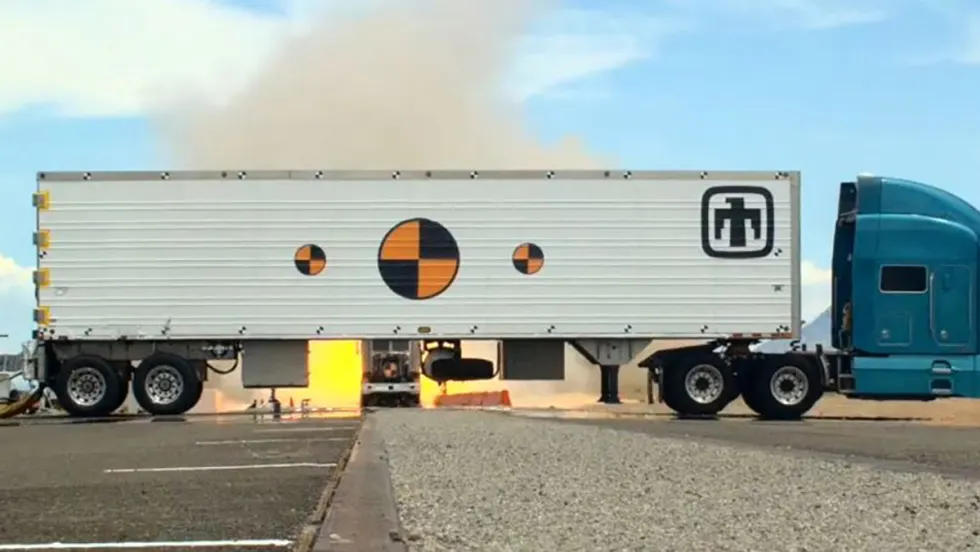
Can You Guess What's in That Trailer?
You don’t always know what’s in the trailers that pass you on the road. But some of those trailers are carrying something a little more dangerous that frozen food or new bedding…like, maybe, a nuclear weapon. But this isn’t an ordinary trailer; this is a trailer specifically made to not only carry this type of payload, but protect it at all costs.
Read More →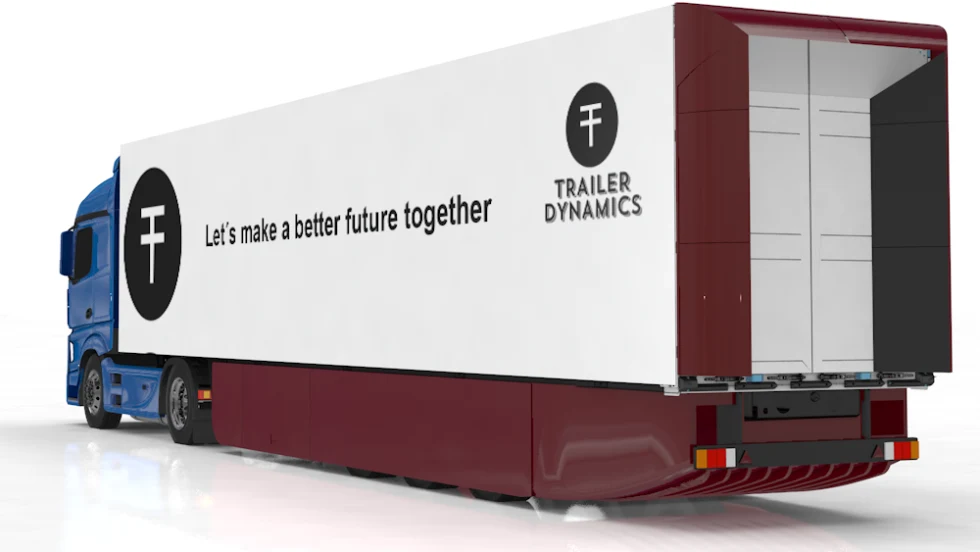
How Trailers Are Harnessing 'Free' Energy
Can trailers play a more active role in sustainable transport beyond aerodynamic add-ons or low-rolling-resistance tires? Some companies think so.
Read More →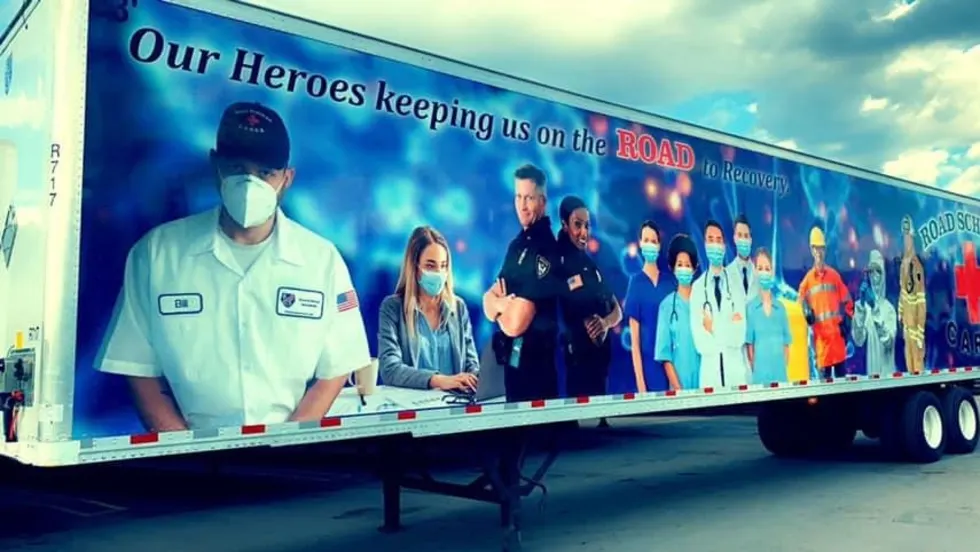
Wrapping a Trailer for COVID’s Everyday Heroes
“We don’t only deliver freight. We deliver awareness.” That’s what Jim Barrett, president and CEO of Road Scholar Transport, likes to say about the Dunmore, Pennsylvania-based carrier’s “awareness fleet.” Its latest trailer wrap honors the everyday heroes of the pandemic.
Read More →
How a Tanker Fleet is Using Unorthodox Trailer Lighting to Fight Rear-End Collisions
Groendyke Transport watched the number of rear-end collisions with its trailers rise steadily until it tried an unorthodox and then unapproved method of alerting following drivers that its trucks were applying brakes and slowing down.
Read More →
The Role Trailers are Playing in COVID-19 Funerals
In places such as New York City and Detroit, overwhelmed hospitals and mortuaries are using refrigerated trailers to store the bodies of people killed by COVID-19.
Read More →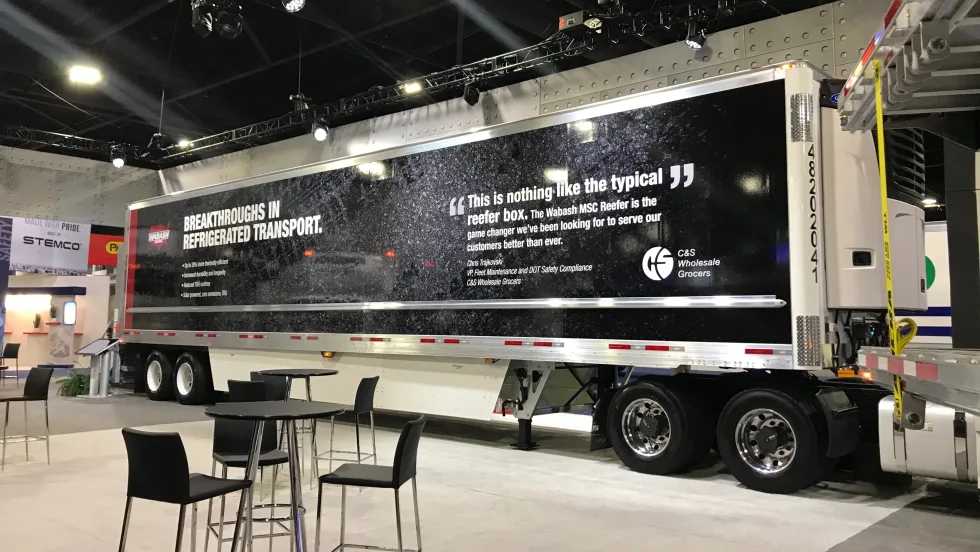
Reefer Trailer Aims to Help Reach Zero Emissions
Wabash National is partnering with C&S Wholesale Grocers to test a new type of zero-emissions refrigerated trailer.
Read More →