




Camera-Based Safety System Slashes Kroger's Collision Rate in Half
Kroger has rolled out video telematics to its fleet of more than 1,200 tractor-trailers, and is already seeing a significant reduction in collisions, handheld phone use, and unbelted drivers.
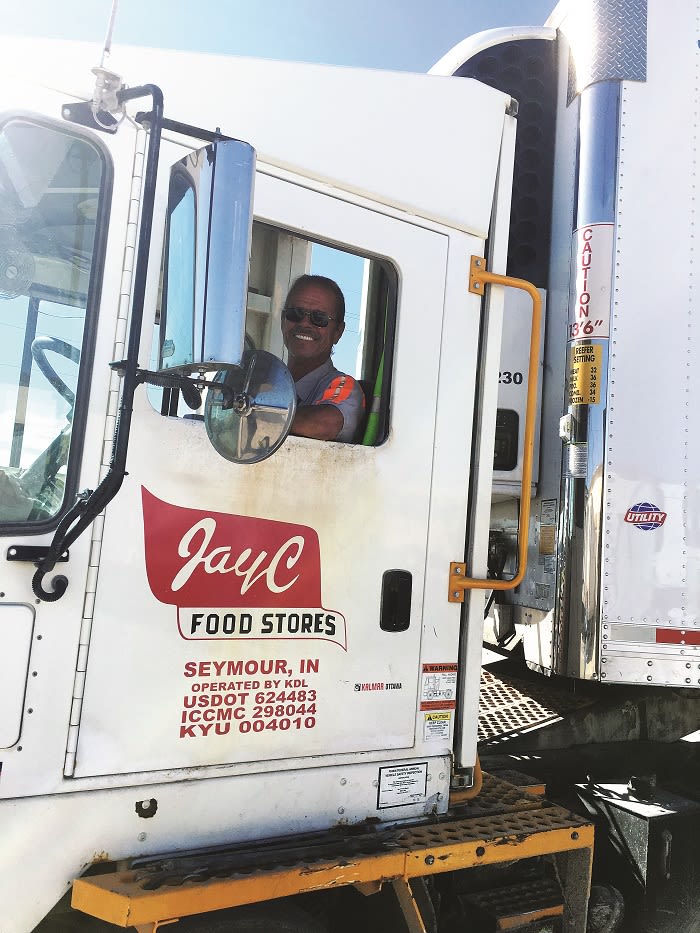
Kroger found “it only took about a week for drivers to forget that the event camera was there” and that an unexpected bonus from adopting DriveCam has been a drop-off in maintenance costs.
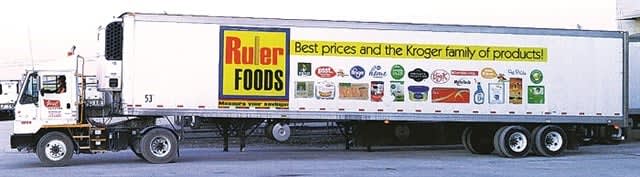
The Kroger fleet operates 1,200 tractors and 1,800 trailers in 35 states to supply the Cincinnati-based company’s network of some 12,000 grocery/retail stores, which operate under nearly two dozen brand names including Kroger, Ralphs, Smith’s Food and Drug, and Harris Teeter. Photos: Lytx
A continuing upswing in the liability risk profile of a major grocery/retail fleet led management to look for a way to rapidly reverse the troubling trend. John Lobenberg, safety manager for the private fleet operated by Kroger, says that with the retailer’s recognition that “liability spending was increasing year over year” with up to five “catastrophic” driving events being recorded each year, it determined that the best way to turn things around was to “proactively manage driver behavior.”
The fleet of 1,200 tractors and 1,800 trailers operates in 35 states to supply the Cincinnati-based company’s network of some 12,000 grocery/retail stores, which operate under nearly two dozen brand names, including Kroger, Ralphs, Smith’s Food and Drug, and Harris Teeter.
Last year, Kroger’s company drivers drove 382 million miles to complete an average of 1,300 deliveries daily. They typically go out and are back home every night. Out on the road, Lobenberg says, the drivers also serve as “Kroger brand ambassadors, each and every day.” He notes that a Kroger driver out on the road “probably interacts with 5,000 people per day. That’s compared with associates in stores, who may talk to 500 to 1,000 people per day.”
After looking into various safety-enhancement programs, Kroger opted to adopt the Lytx DriveCam program. According to Lytx, this exception-based video telematics program combines the video capture of road incidents, such as hard braking or sudden swerving, with data analysis of those incidents that generates “personalized coaching insights” to help improve driving behavior out on the road.
Kroger’s logistics experts prioritized two cities that were incurring the largest collision-related spend to pilot the DriveCam program. Lobenberg says running the pilot helped him prepare for the full fleet rollout — and it helped Kroger’s leadership team understand how the camera-based system could deliver a healthy return on investment.
In fact, Lobenberg reports that the nationwide distribution fleet saw its collision rate sliced in half within just four months of deploying the DriveCam program.
“The results of the DriveCam program have been tremendous,” he elaborates. “Within four months, we saw a 50% reduction in collisions, a 71% reduction in handheld cell phone use, and an 82% reduction in ‘driver unbelted’ incidents,” he says. Increasing seatbelt use is critical, he says, “because drivers who don’t wear their seat belts are 3.4 times more likely to get into a collision than those who do, according to Lytx data.”
Kroger found “it only took about a week for drivers to forget that the event camera was there” and that an unexpected bonus from adopting DriveCam has been a drop-off in maintenance costs.
Lobenberg says that during his 20-year stint in the U.S. Air Force as an in-flight refueling manager/technician, he learned that two words drove every thought and every action behind all flight operations: “Safety first.” Even so, he’s surprised at all he found out about safety culture since DriveCam has been rolled out to the Kroger fleet.
“There’s a lot more risky behavior going on than I had thought,” he says, from big risks like distracted driving to minor risks. “About 15% of our drivers represented 80% of our risk.” Lobenberg says the key to the program is making the most of the data-driven insights that Lytx provides. He finds that having “driver coaches” is very important, as “they’ve been there and they’re listened to.”
It only took about a week for drivers to forget that the event camera was there, he says. An unexpected bonus has been a drop-off in maintenance costs, especially with tires as drivers were no longer “bouncing off curbs.”
He also advises that video recordings have proved to be “a high-value piece of evidence to exonerate drivers” and that DriveCam is making it easier for the fleet to recognize drivers for safe driving. “Truly good, life-saving driving is hard to observe.”
More Safety & Compliance

FMCSA Pauses Biennial-Update Enforcement Amid Motus Transition
Carriers whose updates were due on or after June 1 have more time, while FMCSA works to stabilize its new registration system and warns of phishing sites impersonating its new carrier registration system, Motus.
Read More →
ZF Expands Commercial Vehicle Push in North America
ZF is expanding its North American commercial-vehicle presence with new transmission applications, electrification, trailer technology and autonomous-driving systems.
Read More →
Truck Drivers Need More Than Another Alert
Fleets have more visibility into truck health, safety events, and driver activity than ever. The next challenge is turning all that information into useful guidance for the person who has to decide what to do next.
Read More →
Tesla Wants a Self-Driving Semi. Are Cameras Enough?
Could Tesla’s camera-only autonomous driving technology work on an 80,000-pound Semi? In this commentary, HDT's Deborah Lockridge takes a look at Tesla, Cybercab, and how autonomous trucks see the road.
Read More →
What DOT’s Automated Vehicle Strategy Means for Trucking
The U.S. Department of Transportation issued a new automated-vehicle strategy that outlines plans for driverless-truck regulations, cross-state freight corridors, and federal safety standards.
Read More →
NYC Expands Speed, Pedestrian Safety Tech Across Fleet
New York City is expanding intelligent speed assistance and pedestrian-alert systems across its municipal fleet, moving the technologies from pilot programs into vehicle procurement and retrofit requirements.
Read More →
FMCSA Removes 110 Truck Driver Training Schools from Certified ELDT List
Federal regulators also are targeting more than 160 additional training providers and launching a nationwide audit of third-party CDL skills testers as part of a broader crackdown on trucking fraud.
Read More →
Beyond DOT Compliance: What Makes a Trucking Fleet Truly Safe?
A trucking fleet can follow every rule and still make unsafe decisions. The real test comes when safety conflicts with freight, productivity, or cost.
Read More →
Hours of Service Pilot Programs: FMCSA Readies for 2027 Rollout
Two pilot programs could eventually reshape hours-of-service rules, giving truck drivers options to pause their 14-hour clock or use longer split sleeper rest periods.
Read More →
New Guide Offers Pet Safety Tips for Truck Drivers
Hundreds of thousands of pets travel in truck cabs. A new safety guide from Volvo Trucks and the Center for Pet Safety offers practical advice for truck drivers who bring dogs and cats along for the ride.
Read More →