




Taking Safety To A Higher Level: Fatigue Management Is About More Than Hours Of Service
Back in 2001, Dupre Logistics had a problem. The Louisiana fleet was having too many accidents, some of them fatal


Back in 2001, Dupre Logistics had a problem. The Louisiana fleet was having too many accidents, some of them fatal.
Not only was it bad business, it ran counter to what Dupre believed it stood for.
"We have a vision to be the safest transportation and logistics company in North America," said President Tom Voelkel. "We are good operators, but we weren't performing like good operators."
At the suggestion of its insurer, Dupre turned to Circadian Technologies, a Boston-based consultancy, for an analysis.
"There were good indications that most of our severe accidents were because of fatigue," Voelkel said.
Driver Fatigue and Hours of Service Compliance Are Not the Same
Dupre was not aware of the danger of driver fatigue, he said.
"When we were having these fatigue-related accidents, DOT would come in and say we were in compliance with (the hours of service rules). But it wasn't safe."
What the company learned from Circadian Technologies was that, among other problems, it had a scheduling system that caused fatigue.
It was not unusual, for example, for a Dupre driver to work a week of days, followed by a week of nights and so on, back and forth.
"When you do that, your body really needs three days to adjust to the new schedule," Voelkel said. "We didn't know that."
Another example: Dupre drivers often were starting their day shifts early, between 4 and 5 in the morning, said Todd Dawson of Circadian Technologies.
"Research shows that the earlier you start your shift, the harder it is to get good sleep," he said.
Voelkel took Circadian Technology's analysis to heart. "We were in a situation where our people were tired and (Circadian) had the medicine. I figured we could not do this fast enough."
The program Circadian Technology put together covers the full scope of Dupre's operations, from scheduling to education and training for drivers, dispatchers and the entire management team. It includes creation of a fatigue score based on driver logs that has become part of an ongoing management process.
The results have been eye-opening.
Dupre tracks its safety performance by measuring what it calls "the Big Four" accident types - rollovers, lane changes, intersection crashes and rear-end crashes - which frequently lead to deaths, serious injuries or big-dollar damages.
Between 1999 and 2001, Dupre registered that number at 1.68 per million miles. In 2002, after it started the fatigue management program, the number dropped to 1.16 and it has been moving down, with intermittent slight upticks, ever since. This year the number is .30 per million miles, an 82 percent improvement over eight years.
In addition, according to Circadian Technologies, the average cost per accident has dropped almost 66 percent, and the cost of accidents attributable to the loss of attention dropped more than 80 percent.
The Fatigue Management Movement in Trucking
Dupre's fatigue management program puts it in the vanguard of a movement in trucking to find a way to take safety to a higher level.
Few trucking companies currently have formal fatigue management programs in place, but that could begin to change next year.
Roger Clarke is a key member of an international team charged with constructing a model North American Fatigue Management Program, which is scheduled to be ready by next fall.
"If we keep doing the same thing, the only dips (in accident numbers) we're going to get is when there is less trucking activity," said Clarke, executive director of Vehicle Safety and Carrier Services for Alberta, Canada.
"If we want to make a change, we have to make some quantum leaps every once in a while," he said. "I think this is one of them."
Dave Osiecki, senior vice president of policy and regulatory Affairs at American Trucking Associations, has a similar view.
"Fatigue management could play a big role in improving safety," he said. "The membership of ATA feels strongly that there should be a fatigue management component to any discussion of fatigue. It's not just an hours-of-service issue."
On another front, the Motor Carrier Safety Advisory Committee, a group of 20 representatives from industry, the enforcement community and labor and safety advocacy groups that provides advice and recommendations to the Federal Motor Carrier Safety Administration, is preparing recommendations on fatigue management to deliver to FMCSA in December.
The Dupre Experience with Fatigue Management
Dupre has had success with its program, but the process is challenging, Voelkel said. "Fatigue management is not without risk and it's not without pain."
He views Dupre's experience as more of a cultural decision than a management decision.
"We decided this is the kind of company we are going to run," he said. "We're going to do it safe, or we're just not going to do it. We've given back business. We've turned business away. When we had business that wasn't safe, we fixed it or we gave it up."
At the operational level, Circadian Technologies provided Dupre with an assessment of the fatigue risks associated with its activities, and the tools to hold managers responsible for those risks.
The method uses a proprietary Circadian Alertness Simulator that analyzes a driver's monthly schedule taken from an electronic onboard recorder against a database of tens of thousands of man-days that Circadian Technologies has collected, said Todd Dawson.
The CAS does not track how much or how well the driver actually sleeps. But it can make assumptions about a driver's level of fatigue by comparing his schedule to biological needs and a statistical analysis of what people actually do during their time off, Dawson said.
"For example, a driver may have 10 hours off, but where he is during that time really determines if he sleeps or not," he said.
"If the 10 hours off are during the day, we know that the quantity and quality of sleep he's going to get is much less than if it was 10 hours from 10 p.m. to 8 a.m."
From this assessment, which includes other elements as well, drivers are given a Fatigue Risk Score. Dispatchers, in turn, are taught what they need to do to help drivers keep their scores down. A portion of the dispatcher's bonus is based on the fatigue score of his drivers, Voelkel said.
The training process includes education on diet as well as exercise and healthy sleep practices.
The current hot topic in fatigue management is sleep disorders (a growing number of carriers are implementing screening and treatment programs for apnea and other ailments) but for Dupre that is just one piece of a more comprehensive approach.
Dawson said the company screens drivers who are applying for jobs but does not conduct a full-blown sleep disorder program.
The Pain Of Change
The cultural changes were probably more difficult to implement than the operational changes. Voelkel's observation is, "The only thing that likes change is a wet baby on a good day."
He described the program as "a top-down, bottom up deal." Management has a monthly stewardship meeting in which all the top officers participate with mid-level managers at headquarters as well as terminal managers conferencing in.
"There are 30 people in the room, and 30 to 40 on the phone," Voelkel said. "We review action items and statistics. If there have been any major incidents we will review them, following up on the safety department's prior investigation. This gives senior management a portal to influence safety."
More Safety & Compliance

Kodiak Lines Up Fleets for Driverless Trucking
An agreement for 75 trucks, a new Texas freight lane, and progress on safety validation move Kodiak closer to its planned driverless highway launch.
Read More →
More Trailer Data Through the Same Seven-Way [Video]
Can trucking’s standard seven-way connector handle more cameras and trailer data? Grote’s Adam Slade shows HDT how the company is using new technology with its 4See trailer system, not only to add a new backup camera but also to expand other capabilities — without adding another connection.
Read More →
PrePass Intelligence Mines Fleet Bypass, Toll and Safety Data
PrePass Intelligence helps fleets measure bypass savings, flag potential toll overcharges, and spot suspicious transactions by combining data from separate systems.
Read More →
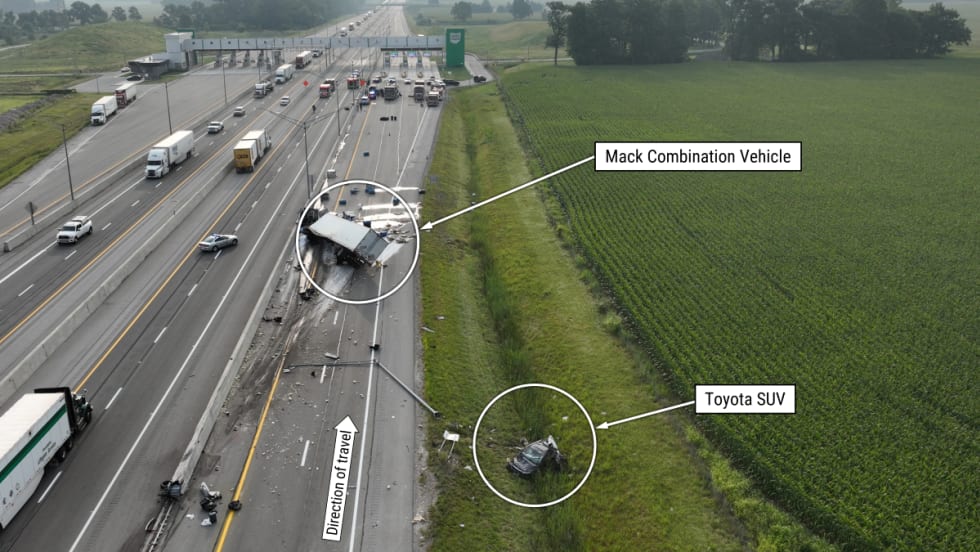
Fatal Crash Exposes Toll Plaza Risks
An NTSB investigation found that last-minute lane changes and large speed differences at an Ohio toll plaza created a hazard the truck driver couldn't avoid in time.
Read More →
When Language Stops the Truck: The Return of ELP Out-of-Service Orders
English language proficiency rules for commercial drivers aren’t new, but renewed out-of-service enforcement has raised the stakes. Here’s what carriers need to know before a driver reaches a roadside inspection.
Read More →
A Camera Isn't a Safety Program. Here's What Brokers Are Screening for Now
Footage alone may not be enough to pass broker vetting processes. Here's what counts as a defensible safety program now.
Read More →
Marijuana and Trucking’s Drug-Testing Dilemma
Marijuana is getting stronger, laws are changing, and drug tests still can’t reliably establish impairment. What does that mean for truck drivers and the fleets that employ them?
Read More →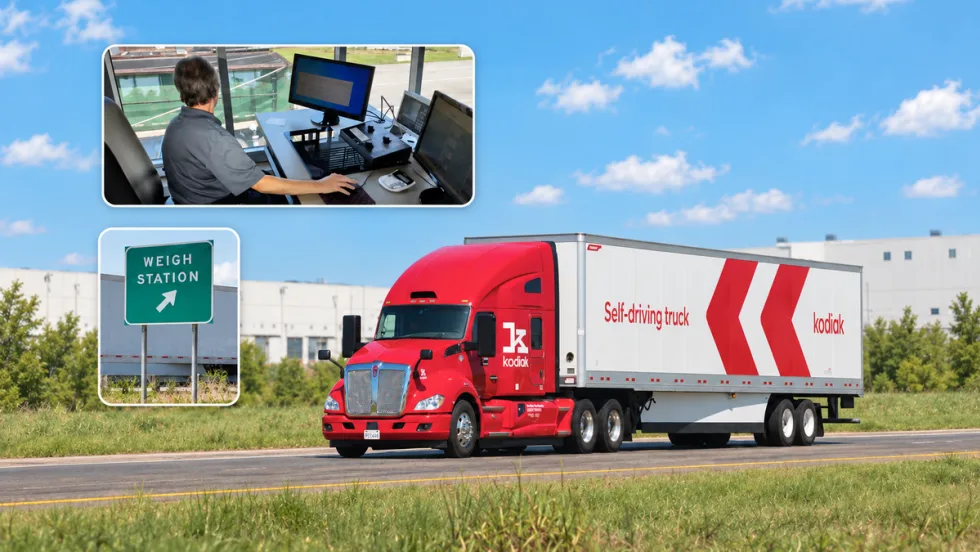
PrePass, Kodiak Connect Driverless Trucks to Roadside Enforcement
The system will allow enforcement agencies to verify Enhanced Inspection information and decide whether Kodiak’s autonomous trucks can bypass roadside screening sites.
Read More →
From One Generation to the Next: How Mentorship Builds Safer Truck Drivers
After three decades in trucking, Harold Perry shares what he's learned about driver safety, mentorship, and helping the next generation build confidence behind the wheel.
Read More →
FMCSA Pauses Biennial-Update Enforcement Amid Motus Transition
Carriers whose updates were due on or after June 1 have more time, while FMCSA works to stabilize its new registration system and warns of phishing sites impersonating its new carrier registration system, Motus.
Read More →