




House Bill Would Suspend 34-Hour Restart Pending Review
A trio of House legislators introduced a bill that would suspend the 34-hour restart provision of the hours of service rule, pending an assessment by the Government Accountability Office.

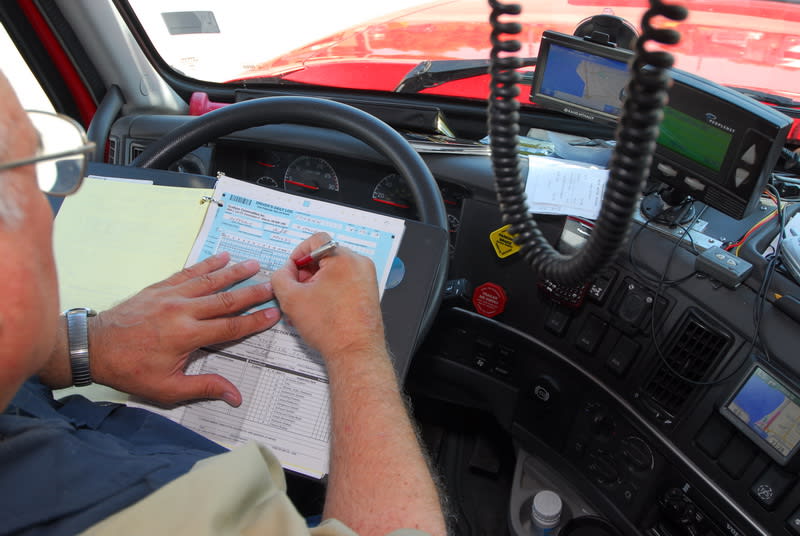
One of the biggest complaints about the new hours of service rules has been the new restrictions for 34-hour restarts. (Photo by Jim Park)
One of the biggest complaints about the new hours of service rules has been the new restrictions for 34-hour restarts. (Photo by Jim Park)
A trio of House legislators introduced a bill that would suspend the 34-hour restart provision of the hours of service rule, pending an assessment by the Government Accountability Office.
The bill would put carriers back under the 34-hour restart provision that was in force before July 1 while GAO looks at the methodology the Federal Motor Carrier Safety Administration used to write the new provision.
GAO would have a year to complete the work. The new provision could not be re-implemented until six months after GAO submits its report to Congress, and only if the study supports the rule.
The “True Understanding of the Economy and Safety Act” was drafted by Reps. Richard Hanna, R-N.Y., Tom Rice, R-S.C., and Mike Michaud, D-Maine.
Hanna said in a statement that the 34-hour restart provision is “arbitrary and capricious” because the safety agency has not yet completed a study of its effectiveness.
“There are legitimate concerns that this new rule makes our roads less safe and hurts small business,” he said. “The TRUE Safety Act is a bipartisan effort to press the ‘pause button’ on this new rule while an independent assessment is completed.”
At issue is the study of the restart mandated in last year’s highway bill at the request of American Trucking Associations. ATA objects to the provision requiring drivers to take off two periods between 1 a.m. and 5 a.m. during their 34-hour restart, and contends that the research the agency used to justify the provision is not convincing.
Not all carriers are affected by the restart provision but those that are, typically long-haul truckload operations, have complained that it cuts into their productivity and does not improve safety.
The agency is late in completing the study of how several carriers’ field operations are affected by the restart provision.
In September, Transportation Secretary Anthony Foxx told Hanna that the agency is “working as expeditiously as possible” and will release the study when it has finished its analysis and review of the data.
In a statement Thursday morning, FMCSA spokesperson Marissa Padilla said the agency has finished collecting data for the field study and still is working on the analysis and review.
“The agency does not comment on pending legislation,” she added.
The draft bill tells GAO to assess the methodology FMCSA used to write the restart provision.
Specifically, the bill says GAO should see if the data used represents the drivers who are subject to the provision and if the analysis is statistically valid. Also, the agency should look at the potential safety impact of the provision putting more drivers on the road during morning rush hour.
A spokesperson for Hanna, Renee Gamela, said the bill will likely be referred to the House Transportation and Infrastructure Committee.
“We are currently building support for the stand-alone bill among House colleagues and stakeholder groups,” she said.
More Drivers

Truck Drivers Need More Than Another Alert
Fleets have more visibility into truck health, safety events, and driver activity than ever. The next challenge is turning all that information into useful guidance for the person who has to decide what to do next.
Read More →
FMCSA Removes 110 Truck Driver Training Schools from Certified ELDT List
Federal regulators also are targeting more than 160 additional training providers and launching a nationwide audit of third-party CDL skills testers as part of a broader crackdown on trucking fraud.
Read More →
Hours of Service Pilot Programs: FMCSA Readies for 2027 Rollout
Two pilot programs could eventually reshape hours-of-service rules, giving truck drivers options to pause their 14-hour clock or use longer split sleeper rest periods.
Read More →
Medical Cards, English Proficiency Reshape Roadcheck Violations
Medical-card violations jumped to the top of the driver out-of-service list during CVSA’s 2026 International Roadcheck, while English-language proficiency violations appeared among the leading violations for the first time.
Read More →
Driver Trust Can Make or Break the Success of Fleet Safety Technology
New Teletrac Navman research suggests that onboarding, transparency about driver data, and positive feedback can play a significant role in how commercial drivers respond to safety and coaching technology.
Read More →
EEOC Sues KLLM Over Alleged Sex Discrimination in Driver Training
KLLM is facing a federal sex-discrimination lawsuit over policies the EEOC alleges put female truck driver trainees at a disadvantage.
Read More →
FMCSA Moves to Codify English Language Requirements for Commercial Drivers
By changing regulations on English-language proficiency requirements for commercial drivers, rather than relying on a guidance memo, the FMCSA said future administrations won't be able to walk back the Trump administration's stricter enforcement with just a memo.
Read More →
Drivers Put Western Star Trucks to the Test at Star Nation Experience
Watch to get an inside look at the Western Star trucks, technology, and community behind the Star Nation Experience 2026!
Read More →
Trump Administration Looks to Put More Veterans Behind the Wheel
The Freedom Haulers program pulls together existing and expanded programs at several federal agencies to recruit veterans to drive commercial heavy-duty trucks and cut the red tape for them to get a CDL, training, and employment.
Read More →
Putting Mack’s Command Steer to the Test
A test drive of Mack’s Command Steer active steering system evaluates how it can make truck driving easier and less tiring.
Read More →