




Industry Groups Challenge Provision of New Licensing Rule
A coalition of industry groups is challenging a provision of the recent federal rule that sets tough new testing standards for commercial licenses. The Federal Motor Carrier Safety Administration rule, posted last month, contains a provision that

A coalition of industry groups is challenging a provision of the recent federal rule that sets tough new testing standards for commercial licenses.
The Federal Motor Carrier Safety Administration rule, posted last month, contains a provision that prohibits third parties from administering skills tests to the applicants they have trained. The agency put in the prohibition as protection against a possible conflict of interest arising from a trainer at a commercial training school also acting as a state-certified test examiner.
But the industry coalition, in a petition filed yesterday at the agency, said this will cause problems for the industry and the states.
It will "greatly exacerbate" the driver shortage by limiting entry-level drivers and will impose burdens on states that allow third-party testing.
The coalition members are American Trucking Associations, the Commercial Vehicle Training Institute, the National Association of Publicly Funded Truck Driving Schools, the Truckload Carriers Association and the Professional Truck Driver Institute, an arm of TCA.
They complain in their petition that this provision was not included in earlier versions of the rule. "Had it been included, there would have been a great outcry from both trucking interests, and the entry-level commercial driver training industry," the coalition said.
The provision evidently got into the final rule after Oregon and the Owner-Operator Independent Drivers Association suggested it in their comments on the proposed rule, the coalition said. It added that the suggestion should have been noticed for comment by other parties before it was adopted.
The coalition also said that the final rule already contains safeguards against fraud, such as background checks and training for third-party testers. And, the July 8 effective date of the rule means that training schools and motor carriers will have just a month to implement significant changes in their business practices, the coalition said.
The coalition is asking for reconsideration of just this part of the rule.
Other parts of the rule tighten testing standards and create a new commercial learner's permit.
Under the rule, states must start issuing a learner's permit to would-be truck drivers starting in
July. Applicants will have to pass federally approved CDL knowledge and skills tests, clear a check of their driving record, and hold the learner's permit for at least two weeks before they apply for a CDL. The minimum age for a learner's permit is 18.
The rule also strengthens the standards of proof for legal residence in the U.S. Only U.S. citizens and lawful permanent residents can get a license. State agencies will be required to verify an applicant's social security number. An initial learner's permit will be valid for 180 days but can be renewed for an additional 180 days before the applicant must take the CDL skill exam. The maximum period for an initial and a renewed CDL will still be eight years, although each state has the authority to set a lesser period.
Other aspects of the rule address state licensing practices. The agencies will have to keep a digitized photo of the driver, and give only supervisors the ability to override computer systems. And applicants will not be able to use language interpreters when taking the knowledge and skills tests.
More Drivers

FMCSA Removes 110 Truck Driver Training Schools from Certified ELDT List
Federal regulators also are targeting more than 160 additional training providers and launching a nationwide audit of third-party CDL skills testers as part of a broader crackdown on trucking fraud.
Read More →
Hours of Service Pilot Programs: FMCSA Readies for 2027 Rollout
Two pilot programs could eventually reshape hours-of-service rules, giving truck drivers options to pause their 14-hour clock or use longer split sleeper rest periods.
Read More →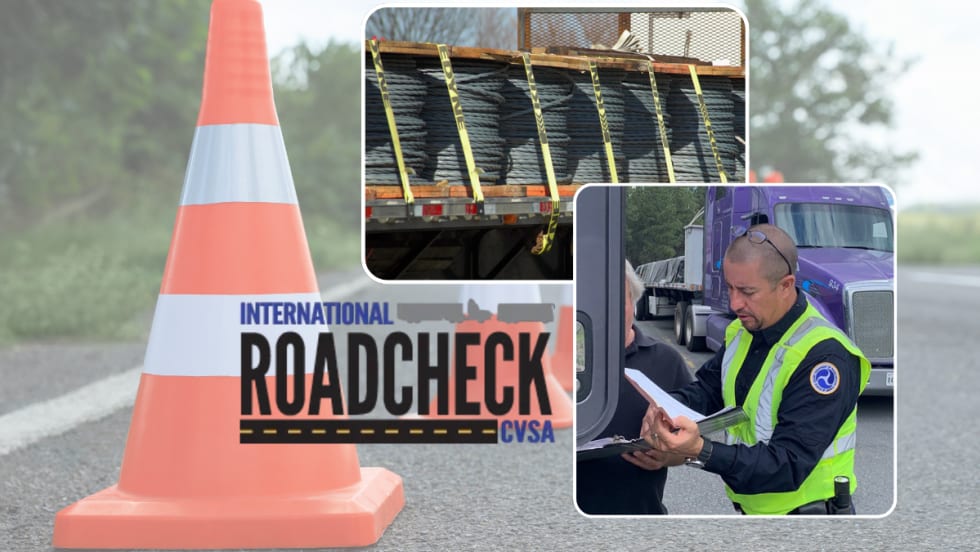
Medical Cards, English Proficiency Reshape Roadcheck Violations
Medical-card violations jumped to the top of the driver out-of-service list during CVSA’s 2026 International Roadcheck, while English-language proficiency violations appeared among the leading violations for the first time.
Read More →
Driver Trust Can Make or Break the Success of Fleet Safety Technology
New Teletrac Navman research suggests that onboarding, transparency about driver data, and positive feedback can play a significant role in how commercial drivers respond to safety and coaching technology.
Read More →
EEOC Sues KLLM Over Alleged Sex Discrimination in Driver Training
KLLM is facing a federal sex-discrimination lawsuit over policies the EEOC alleges put female truck driver trainees at a disadvantage.
Read More →
FMCSA Moves to Codify English Language Requirements for Commercial Drivers
By changing regulations on English-language proficiency requirements for commercial drivers, rather than relying on a guidance memo, the FMCSA said future administrations won't be able to walk back the Trump administration's stricter enforcement with just a memo.
Read More →
Drivers Put Western Star Trucks to the Test at Star Nation Experience
Watch to get an inside look at the Western Star trucks, technology, and community behind the Star Nation Experience 2026!
Read More →
Trump Administration Looks to Put More Veterans Behind the Wheel
The Freedom Haulers program pulls together existing and expanded programs at several federal agencies to recruit veterans to drive commercial heavy-duty trucks and cut the red tape for them to get a CDL, training, and employment.
Read More →
Putting Mack’s Command Steer to the Test
A test drive of Mack’s Command Steer active steering system evaluates how it can make truck driving easier and less tiring.
Read More →
Competition Heating Up for Truck Drivers
New report reveals rising driver hiring costs, the return of sign-on bonuses, growing AI advantages, and the operational factors shaping driver retention.
Read More →