




CSA 2010: Report from the Field
Starting in December, compliance with federal safety regulations is going to get a lot tougher, say carriers that have been participating in the pilot version of the new safety regime, CSA 2010. Pilot carriers in a recent webinar warned that a carrier's performance under the SafeStat measurement system is not a reliable indicator of how it will perform under CSA 2010
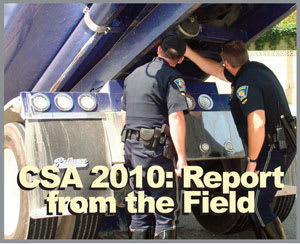
Starting in December, compliance with federal safety regulations is going to get a lot tougher, say carriers that have been participating in the pilot version of the new safety regime, CSA 2010. Pilot carriers in a recent webinar warned that a carrier's performance under the SafeStat measurement system is not a reliable indicator of how it will perform under CSA 2010.
"If you compare our SafeStat scores to our CSA 2010 scores, it appears like we are two entirely separate companies," said Donna Underwood, safety director for Steelman Transportation, Springfield, Mo.
Underwood was one of eight trucking executives who discussed their experience with CSA 2010 in a September webinar hosted by the Missouri Trucking Association.
CSA 2010, which eventually will become just CSA (Compliance, Safety and Accountability), changes the way the Federal Motor Carrier Safety Administration analyzes the safety data it collects from roadside inspections, truck crash reports and traffic reports on moving violations.
Right now, under SafeStat, the agency limits its analysis of roadside inspection data to violations that result in out-of-service orders. Under CSA 2010, however, all safety violations are included in an analysis that goes considerably deeper into carrier operations. That analysis will be accompanied by a much more robust and far-reaching enforcement scheme.
The experience of the pilot state carriers shows that violations that used to be statistically insignificant will now carry significant weight, and carriers that are not in compliance will hear directly from FMCSA.
Several other themes emerged from the presentations.
All of the carriers found they needed to make an extra effort to train drivers and other company personnel, and maintain a higher level of communication.
Many realized the need to go to their customers and explain the new system to them - shippers must be engaged in the process, as well.
They found FMCSA's new pre-employment screening program a useful tool in the driver selection process.
And several have decided that the best way to manage driver performance in the fatigued driving category is to make the move to electronic onboard recorders.
A DVD showing the entire session is available for $125 from the Missouri Trucking Association (www.csa-exp.com), and look for a more detailed article in the October issue of Heavy Duty Trucking magazine.
More Drivers

Truck Drivers Need More Than Another Alert
Fleets have more visibility into truck health, safety events, and driver activity than ever. The next challenge is turning all that information into useful guidance for the person who has to decide what to do next.
Read More →
FMCSA Removes 110 Truck Driver Training Schools from Certified ELDT List
Federal regulators also are targeting more than 160 additional training providers and launching a nationwide audit of third-party CDL skills testers as part of a broader crackdown on trucking fraud.
Read More →
Hours of Service Pilot Programs: FMCSA Readies for 2027 Rollout
Two pilot programs could eventually reshape hours-of-service rules, giving truck drivers options to pause their 14-hour clock or use longer split sleeper rest periods.
Read More →
Medical Cards, English Proficiency Reshape Roadcheck Violations
Medical-card violations jumped to the top of the driver out-of-service list during CVSA’s 2026 International Roadcheck, while English-language proficiency violations appeared among the leading violations for the first time.
Read More →
Driver Trust Can Make or Break the Success of Fleet Safety Technology
New Teletrac Navman research suggests that onboarding, transparency about driver data, and positive feedback can play a significant role in how commercial drivers respond to safety and coaching technology.
Read More →
EEOC Sues KLLM Over Alleged Sex Discrimination in Driver Training
KLLM is facing a federal sex-discrimination lawsuit over policies the EEOC alleges put female truck driver trainees at a disadvantage.
Read More →
FMCSA Moves to Codify English Language Requirements for Commercial Drivers
By changing regulations on English-language proficiency requirements for commercial drivers, rather than relying on a guidance memo, the FMCSA said future administrations won't be able to walk back the Trump administration's stricter enforcement with just a memo.
Read More →
Drivers Put Western Star Trucks to the Test at Star Nation Experience
Watch to get an inside look at the Western Star trucks, technology, and community behind the Star Nation Experience 2026!
Read More →
Trump Administration Looks to Put More Veterans Behind the Wheel
The Freedom Haulers program pulls together existing and expanded programs at several federal agencies to recruit veterans to drive commercial heavy-duty trucks and cut the red tape for them to get a CDL, training, and employment.
Read More →
Putting Mack’s Command Steer to the Test
A test drive of Mack’s Command Steer active steering system evaluates how it can make truck driving easier and less tiring.
Read More →