




Q&A: Next Gen's Lindsey Trent on Younger Truck Drivers
Where is our next generation of truck drivers, technicians, and other trucking people going to come from? Lindsey Trent with Next Gen Trucking has been working to find an answer.

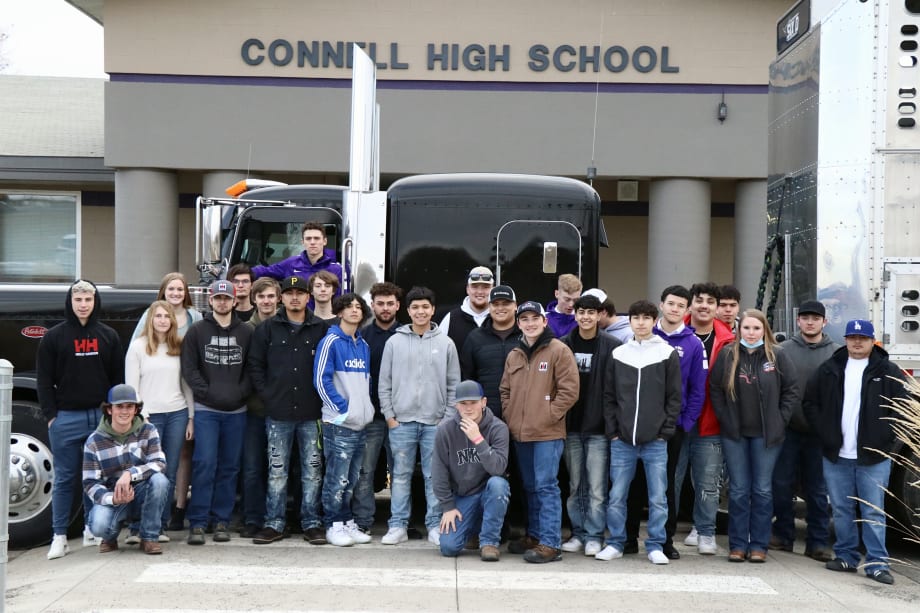
Next Gen Trucking offers high schools a truck driver training curriculum.
Photo: Next Gen Trucking
Where is our next generation of truck drivers, technicians, and other trucking people going to come from? Lindsey Trent has been working to find an answer.
Trent is president and co-founder of the Next Generation in Trucking Association, also known as Next Gen.
With over a decade in the industry, Lindsey’s journey led her to create an organization dedicated to promoting trucking as a career path for young people, tackling workforce shortages, and enhancing the industry’s image.
In this HDT Talks Trucking interview, she shares insights into Next Gen’s initiatives, the challenges young people face entering the industry, and how trucking can attract the next generation. Watch the full video above, or read the following Q&A, which been edited for length and clarity.
Deborah Lockridge:Lindsey, tell us a bit about how the Next Generation in Trucking Association came to be.
Lindsey Trent: I’ve been in trucking for 12 years, starting out in driver staffing. It didn’t matter who I talked to; everyone from the receptionist to the president of a trucking company kept bringing up the driver shortage, the aging workforce, and the challenge of getting young people into the industry.
Later, when I was at Ryder, I saw the same problem, but expanded to include diesel mechanics. But there wasn’t a cohesive solution for attracting young people to the industry or improving its image.
Then, someone introduced me to Dave Dein, who had started a high school trucking program. It clicked for me: That’s the answer. We need high schools to focus on educating our future workforce.
So, Dave and I dreamed up this idea for the Next Generation in Trucking Association, really focusing on working within education and raising awareness about careers in the trucking industry, but also helping schools start trucking programs.
And so that's what we're doing today. We're promoting trucking as a positive career choice for younger people and trying to build up that workforce and get them excited.
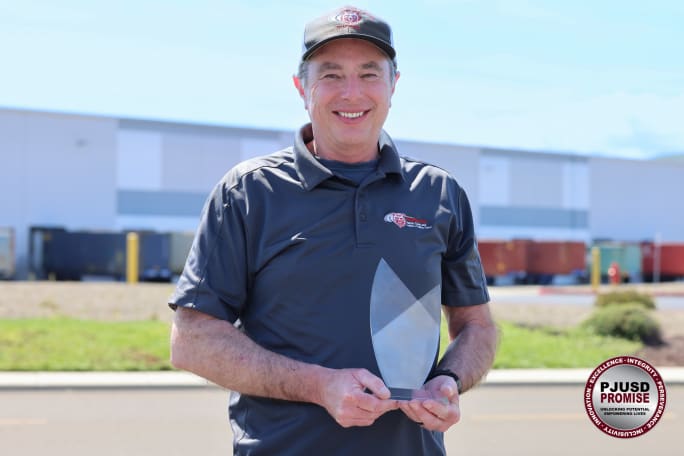
Dave Dein's innovative high school program for future truck drivers has earned accolades.
Photo: Next Gen Trucking
Lockridge: Now you have a curriculum companion to help high schools implement these programs. Tell us more about that.
Trent: We were able to win a grant from the Knorr-Bremse Global Cares Foundation, the parent company of Bendix, which allowed us to develop a curriculum companion based on Dave’s program.
Scaling the program was a challenge, especially if a school in New York wanted to start a program when Dave’s in California.
This companion guide lays out weekly lesson plans, handouts, and aligns with ELDT (Entry-Level Driver Training) requirements, but it’s tailored specifically for high school students.
It’s 210 hours, a senior can take it in high school. It includes driver simulation training and offers a holistic approach to training new drivers. Now, any school can call us, and we can give them a turnkey solution for starting a trucking program that prepares students to be career-ready.
Watch this interview with Dave Dein from the HDT Talks Trucking archives:
Lockridge:How have schools responded to this program?
Trent: Schools are really excited! They’re always looking for programs that benefit students, the community, and employers.
Thanks to COVID, people are much more aware of the importance of the supply chain and what happens when trucking stops. They also know these jobs pay well, which has made schools even more eager to offer these programs.
We’re seeing a trend of young people questioning college and student debt; they don’t want to graduate with a lot of debt and a low-paying job.
With this program, they can go into trucking right out of high school. There are some barriers, but they can start earning a living.
And starting off as a driver is a great career path to so many opportunities within our industry. You can stay a driver or move into roles like safety manager, operations manager. We’re out there every day promoting that message.
Lockridge:There are even some top trucking company executives that started out as truck drivers. And I've seen that trend as well — there's a lot more interest today in vocational programs, skilled trades, truck driving.
Trent: Yes! One of the most exciting things to me to share with educators and students alike is that a lot of trucks they see on the road, they are their own small business, they are owner-operators, and they manage their career, they manage their job. And that is really exciting to young people, because this is the most entrepreneurial generation that we've seen.
Lockridge:One of the challenges, though, is that at 18, you can drive intrastate but not interstate. How does Next Gen work to help young people navigate this?
Trent: That’s definitely a challenge, and we’re working closely with FMCSA, motor carriers, and insurance companies to address it. We don’t want to lose young people because they feel there’s no path forward in trucking at 18.
We've got to start removing those barriers, because we want young people to choose trucking as a first career choice, instead of down the road when they're 35 as the second, third, fourth career choice. We think that it's really also going to help raise the image of the industry as well.
The Safe Driver Apprenticeship Pilot Program is a three-year pilot program that will allow 3,000 18- to 20-year-olds to drive interstate if they’re in a qualifying company, and we’re actively working to bring more motor carriers and potential drivers to that program.
The program aims to see if 18-year-olds are just as safe as, say, a 24-year-old that just got their CDL.
We’re advocating for these young people by giving them safety-focused, year-long training in high school, followed by local community college or driving school training, and then an apprenticeship with a local carrier. We believe an 18-year-old with that background will be more prepared than a 24-year-old who completes a four-week CDL course.
Lockridge:I know there’s been some frustration with that pilot program because of certain restrictions. Are there any updates on that?
Trent: Yes, there were barriers like the requirement for inward-facing cameras and DOL-registered apprenticeship programs. But FMCSA recently lifted the inward-facing camera requirement, which opened the program to more employers. They’re also not enforcing the registered apprenticeship requirement, which is bringing more companies on board.
Lockridge:What other initiatives is the association working on?
Trent: Career exploration is a big thing. I just heard from a middle school hosting a career fair with 50 companies, and we want to make sure trucking is represented there. If there is a school in your community that has a career fair, please go. Bring a truck if possible and talk to students about trucking careers.
More Drivers

Truck Drivers Need More Than Another Alert
Fleets have more visibility into truck health, safety events, and driver activity than ever. The next challenge is turning all that information into useful guidance for the person who has to decide what to do next.
Read More →
FMCSA Removes 110 Truck Driver Training Schools from Certified ELDT List
Federal regulators also are targeting more than 160 additional training providers and launching a nationwide audit of third-party CDL skills testers as part of a broader crackdown on trucking fraud.
Read More →
Hours of Service Pilot Programs: FMCSA Readies for 2027 Rollout
Two pilot programs could eventually reshape hours-of-service rules, giving truck drivers options to pause their 14-hour clock or use longer split sleeper rest periods.
Read More →
Medical Cards, English Proficiency Reshape Roadcheck Violations
Medical-card violations jumped to the top of the driver out-of-service list during CVSA’s 2026 International Roadcheck, while English-language proficiency violations appeared among the leading violations for the first time.
Read More →
Driver Trust Can Make or Break the Success of Fleet Safety Technology
New Teletrac Navman research suggests that onboarding, transparency about driver data, and positive feedback can play a significant role in how commercial drivers respond to safety and coaching technology.
Read More →
EEOC Sues KLLM Over Alleged Sex Discrimination in Driver Training
KLLM is facing a federal sex-discrimination lawsuit over policies the EEOC alleges put female truck driver trainees at a disadvantage.
Read More →
FMCSA Moves to Codify English Language Requirements for Commercial Drivers
By changing regulations on English-language proficiency requirements for commercial drivers, rather than relying on a guidance memo, the FMCSA said future administrations won't be able to walk back the Trump administration's stricter enforcement with just a memo.
Read More →
Drivers Put Western Star Trucks to the Test at Star Nation Experience
Watch to get an inside look at the Western Star trucks, technology, and community behind the Star Nation Experience 2026!
Read More →
Trump Administration Looks to Put More Veterans Behind the Wheel
The Freedom Haulers program pulls together existing and expanded programs at several federal agencies to recruit veterans to drive commercial heavy-duty trucks and cut the red tape for them to get a CDL, training, and employment.
Read More →
Putting Mack’s Command Steer to the Test
A test drive of Mack’s Command Steer active steering system evaluates how it can make truck driving easier and less tiring.
Read More →