





Other recent TA news: TravelCenters Expands Network, Makes Upgrades
BP Buys TravelCenters of America
With its acquisition of TravelCenters of America, BP said its global scale will allow it to develop more electric vehicle charging, biofuels, renewable natural gas (RNG) and later hydrogen, both for passenger vehicles and fleets.
February 16, 2023
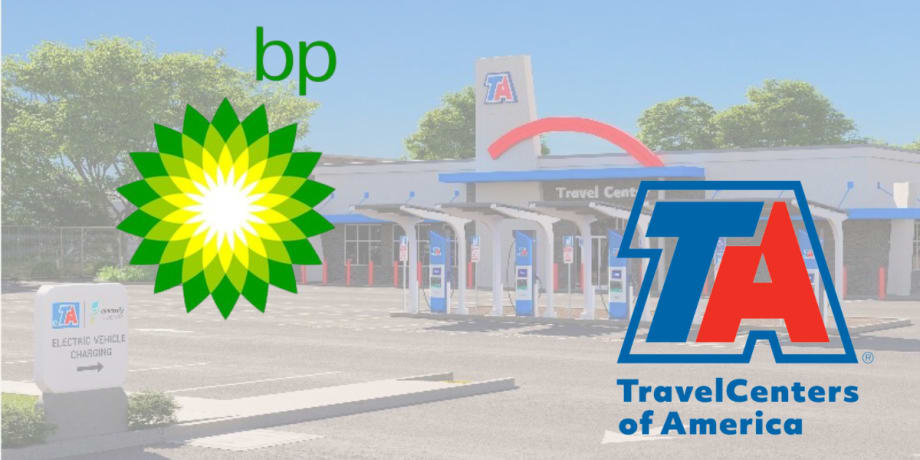
BP says its acquisition of TravelCenters of America will help expand alternative-fuel and EV-charging options.
HDT graphic from BP, TA images
2 min to read
BP Products North America Inc. is buying TravelCenters of America for $1.3 billion in cash as it continues a growth strategy beyond petroleum into convenience stores, electric vehicles, and alternative fuels.
TA’s network of around 280 travel centers, strategically-located on major highways across the U.S., complements BP’s existing convenience and mobility business, which is predominantly off-highway.
BP said its global scale and reach will, over time, bring advantages in fuel and biofuel supply. It will provide options to expand and develop new mobility offers, including electric vehicle charging, biofuels, renewable natural gas (RNG) and later hydrogen, both for passenger vehicles and fleets.
The news follows BP’s Feb. 15 announcement that it plans to invest $1 billion in EV charging across the U.S. by 2030. In January, TA announced an agreement with Electrify America to offer electric vehicle charging at select TA/Petro locations, with the first stations planned to be deployed in 2023. TravelCenters of America also is working with Nikola’s energy division to install hydrogen fueling stations for heavy-duty trucks at two TA-Petro sites in California.
Convenience is one of BP's five strategic transition growth engines where it plans significantly grow investment through this decade. By 2030, BP aims for around half its annual investment to go into these transition growth engines. Over 2023-2030 it aims that around half of its cumulative $55 billion to $65 billion transition growth engine investment will go into convenience, bioenergy, and EV charging.
“By enabling growth in EV charging, biofuels and RNG and later hydrogen, we can help our customers decarbonize their fleets,” said Bernard Looney, CEO of BP.
TA’s travel centers, which average around 25 acres, offer a full range of facilities for vehicles and fleet trucks, including more than 600 full-service and quick service restaurants, as well as truck maintenance and repair services.
“Today’s announcement that BP is acquiring TA for $86 per share is a result of the successful implementation of our turnaround and strategic plans,” said TA CEO Jonathan M. Pertchik in a statement. “We have improved our core travel center business, expanded our network, launched eTA to prepare for the future of alternative fuels, and improved our operating and financial results.”
As part of the transaction, TA will enter into amended lease agreements with Service Properties Trust, establishing long-term real estate access.
The acquisition is subject to regulatory and TravelCenters of America shareholder approval.
More Fuel Smarts

EPA Proposal Could Ease 2027 Truck Costs and Buying Uncertainty
The proposal doesn't change the tougher NOx standard, but it would revise key implementation requirements that manufacturers say have driven up costs and complicated fleet purchasing decisions.
Read More →
Cummins, Paccar Ease DEF Derates After EPA Guidance
Updated diesel engine software gives truck operators more time to address emissions-system issues while staying compliant with EPA emissions standards.
Read More →
Maintenance in the Messy Middle Part 3: Biodiesel
Biodiesel can reduce emissions, improve fuel-system lubricity and use existing diesel infrastructure. But NACFE’s Messy Middle maintenance report says fleets must actively manage storage, cold-weather operation, filters and oil drain intervals to avoid problems.
Read More →
Sponsored•July 1, 2026
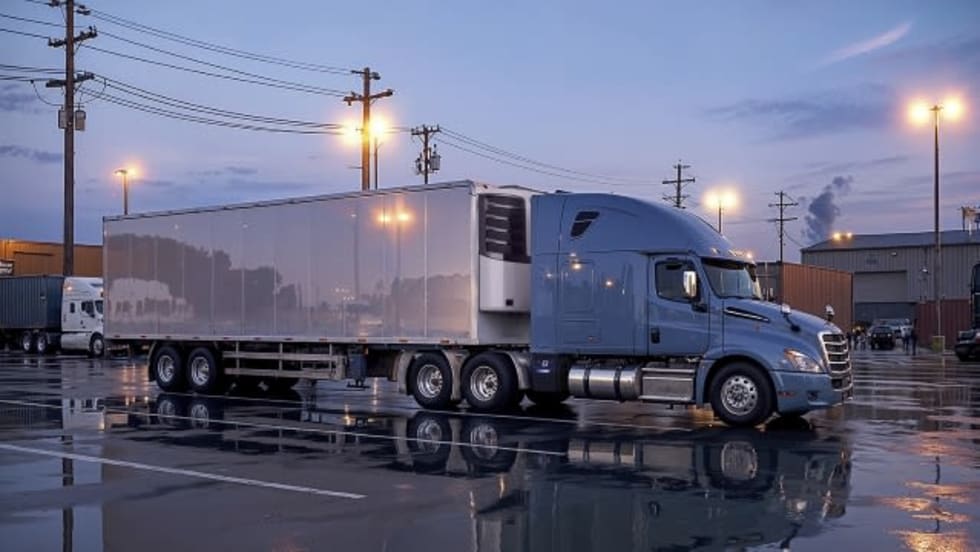
Enhance Fleet Performance with High-Efficiency Auxiliary Power Units
Drive sustainable cost savings while increasing driver comfort during short- and long-haul logistics operations.
Read More →
Maintenance in the ‘Messy Middle’ Part 2: Renewable Diesel Fuel
NACFE's latest Messy Middle Powertrain Service & Maintenance report says renewable diesel gives fleets an opportunity to reduce carbon emissions without changing trucks, fueling infrastructure or maintenance practices. But technicians still need to understand several important operational differences.
Read More →
The Diesel Engine Enters NACFE’s ‘Messy Middle’
NACFE’s new Messy Middle Powertrain Service & Maintenance report says keeping modern diesel engines running now depends as much on software, diagnostics and data as traditional mechanical service.
Read More →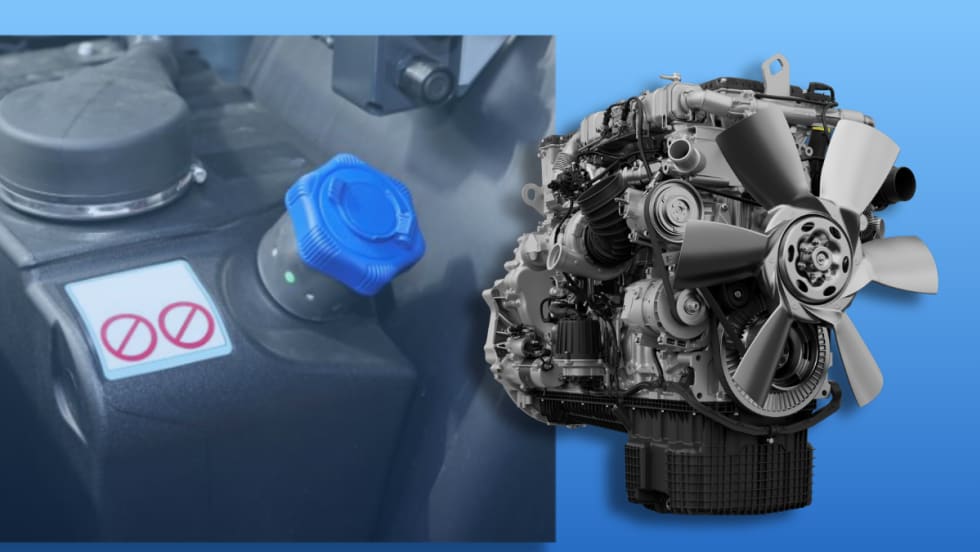
DTNA Software Update Gives Truckers More Time Before DEF Derates Take Effect
The changes reflect EPA guidance aimed at reducing downtime caused by emissions-system faults while maintaining compliance requirements.
Read More →
New Agentic Predictive Maintenance Report Demonstrates How Degraded Aftertreatment Systems Waste Fuel
Questar analyzed a large mixed-class fleet and discovered it was wasting as much as $30 in fuel per vehicle, per day, because of mechanically degraded aftertreatment systems.
Read More →
New York City's Microhub Project is Delivering Results
Trucking, last-mile delivery companies, and environmental advocates like what they are seeing so far with New York's microhub program.
Read More →
Lessons Learned About Alternative Fuels: Start Small, Stay Flexible
Practical advice on adopting alternative fuels and ZEVs from HDT's 2026 Top Green Fleets, from renewable diesel and natural gas to electric trucks.
Read More →