


 MENU
MENU SEARCHMENUSEARCH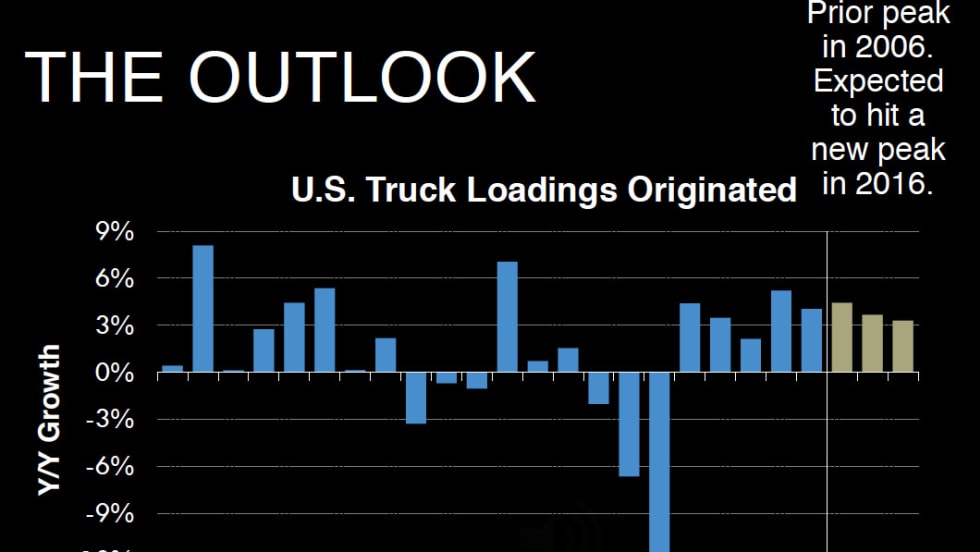
While some may complain that truck freight levels haven’t taken off like a rocket since the end of the Great Recession, the fact is they have posted solid improvements, according to Jonathan Starks of the freight forecasting firm FTR -- and could be headed for a new peak.
Read More →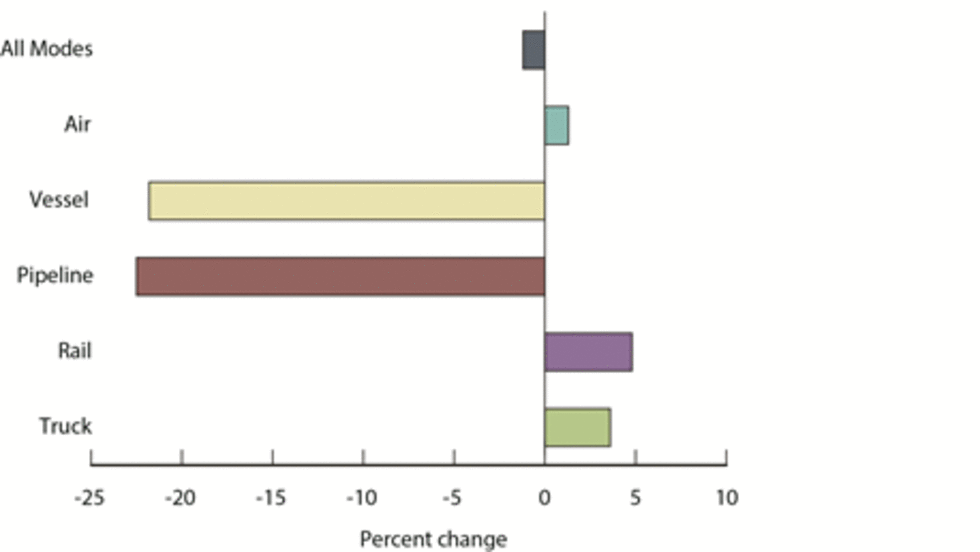
The amount of freight moved between the U.S. and its North American Free Trade Agreement neighbors of Canada and Mexico totaled $89.3 billion in January, according to U.S. Transportation Department figures, down 1.2% from a year earlier,
Read More →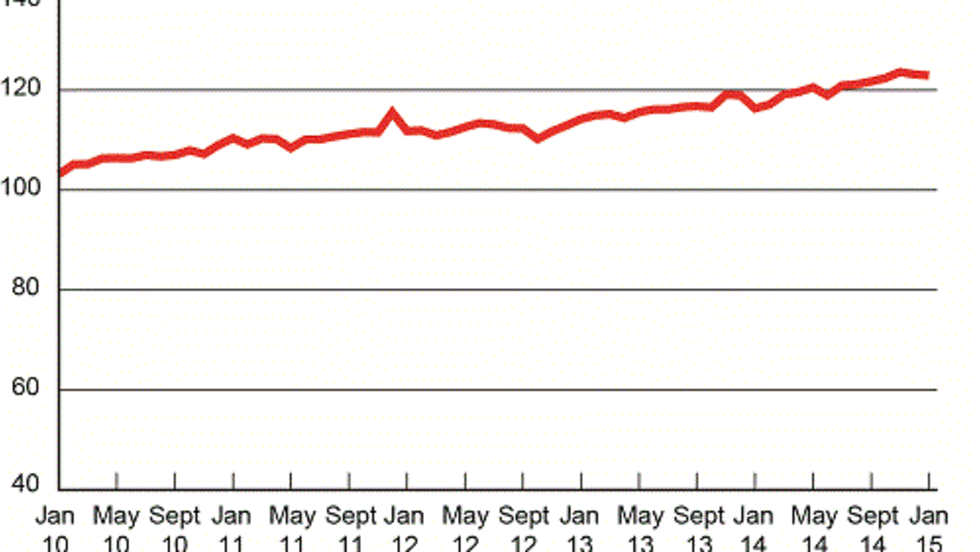
The amount of freight moved by the nation’s for-hire transportation industry fell slightly in January from the month before, but remains close to its record high level.
Read More →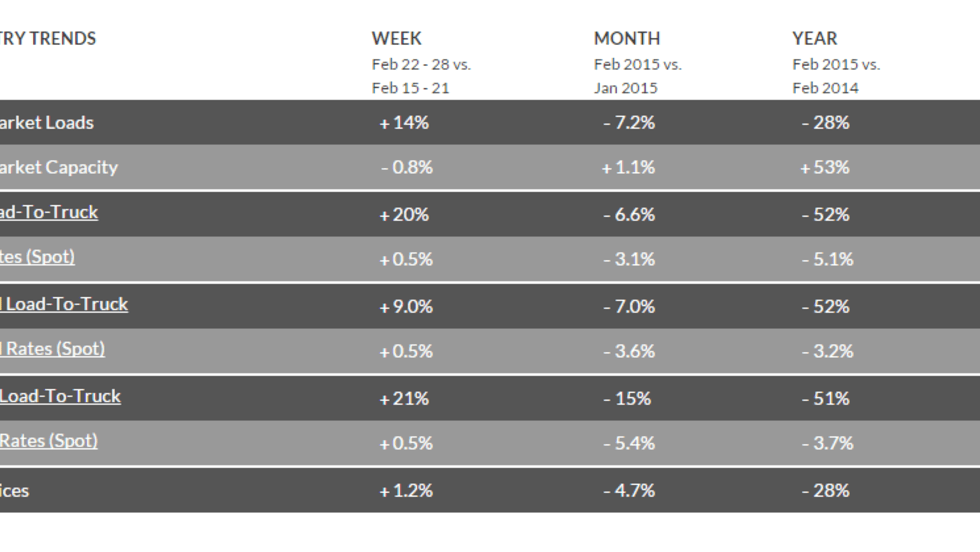
Freight volume fell 37% year-over-year in February and spot-market freight availability declined for the second consecutive month in February, according to DAT -- so why did rates rise compared to last year?
Read More →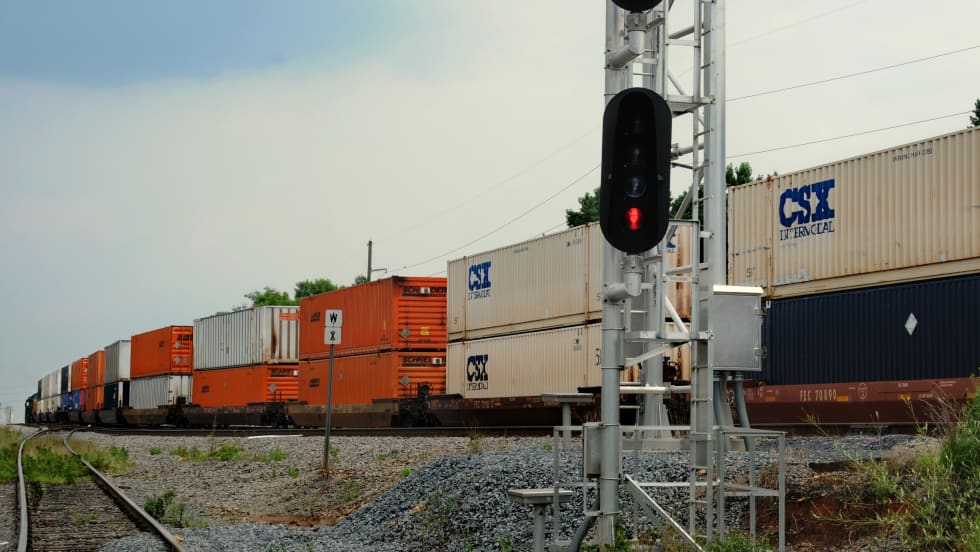
Intermodal rail traffic fell in February, according to new figures released by the Association of American Railroads.
Read More →
ComFreight has announced a new API which integrates the company's applications with a customer's back office software.
Read More →
Driver shortages, driver turnover and regulations could all affect the potential growth of the trucking industry in 2015, according to analysis from GE Capital.
Read More →
U.S. retail sales slumped in January for the second straight months, falling 0.8% from the month before, according to a new Commerce Department report and double the amount forecast by many economists.
Read More →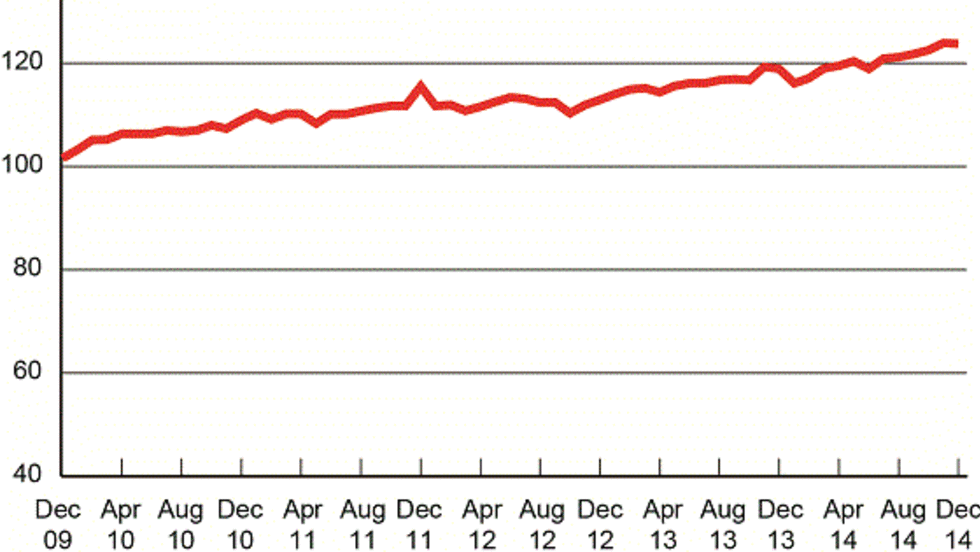
The latest reading on freight movements in the U.S. shows the amount carried by the for-hire transportation industry was virtually unchanged in December from November, failing to rise after five consecutive months of increases, according to the U.S. Department of Transportation.
Read More →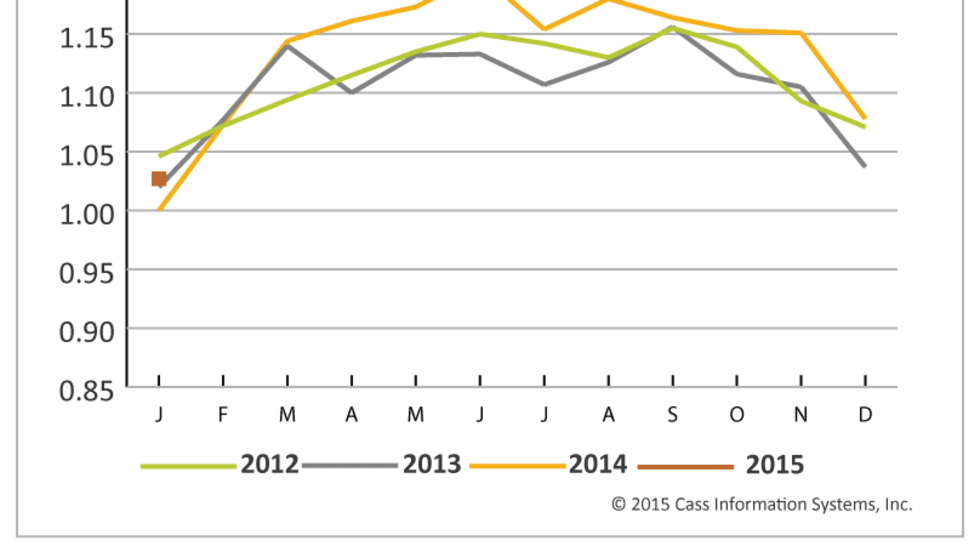
North American shipment volumes and total spending on freight both dropped in January, according to the Cass Freight Index, but they were also at their highest level for the month in at least three years.
Read More →