




Valvoline, Tiwi Team Up for Fuel Savings
By teaming up with in-truck driver coaching aid Tiwi, Valvoline is offering fleets real fuel savings through its new Fuel Proof Guarantee program.
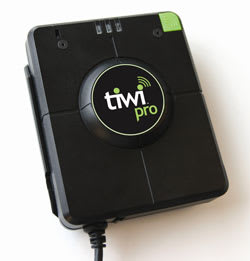
By teaming up with in-truck driver coaching aid Tiwi, Valvoline is offering fleets real fuel savings through its new Fuel Proof Guarantee program.
To gain fuel economy of 4 percent or more under the guarantee, a fleet must run Valvoline's Premium Blue Extreme engine oil and Syn Gard transmission and axle lube, which together offer lower friction and potential extended oil drains. They must also use the innovative Tiwi driver performance device.
After an initial screening period to determine baseline economy, a switch to the Valvoline lubes and the activation of the Tiwi demonstrates the potential fuel savings by the end of the 120-day evaluation period. If the anticipated fuel savings are not delivered, under the Fuel Proof Guarantee, the fleet's incremental expenses are reimbursed.
The program is a partnership where both components - fuel economy lubes and driver coaching - contribute to the savings. By co-branding with Valvoline, tiwi gains market credibility, by teaming with tiwi, Valvoline is assured of the fuel savings through modified driver behaviors.
The Tiwi Connection
Drivers can make up to a 30 percent difference in fuel economies by their driving style, according to the Technology and Maintenance Council of the American Trucking Associations. The Tiwi device is designed to address driving style - particularly speeding and aggressive driving - by coaching the driver with voice prompts and by reporting his actions back to back-office systems if he doesn't respond.
The genesis of the windshield-mounted Tiwi is from accident reconstruction enabled by on-board recorders designed for oilfield and remote locations. These same recorders, in their most sensitive form, have been required in every NASCAR race car since the fatal 2001 Dale Earnhardt crash to reconstruct accidents to see how to improve racecar safety as well as the track environment to minimize accident severities. Since their install, there have been no more NASCAR fatalities, says president Todd Follmer, president of parent company Inthinc.
NASCAR drivers don't need to be told to buckle up. But the Tiwi device in trucks ensures they are, or it will report drivers who violate this rule. This is a primary safety feature, says Follmer as studies show unbelted drivers significantly more at risk in accidents.
The device uses three-axis accelerometers to measure braking, acceleration and cornering forces. These give a precise indication of aggressive driving. Unique to the Tiwi device is real-time communications with a mapping database with all street speed limits in the United States and Canada - even private access roads. The GPS function identifies vehicle location and speed, which is verified against the database and can immediately identify a speeding driver. This speed-by-street function enables coaching by the device, which alerts the driver via voice message that a speeding violation is in progress. If he responds and slows to the limit within 15 seconds, no report is sent. If the driver fails to respond, then the reporting system is notified.
Valvoline parent company Ashland's Chicago-area fleet of 18 trucks were equipped with the Tiwi devices, said fleet manager Al Kirkland. He was amazed, he said, to see 778 violations in the first 24-hour period. The violations were not necessarily serious, but it showed work needed to be done to make drivers aware of their street-level speeds.
Addressing seat-belt use, speed and aggressive driving makes a huge difference to the loss prevention in a fleet, says Follmer. In major-account fleets using the devices, accidents have dropped from 3.5 to 5 reportable accidents per million miles to under 0.3.
The GPS location within the devices helps with asset management. A geofencing utility allows for setting specific speed limits or event records. As an example, a dump-truck and mixer fleet could address damage to trucks as drivers transitioned from sealed road to rough site roadways. By geofencing the location, fleet-allowed speeds could be specified lower than posted. Moreover, having vehicles send a departing message from the geofenced location could speed up the billing by initiating the process the moment the truck left the site.
The Tiwi Device
The Tiwi is very easy to mount in the truck. since it only needs the J1708 data port to both read the truck's databus and to power the device. It can thus be fitted in around 10 minutes, and the unit serial number is paired with the truck VIN to complete the install. Self-contained, it mounts to the windshield so the GPS antenna can see out and the internal modem communicate via Iridium Satellite.
Costs are $299.95 set up and $59.99 a month for the service. Alternatively, the device can be purchased for $750 and then the monthly charge is reduced to $39.99.
According to tiwi, the return on investment is multi-faceted. Maintaining speed and eliminating aggressive driving results in fuel savings every time, tending to address the worst drivers in a fleet and bringing overall average fuel economy up. Maintenance and tire expense is lower and trucks last longer. Experience shows accidents are significantly reduced, so a fleet could also see savings on insurance premiums.
Follmer says these accident savings are maintained because the device keeps coaching the driver. Other accident amelioration programs that bring the driver in for infrequent coaching often result in only temporary changes in driver behaviors. With the coaching device active at all times, drivers are encouraged to maintain their improved behavior or be disciplined.
Driver Acceptance and Fuel Proof
Fielding questions at the press introduction of the Fuel Proof program, Follmer and Ashland fleet manager Kirkland said drivers certainly do respond differently, but according to how the fleet introduces the program, the results can be positive for everybody. Some drivers see benefits in earning fleet fuel economy bonuses or enjoying lower exposure to speeding tickets. Drivers who won't get with the program can be identified, scored and if necessary replaced.
In the Fuel Proof Guarantee program, fleets sign up for a 120-day evaluation. A 30-truck demo fleet is selected and equipped with the Tiwi units. The driver coaching function is disabled for the first 60 days to give a baseline.
At the mid-point of the evaluation, drivers are told what the devices are doing and 15 of the 30 have the coaching function enabled. At the same time, the 15 evaluation trucks have lubes change for the 5W-30 Premium Blue Extreme and the Syn Gard 75W-90 gear oil.
The demo continues out to the 120-day close for review. Not surprisingly drivers in the control group also improve somewhat, when they learn the devices attached to the windshields of their trucks are sending back reports on their driving.
At this point the fleet can make a decision about the savings achieved, whether they have met the guarantee and what the ROI will be on the total program. For fleets interested in participating, there is an ROI calculator at the Fuel Proof Guarantee website, www.fuelproofguarantee.com.
Currently Fuel Proof is only available to fleets of 200 trucks or more. As the program rolls out, Valvoline distributors will have information and literature about the program, but for the moment the web site is the best way to enter the program.
The Tiwi windshield-mount devices will be installed by service points around the country. The press conference was held in the Dallas area and Freightliner Cascadia tractors were used to demonstrate the Tiwi coaching features. ATC Freightliner is the area Freightliner dealer and will likely become such an installer.
According to Valvoline vice president John Noal, fleets are highly skeptical about mpg claims. By combining the Valvoline brand, products that deliver fuel economy and a real time coach backed up by the guarantee, fleets should feel
More Drivers
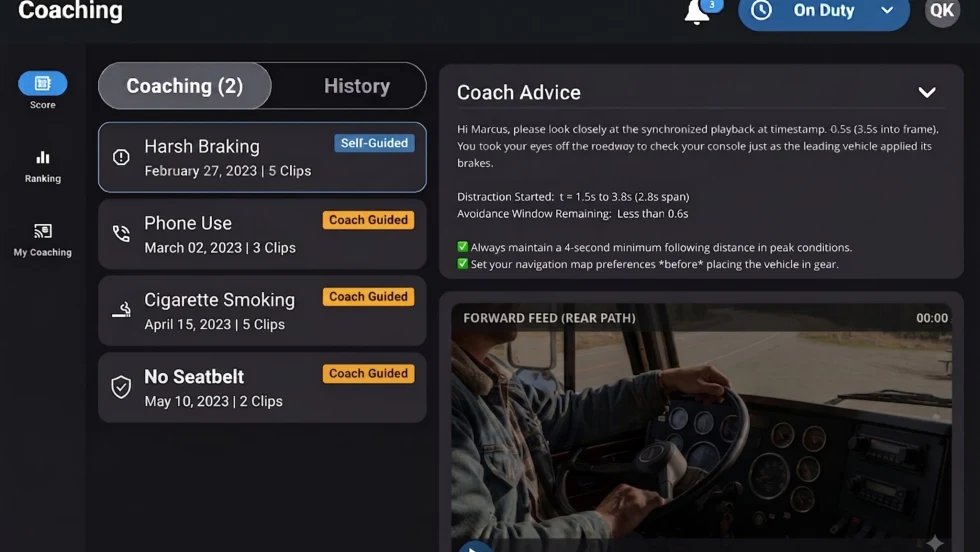
Platform Science Adds Dispatch and Safety Tools
Four additions to PS Fleet help fleets monitor loads, manage driver coaching, share truck locations and adjust video system settings.
Read More →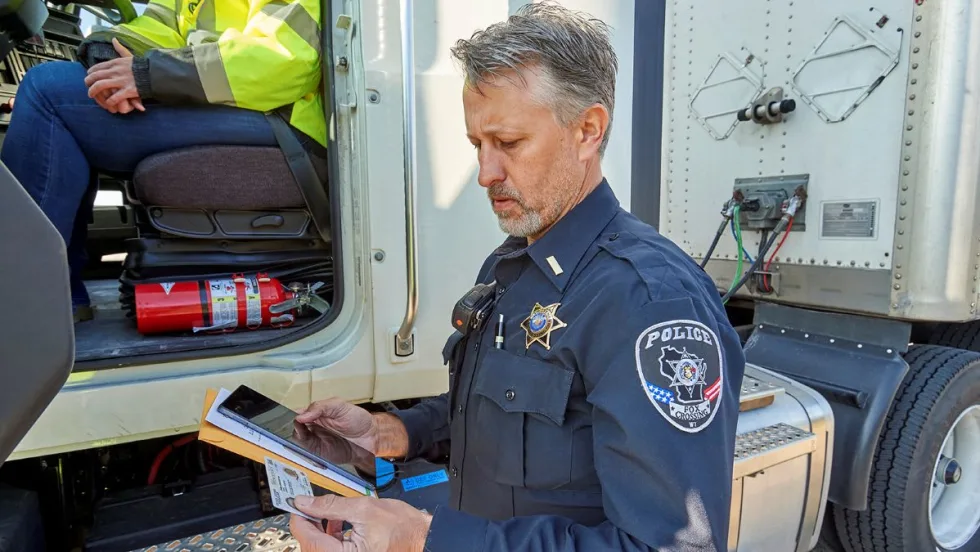
When Language Stops the Truck: The Return of ELP Out-of-Service Orders
English language proficiency rules for commercial drivers aren’t new, but renewed out-of-service enforcement has raised the stakes. Here’s what carriers need to know before a driver reaches a roadside inspection.
Read More →
Samsara Launches Custom AI Agent Builder
Agent Studio lets fleets create AI tools for hours-of-service monitoring, reporting and driver support, including agents that communicate by phone.
Read More →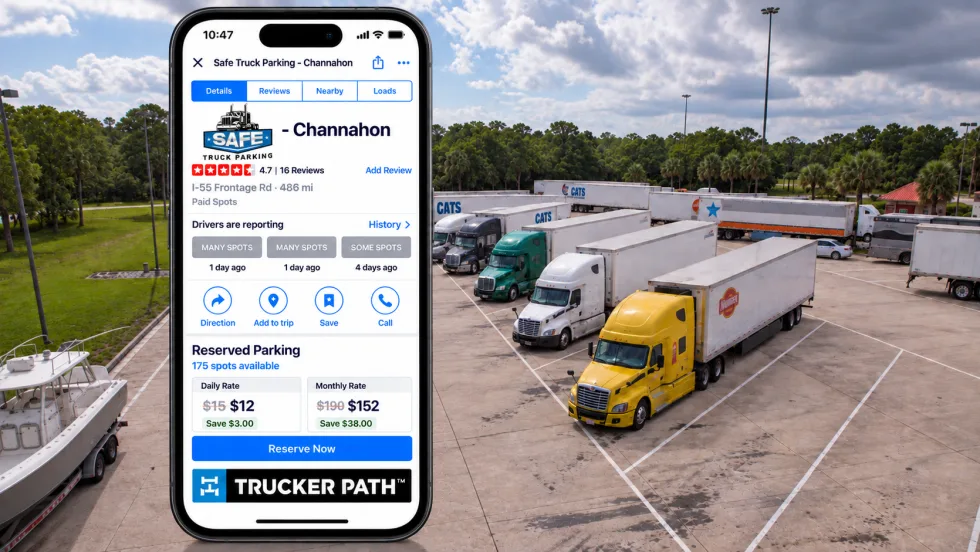
Trucker Path Expands Reserved Parking Network
Trucker Path has added close to 6,000 more truck parking spaces to its Trucker Path Reserved Parking Network with the addition of Safe Truck Parking.
Read More →
EEOC Sues Texas Trucking Company Over Driver Age Limits
The agency says Trancasa USA rejected applicants over 65 and applied tougher driving-record standards to those over 60.
Read More →
Nussbaum, Roehl Announce Second Driver Pay Increase This Year
This year has seen a swath of major truck driver pay increases as freight capacity has tightened.
Read More →
From One Generation to the Next: How Mentorship Builds Safer Truck Drivers
After three decades in trucking, Harold Perry shares what he's learned about driver safety, mentorship, and helping the next generation build confidence behind the wheel.
Read More →
Truck Drivers Need More Than Another Alert
Fleets have more visibility into truck health, safety events, and driver activity than ever. The next challenge is turning all that information into useful guidance for the person who has to decide what to do next.
Read More →
FMCSA Removes 110 Truck Driver Training Schools from Certified ELDT List
Federal regulators also are targeting more than 160 additional training providers and launching a nationwide audit of third-party CDL skills testers as part of a broader crackdown on trucking fraud.
Read More →
Hours of Service Pilot Programs: FMCSA Readies for 2027 Rollout
Two pilot programs could eventually reshape hours-of-service rules, giving truck drivers options to pause their 14-hour clock or use longer split sleeper rest periods.
Read More →