




Traffic Congestion Still a Problem, Study Says
Even though traffic congestion improved slightly in 2007, the roads are expected to be clogged again when the economy picks back up, according to a report issued by the Texas Transportation Institute
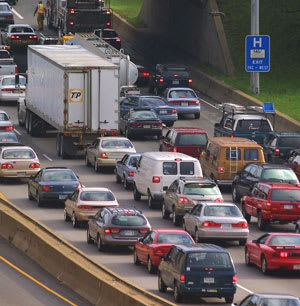
Even though traffic congestion improved slightly in 2007, the roads are expected to be clogged again when the economy picks back up, according to a report issued by the Texas Transportation Institute.
The 2009 Urban Mobility Report outlines critical steps that can be taken to improve traffic, including adding capacity in critical corridors.
According to the study, traffic is affecting America's 439 urban areas, and has gotten worse. In 2007, Americans had to drive 4.2 billion hours more and spend an extra 2.8 billion gallons of fuel as a result of congestion. This amounted to congestion costs of $87.2 billion, a rise of more than 50 percent over the previous decade.
While the rising cost of fuel in the last half of 2007 contributed to slight declines in traffic, the year still saw an increase of over $100 million from 2006 because of high fuel prices and truck delay. The report did point out that delay per traveler, or the number of hours of extra time commuters spend during rush hours, was 1.3 hours lower in 2007 than 2005.
"This change would be more hopeful if it was associated with something other than rising fuel prices (which occurred for a short time in 2005 and 2006 before the sustained increase in 2007 and 2008) and a slowing economy," the report said.
The American Trucking Associations released a statement saying the report shows that "it's time to get serious about highway infrastructure investment."
While public transportation could supplement highway capacity expansion on certain corridors in densely populated areas, ATA said, "highway improvements are the only viable, cost-effective solution to addressing congestion in the vast majority of U.S. communities." The TTI report found that 75 percent of travel time and congestion cost savings produced by public transportation systems were concentrated in just six cities, with New York City capturing half of the nationwide benefits.
To address the impending traffic issues, the report outlined the following recommendations:
* Get as much service as possible from what we have. In other words, low-cost improvements can go a long way with public support and rapid deployment. These include rapidly removing crashed vehicles, timing the traffic signals so that more vehicles see green lights, improving road and intersection designs, or adding a short section of roadway.
* Add capacity in critical corridors. The report suggests adding more road lanes, new streets and highways, new or expanded public transportation facilities and larger bus and rail fleets. These actions can allow for greater freight or person travel on roadways.
* Change the usage patterns. Things like flexible work hours, internet connections or phones allow employees to choose work schedules that not only meet their needs, but also reduce traveling in "rush hours."
* Provide choices. Solutions such as different routes, travel modes or lanes that involve a toll for high-speed and reliable, allowing travelers and shippers to customize their travel plans.
* Be realistic about finding solutions. Large urban areas and key activity centers will always be congested. Congestion can not be eliminated in all locations at all times.
The full report can be downloaded at mobility.tamu.edu.
More Drivers

Driver Trust Can Make or Break the Success of Fleet Safety Technology
New Teletrac Navman research suggests that onboarding, transparency about driver data, and positive feedback can play a significant role in how commercial drivers respond to safety and coaching technology.
Read More →
EEOC Sues KLLM Over Alleged Sex Discrimination in Driver Training
KLLM is facing a federal sex-discrimination lawsuit over policies the EEOC alleges put female truck driver trainees at a disadvantage.
Read More →
FMCSA Moves to Codify English Language Requirements for Commercial Drivers
By changing regulations on English-language proficiency requirements for commercial drivers, rather than relying on a guidance memo, the FMCSA said future administrations won't be able to walk back the Trump administration's stricter enforcement with just a memo.
Read More →
Drivers Put Western Star Trucks to the Test at Star Nation Experience
Watch to get an inside look at the Western Star trucks, technology, and community behind the Star Nation Experience 2026!
Read More →
Trump Administration Looks to Put More Veterans Behind the Wheel
The Freedom Haulers program pulls together existing and expanded programs at several federal agencies to recruit veterans to drive commercial heavy-duty trucks and cut the red tape for them to get a CDL, training, and employment.
Read More →
Putting Mack’s Command Steer to the Test
A test drive of Mack’s Command Steer active steering system evaluates how it can make truck driving easier and less tiring.
Read More →
Competition Heating Up for Truck Drivers
New report reveals rising driver hiring costs, the return of sign-on bonuses, growing AI advantages, and the operational factors shaping driver retention.
Read More →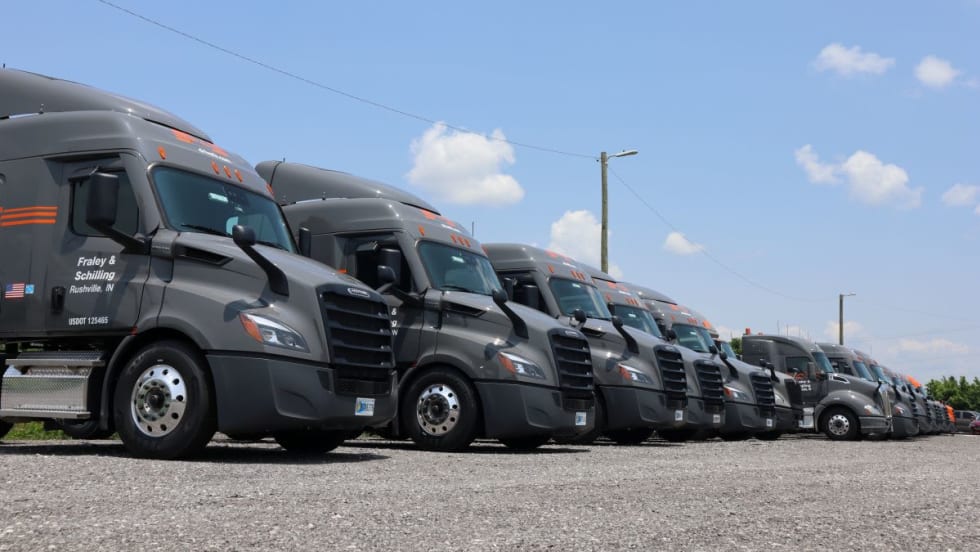
How Fraley & Schilling Improved Logbook Compliance by Over 50%
Fraley & Schilling needed a way to close a compliance workflow gap in its ELD system without adding more work from driver training, reminders, and back-office follow-ups. It found the answer in a custom driver app.
Read More →
Volvo Goes Gaming
Volvo has roared into American Truck Simulator with two new flagship trucks.
Read More →
What the Best Fleets to Drive For Teach About Driver Retention
Survey fatigue, AI-powered routing, owner-operator expectations, and the decline of social media all emerged as themes from this year's Best Fleets to Drive For program.
Read More →