





"It became clear during our research that no publication out there in the industry really gives the technician a clear-cut way to determine how to diagnose this problem."
TMC Developing S-Cam Brake Troubleshooting Guide
Work is underway on a long-overdue TMC Recommended Practices document addressing excessive applied stroke in S-cam brakes – a problem too often incorrectly addressed by adjusting the automatic brake slack adjuster.
March 8, 2018
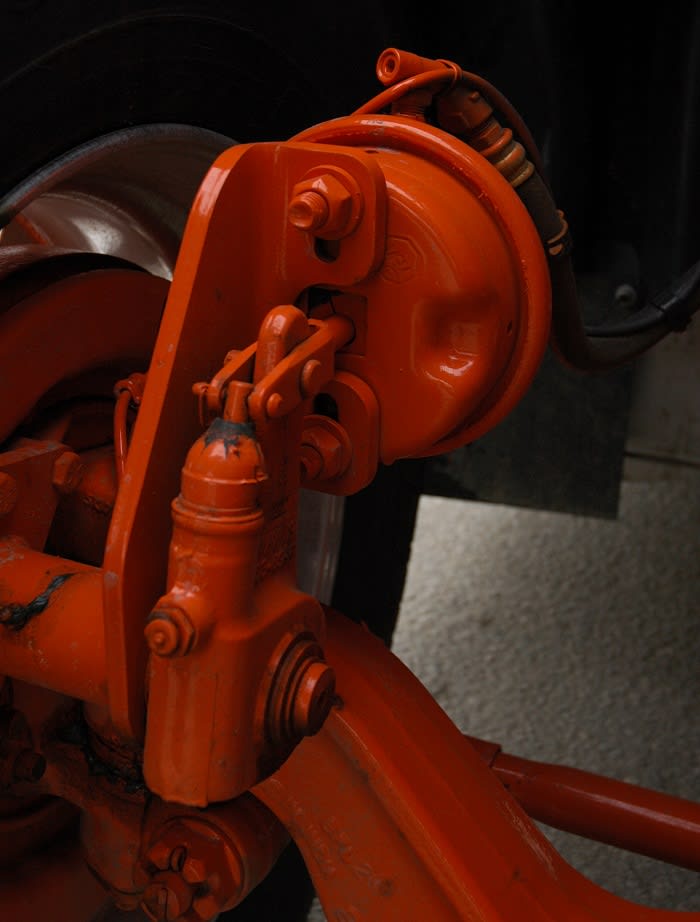
Ever since automatic brake adjusters (ABA, also called automatic slack adjusters) were first required by law in 1994, many drivers and surprisingly, brake technicians, still respond to an over-stroking S-cam brake by manually readjusting the device rather than determining the root cause of the problem. Photo: Jim Park
3 min to read
Work is underway on a long-overdue TMC Recommended Practices document addressing excessive applied stroke in S-cam brakes – a problem too often incorrectly addressed by adjusting the automatic brake slack adjuster. The RP will provide a diagnostic and troubleshooting guide to help technicians repair the actual cause of an brake taken out of service because of excessive push-rod travel.
Ever since automatic brake adjusters (ABA, also called automatic slack adjusters) were first required by law in 1994, many drivers and surprisingly, brake technicians, still respond to an over-stroking S-cam brake by manually readjusting the device rather than determining the root cause of the problem. Photo: Jim Park
Discussions took place during the March 5 S.6 Chassis & Brake Task Force meeting, "Proper Diagnosis of S-cam Out-of-service Criteria," at the annual meeting of the ATA's Technology & Maintenance Council meeting in Atlanta. The task force committee was refining the wording of the RP.
Ever since automatic brake adjusters (ABA, also called automatic slack adjusters) were first required by law in 1994, many drivers and surprisingly, brake technicians, still respond to an over-stroking S-cam brake by manually readjusting the device rather than determining the root cause of the problem. By design, an ABA will self-adjust based on either the application stroke (stroke-sensing ABA models) or the return stroke (clearance-sensing ABA models) of the adjuster and find their own stroke length based on the conditions it senses. Unfortunately, a manually readjusted ABA will return to an over-stroke condition in just a few brake applications if some other physical problem exists with the foundation brake, the parking brake or any other component in the wheel-end brake assembly.
This RP will walk the technician through a troubleshooting tree that will determine the cause of the over-stroke so appropriate steps can be taken to solve the problem.
"All too often, the root cause of the excessive applied stroke condition is not diagnosed properly," said task force chairman, Glen Cram of Meritor. "It became clear during our research that no publication out there in the industry really gives the technician a clear-cut way to determine how to diagnose this problem."
When complete, the RP will take the technician through an eight-step process from confirming that an over-stroke condition actually exists (not just a faulty stroke measurement) to removing the wheel and inspecting lining and drum condition as well as the physical condition of the foundation brake, from excessive axial rotation of the cam and/or faulty return springs. It will be structured in such a way that the least invasive and most-likely-cause steps come first. The final step will be how to test the ABA for proper function.
Why you shouldn't adjust your slack adjusters
The risk in manually adjusting ABAs (except when an ABA is first installed or when reinstalled following wheel-end work) lies in the potential for damage to the ABA or in wearing out the internal adjustment mechanism.
In 2003, the National Transportation Safety Board determined that repeated manual readjustment on an ABA led directly to a fatal collision between a dump truck and a passenger car in Glen Rock, Pennsylvania.
"The National Transportation Safety Board determines that the probable cause of this accident was the lack of oversight by [the company], which resulted in an untrained driver improperly operating an overloaded, air brake-equipped vehicle with inadequately maintained brakes. Contributing to the accident was the misdiagnosis of the truck's underlying brake problems by mechanics involved with the truck's maintenance; also contributing was a lack of readily available and accurate information about automatic slack adjusters and inadequate warnings about the safety problems caused by manually adjusting them."
When this RP is completed, the information technicians need will be easier to find and widely available to anyone working with automatic brake adjusters on heavy trucks.
More Maintenance

Sponsored•September 16, 2026
Color Match Smarter: Tools That Restore & Perform
For fleet managers and collision repair professionals keeping heavy-duty trucks on the road, getting the color right the first time isn't just about appearance — it's about efficiency, turnaround time, and bottom-line results. Discover how today's digital color tools are transforming the repair process from guesswork to precision.
Read More →
Wrong Repair Prompts Recall of Freightliner, Western Star 4x2 Trucks
DTNA is recalling more than 2,400 trucks that received an incompatible software fix instead of the hardware repair required to address brake valve corrosion.
Read More →
Truck Drivers Need More Than Another Alert
Fleets have more visibility into truck health, safety events, and driver activity than ever. The next challenge is turning all that information into useful guidance for the person who has to decide what to do next.
Read More →
The Maintenance Checks Trucking Fleets Should Prioritize Before Fall Freight Picks Up
Making it through August isn’t the same as being ready for the next several months of operation. Find out what systems may have suffered from summer heat and need to be checked out before fall.
Read More →
What Three Fleets Are Doing Differently When Buying Truck Parts in 2026
With freight improving but costs still climbing, fleet maintenance executives explain how they're balancing price, quality, and supplier relationships.
Read More →
Paccar Recalls 2027 Trucks Built This Summer for Possible Electrical Problem
The nearly 6,000 Kenworth and Peterbilt trucks in the recall could potentially lose engine power, among other things.
Read More →
Will API PC-12 Oil Change Trucking Fleet Maintenance?
The new API PC-12 heavy-duty engine oil category reflects the changing demands of modern diesel engines. But fleets like Foodliner are looking to getting their own data before making decisions on adopting the new oils and questions such as extending oil drain intervals.
Read More →
Brake Safety Week to Focus on Drums and Rotors
Commercial vehicle inspectors are focusing on truck brakes during CVSA's Brake Safety Week, August 23-29.
Read More →Possible Battery-Cable Fires Prompt Recall of 15,000+ International MV and HV Trucks
On the recalled vehicles, manufacturing variations can cause the battery interconnect cable to contact the auxiliary stud and hold down the bracket.
Read More →
Rush, MCT Team Up to Grow Refrigeration Service Network
The joint venture will operate MCT's network of Carrier Transicold dealerships and mobile service locations, with the companies promising greater service capacity and uptime for refrigerated fleets.
Read More →