




Study Recommends Infrastructure Overhaul
As the anticipated boost in demand for freight transportation approaches, the U.S. may need to give more urgency to congestion and transportation infrastructure
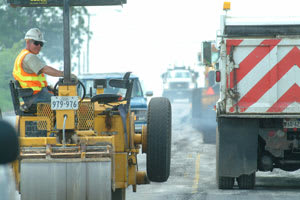
Copyright Texas Transportation Institute - 2004
As the anticipated boost in demand for freight transportation approaches, the U.S. may need to give more urgency to congestion and transportation infrastructure.
According to a recent study conducted by the Rand Corporation, the U.S. freight system is threatened by bottlenecks, inefficient use of infrastructure, disruptions as well as environmental and energy problems.
"There's an opportunity now for the United States to develop policies and plans that will improve the flexibility and security of the freight transportation system, which is currently vulnerable to a host of dangers that could cause costly disruptions, whether from a terrorist attack or a natural disaster, such as an earthquake," said Richard Hillestad, lead author of the study and senior principal research with Rand. "The whole functionality of freight transportation is built on reliability and speed, and those elements need to be protected."
Rand's research points out the importance of the freight transportation system, which moves about $40 billion worth of goods each day. If performance and efficiency of the system goes awry, the consequences fall on the consumer, who would have to pay higher prices, Rand says. In addition, capacity on the nation's highways, port and railroads are reaching their limits in key urban areas.
The research surrounding the study involved looking at relevant transportation reports and conducting interviews with operators of both U.S. and foreign ports, local and regional transportation planners, railroad executives, trucking and sea-shipping industry representatives and companies that use the freight transportation system, including large and small retailers, auto manufacturers, raw-material shippers and chemical-product suppliers.
Rand came up with four key freight transportation issues that need attention:
*Expanding the capacity of the U.S.' national and international freight systems. The study not only recommends increasing the number of roads and rail lines, but also advocates implementing regulations, pricing, technology, improved operating practices and selective infrastructure investments.
*Making the freight transportation system more adaptable, less vulnerable and more resilient, which could be done by conducting system-level modeling to find out where congestion occurs. Researchers also suggest that shippers use different ports, not simply the largest.
*Prioritizing energy and environmental issues related to freight transportation. Emissions can be reduced by boosting the operational efficiency of freight transportation. The industry could implement direct mitigation technologies such as cleaner fuel, better engines and more aerodynamic vehicles. Twenty-five percent of the nation's hydrocarbon fuel use is created by transportation, one-fourth of which is freight transportation.
*Emphasizing the importance of public and private investment in infrastructure.
The study was funded by the Dow Chemical Company, the U.S. Chamber of Commerce, the Port Authority of New York and New Jersey, Union Pacific Railroad, the Port of Long Beach and the Port of Los Angeles.
The study, "Fast Forward: Key Issues in Modernizing the U.S. Freight Transportation System for Future Economic Growth," is available at www.rand.org.
More Drivers

From One Generation to the Next: How Mentorship Builds Safer Truck Drivers
After three decades in trucking, Harold Perry shares what he's learned about driver safety, mentorship, and helping the next generation build confidence behind the wheel.
Read More →
Truck Drivers Need More Than Another Alert
Fleets have more visibility into truck health, safety events, and driver activity than ever. The next challenge is turning all that information into useful guidance for the person who has to decide what to do next.
Read More →
FMCSA Removes 110 Truck Driver Training Schools from Certified ELDT List
Federal regulators also are targeting more than 160 additional training providers and launching a nationwide audit of third-party CDL skills testers as part of a broader crackdown on trucking fraud.
Read More →
Hours of Service Pilot Programs: FMCSA Readies for 2027 Rollout
Two pilot programs could eventually reshape hours-of-service rules, giving truck drivers options to pause their 14-hour clock or use longer split sleeper rest periods.
Read More →
Medical Cards, English Proficiency Reshape Roadcheck Violations
Medical-card violations jumped to the top of the driver out-of-service list during CVSA’s 2026 International Roadcheck, while English-language proficiency violations appeared among the leading violations for the first time.
Read More →
Driver Trust Can Make or Break the Success of Fleet Safety Technology
New Teletrac Navman research suggests that onboarding, transparency about driver data, and positive feedback can play a significant role in how commercial drivers respond to safety and coaching technology.
Read More →
EEOC Sues KLLM Over Alleged Sex Discrimination in Driver Training
KLLM is facing a federal sex-discrimination lawsuit over policies the EEOC alleges put female truck driver trainees at a disadvantage.
Read More →
FMCSA Moves to Codify English Language Requirements for Commercial Drivers
By changing regulations on English-language proficiency requirements for commercial drivers, rather than relying on a guidance memo, the FMCSA said future administrations won't be able to walk back the Trump administration's stricter enforcement with just a memo.
Read More →
Drivers Put Western Star Trucks to the Test at Star Nation Experience
Watch to get an inside look at the Western Star trucks, technology, and community behind the Star Nation Experience 2026!
Read More →
Trump Administration Looks to Put More Veterans Behind the Wheel
The Freedom Haulers program pulls together existing and expanded programs at several federal agencies to recruit veterans to drive commercial heavy-duty trucks and cut the red tape for them to get a CDL, training, and employment.
Read More →