




Study Cites Cost of Highway Bottlenecks to Truckers
Bottlenecks on highways throughout the nation idled trucks for more than 243 million hours in 2004, costing U.S. trucking companies $7.8 billion, according to a study prepared for the Federal Highway Administration.
Bottlenecks on highways throughout the nation idled trucks for more than 243 million hours in 2004, costing U.S. trucking companies $7.8 billion, according to a study prepared for the Federal Highway Administration.
The study by Cambridge Systematics Inc. in association with the Battelle Memorial Institute is an initial effort to identify and quantify highway bottlenecks that delay trucks and increase costs to businesses and consumers. It found the worst bottlenecks in Los Angeles, New York, Chicago, Atlanta, Dallas-Fort Worth, Denver, Columbus and Portland, Ore.
The study estimates a direct user delay cost of $32.15 per hour based on four major types of truck-related delays along freight corridors, including constraints at interchanges, signalized intersections, hold ups caused by steep grades and lane reductions.
When truck deliveries are delayed by congestion, freight transportation costs increase due to unnecessary fuel consumption, lost driver time and productivity, and disruption of pick-up and delivery schedules, particularly with critical just-in-time freight.
Overall, bottlenecks account for 40 percent of vehicle delays, with the balance caused by construction work zones, crashes, breakdowns, bad weather and poor signal timing.
“Ultimately, it is the consumer who will pay the price when increasing congestion forces the cost of goods on store shelves go up,” said Bill Graves, president and CEO of the American Trucking Associations. “This should encourage all Americans to insist on highway projects that improve the mobility and reliability of freight. The Congress now has a roadmap to follow when making critical decisions about how to invest scarce transportation resources.”
“Bottlenecks that harm truckers hurt other highway users and the public at-large,” said Greg Cohen, president and CEO of the American Highway Users Alliance. “Unfortunately, all levels of government are failing to focus their resources on the efficient movement of goods. Yet the societal benefits of a national plan to fix the worst freight chokepoints would be astounding: Not only money, time and hundreds of millions of gallons in diesel fuel would be saved, but roads would be safer, air pollution and greenhouse gas emissions would decrease dramatically.”
Nearly 40 percent of the approximately $40 billion in annual revenue collected into the federal Highway Trust Fund comes from fuel taxes paid by trucks, highway use taxes, sales taxes and tire taxes. Billions more in state diesel and truck registration fees are collected. However, a significant amount of this revenue is diverted to projects that have little or no benefit to the truckers paying the taxes.
Increased congestion is hitting the trucking industry at a time when the economy is relying on trucks to haul more goods. Trucking is projected to haul 13 billion tons of freight by 2016, compared with 9.8 billion tons in 2004. By 2016, ATA projects 3.7 million “18 wheelers” will be operating on the nation’s highways, up from 2.7 million in 2004. Yet most state transportation plans do not anticipate breaking with the current trend of limiting highway capacity expansion, which has caused the current congestion problems.
The study authors concluded that these bottlenecks are a federal concern because “they are a significant national problem for trucking and the efficient operation of the national freight transportation system.” The report recommends, therefore, that federal resources should focus on improving highway bottlenecks.
For its part, the trucking industry, through a partnership between the FHWA and the American Transportation Research Institute, is developing a “Freight Performance Measures” initiative that will promote future highway efficiency tactics and strategies through a freight-focused lens. The joint effort will use practical travel time averages, reliability indices, and truck position data along freight-significant corridors.
Of note, the report indicates the majority of bottlenecks occur on the nation’s Interstate Highway System. Last week in Washington, D.C., an alliance of interstate highways users kicked off a year long commemoration of the 50th anniversary of the system with “The Interstate of the Future” as its theme.
More Drivers

When Language Stops the Truck: The Return of ELP Out-of-Service Orders
English language proficiency rules for commercial drivers aren’t new, but renewed out-of-service enforcement has raised the stakes. Here’s what carriers need to know before a driver reaches a roadside inspection.
Read More →
Samsara Launches Custom AI Agent Builder
Agent Studio lets fleets create AI tools for hours-of-service monitoring, reporting and driver support, including agents that communicate by phone.
Read More →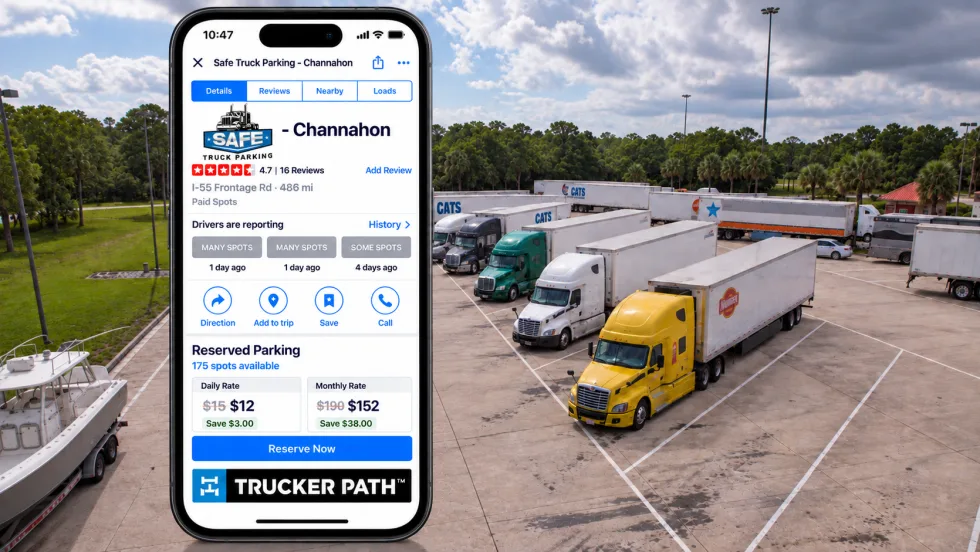
Trucker Path Expands Reserved Parking Network
Trucker Path has added close to 6,000 more truck parking spaces to its Trucker Path Reserved Parking Network with the addition of Safe Truck Parking.
Read More →
EEOC Sues Texas Trucking Company Over Driver Age Limits
The agency says Trancasa USA rejected applicants over 65 and applied tougher driving-record standards to those over 60.
Read More →
Nussbaum, Roehl Announce Second Driver Pay Increase This Year
This year has seen a swath of major truck driver pay increases as freight capacity has tightened.
Read More →
From One Generation to the Next: How Mentorship Builds Safer Truck Drivers
After three decades in trucking, Harold Perry shares what he's learned about driver safety, mentorship, and helping the next generation build confidence behind the wheel.
Read More →
Truck Drivers Need More Than Another Alert
Fleets have more visibility into truck health, safety events, and driver activity than ever. The next challenge is turning all that information into useful guidance for the person who has to decide what to do next.
Read More →
FMCSA Removes 110 Truck Driver Training Schools from Certified ELDT List
Federal regulators also are targeting more than 160 additional training providers and launching a nationwide audit of third-party CDL skills testers as part of a broader crackdown on trucking fraud.
Read More →
Hours of Service Pilot Programs: FMCSA Readies for 2027 Rollout
Two pilot programs could eventually reshape hours-of-service rules, giving truck drivers options to pause their 14-hour clock or use longer split sleeper rest periods.
Read More →
Medical Cards, English Proficiency Reshape Roadcheck Violations
Medical-card violations jumped to the top of the driver out-of-service list during CVSA’s 2026 International Roadcheck, while English-language proficiency violations appeared among the leading violations for the first time.
Read More →