




Retail Fuel Marketers Announce New Coalition
A national coalition of associations representing independent petroleum marketers has formed the Partnership for Uniform Marketing Practices (PUMP). The organization's focus is to ensure fair competition,
A national coalition of associations representing independent petroleum marketers has formed the Partnership for Uniform Marketing Practices (PUMP). The organization's focus is to ensure fair competition,
cost-effective distribution and equitable treatment of consumers in addressing the issue of temperature variation in the sale of gasoline and diesel fuels.
"Our coalition believes that consumers must be provided with reliable and accurate practices in the delivery of fuel at the pump," said Lisa Mullings, president and CEO of NATSO, an association representing truckstops and travel plazas and a founding member of PUMP. "That's why we have joined together in support of a complete and thorough examination of fuel dispensing practices to fully understand and evaluate the impact of temperature variation on consumers."
Retailers have banded together to fight recent allegations that consumers are receiving less than they pay for as the result of retailers selling gasoline at temperatures higher than standard 60-degree reference temperature. Based on unverifiable data provided by the Owner-Operator Independent Drivers Association to the Kansas City Star, proponents are demanding that retail gas marketers install expensive automatic temperature compensation (ATC) devices, claiming significant, but unsubstantiated, savings for consumers.
PUMP members counter that there is currently no accurate or statistically reliable data to suggest that consumers are being adversely impacted under the existing system. Coalition members maintain that any variation from the 60-degree standard reference temperature balances out for consumers based on year-round, seasonal averages. The coalition further emphasizes that proponents of ATC ignore the fact that the costs associated with enforcing and implementing the proposed regulatory changes would most likely be borne by the very consumers they claim to be protecting.
"There's simply too much at stake for consumers, retailers, and state and local governments to rush to an ill-informed judgment on this issue," said Jay McKeeman, vice president of Government Relations and Communications for the California Independent Oil Marketers Association (CIOMA) and a founding member of the PUMP coalition. "Before costly solutions are forced on consumers and retailers, it's imperative to confirm whether the problem is real, how widespread it is, and whether the costs of implementing any solution will be offset by a real and measurable economic benefit, if any, to the consumer."
The coalition is asking government officials and regulators to conduct a comprehensive cost-benefit study of the issue to determine the real costs to consumers compared to the benefits from ATC before any decision is made relative to the use of temperature compensation devices.
More Drivers
Trucker Path Expands Reserved Parking Network
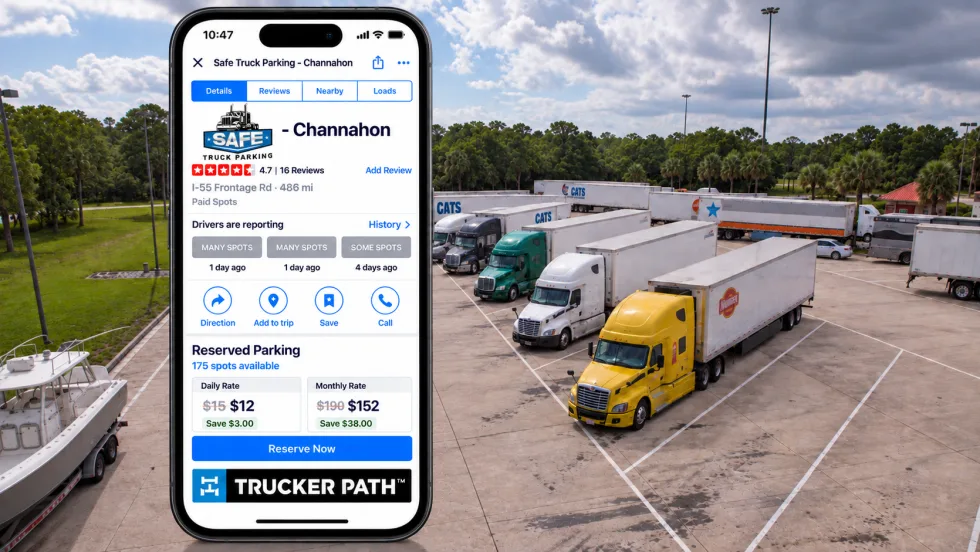
Trucker Path has added close to 6,000 more truck parking spaces to its Trucker Path Reserved Parking Network with the addition of Safe Truck Parking.
Read More →
EEOC Sues Texas Trucking Company Over Driver Age Limits
The agency says Trancasa USA rejected applicants over 65 and applied tougher driving-record standards to those over 60.
Read More →
Nussbaum, Roehl Announce Second Driver Pay Increase This Year
This year has seen a swath of major truck driver pay increases as freight capacity has tightened.
Read More →
From One Generation to the Next: How Mentorship Builds Safer Truck Drivers
After three decades in trucking, Harold Perry shares what he's learned about driver safety, mentorship, and helping the next generation build confidence behind the wheel.
Read More →
Truck Drivers Need More Than Another Alert
Fleets have more visibility into truck health, safety events, and driver activity than ever. The next challenge is turning all that information into useful guidance for the person who has to decide what to do next.
Read More →
FMCSA Removes 110 Truck Driver Training Schools from Certified ELDT List
Federal regulators also are targeting more than 160 additional training providers and launching a nationwide audit of third-party CDL skills testers as part of a broader crackdown on trucking fraud.
Read More →
Hours of Service Pilot Programs: FMCSA Readies for 2027 Rollout
Two pilot programs could eventually reshape hours-of-service rules, giving truck drivers options to pause their 14-hour clock or use longer split sleeper rest periods.
Read More →
Medical Cards, English Proficiency Reshape Roadcheck Violations
Medical-card violations jumped to the top of the driver out-of-service list during CVSA’s 2026 International Roadcheck, while English-language proficiency violations appeared among the leading violations for the first time.
Read More →
Driver Trust Can Make or Break the Success of Fleet Safety Technology
New Teletrac Navman research suggests that onboarding, transparency about driver data, and positive feedback can play a significant role in how commercial drivers respond to safety and coaching technology.
Read More →
EEOC Sues KLLM Over Alleged Sex Discrimination in Driver Training
KLLM is facing a federal sex-discrimination lawsuit over policies the EEOC alleges put female truck driver trainees at a disadvantage.
Read More →