




Report: Number of Employed Diesel Techs Increases
The total number of diesel technicians employed in 2021 was 293,200, a 6.5% increase from 2020, according to the TechForce Foundation. But new entrant techs have less training than before.


The number of workers projected to leave the occupation as a diesel tech is outpacing new growth by more than a 5:1 ratio.
Graphic: TechForce Foundation
The combination of a higher number of technicians employed in diesel tech positions in 2021, together with a lower number of post-secondary graduates, means that the new entrant technicians to the workforce have less training, according to the TechForce Foundation’s 2022 report on the supply and demand of technicians.
Diesel Tech Employment
The total number of diesel technicians employed in 2021 was 293,200, a 6.5% increase from 2020 when the number of diesel technicians was at its lowest (275,400) since this report began tracking this data in 2016.
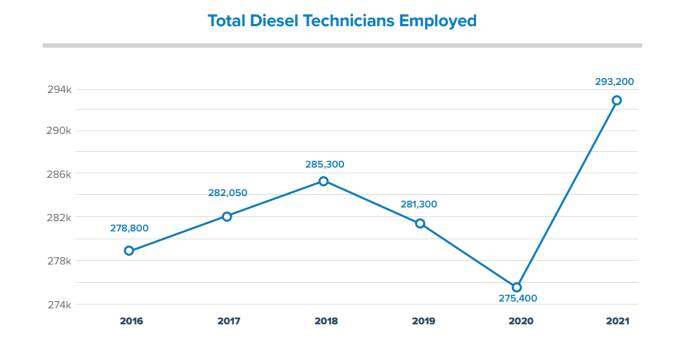
After employment peaked in 2018, the number was on a downward slide until this 2021.
Graph: TechForce Foundation
After employment peaked in 2018 at 285,300, the number was on a downward slide until this 2021.
New Entrants into the Diesel Tech Occupation
By definition, new entrant technicians are those entering the occupation for the first time, as opposed to experienced technicians who may be switching employers. These new entrant techs come not only from post-secondary training programs, but also from high school shop programs and “off-the-street,” with no training at all.
The number of workers projected to leave this occupation as a diesel tech is outpacing new growth by more than a 5:1 ratio. From 2022 to 2026, just under 28,000 new positions will be attributed to growth demand, as opposed to over 141,000 during this same period due to occupational separations.
Unfilled positions carried over from 2021 add another 7,650 positions to the total.
The BLS Replacement Rate for diesel technicians has remained steady at 9.1%, consistent with the rate in 2020.
Graduate Levels of Diesel Techs
Diesel techs who completed post-secondary education had been on an upward trend until 2017, when they totaled 12,807. Beginning in 2018, however, they have been dropping each year. For 2021, the number of completions is now at 10,699.
“The area of most concern is the prolonged drop in the number of students completing post-secondary programs for technician roles,” according to the report. “These reductions are not short-term aberrations by any means.”
In the case of diesel techs, the downward trend began in 2018. Across the industry, we are looking at a 4-to-9-year downward trend, the report found.
Public, two-year schools and private, for-profit two-year schools graduate the highest number of students in the diesel sector.
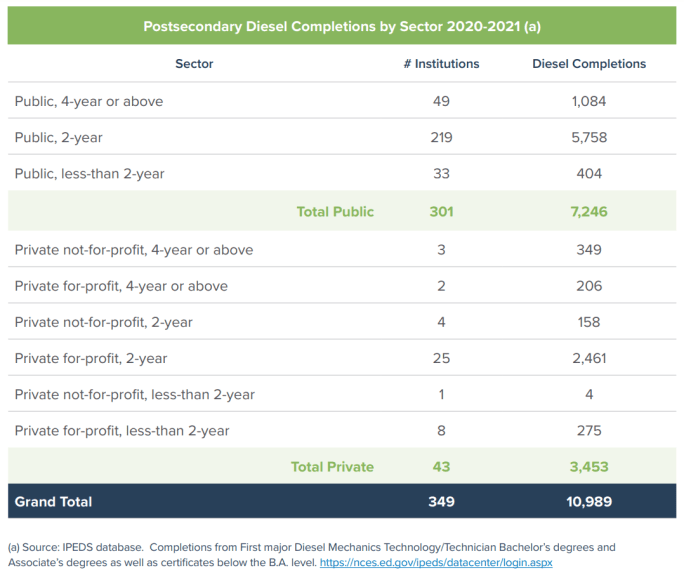
Beginning in 2018, the number of diesel techs who completed post-secondary education has been dropping each year.
Chart: TechForce Foundation
Top Schools
In 2021, the top five largest providers of diesel techs who completed post-secondary education were:
- University of Northwestern Ohio: 285 students
- WyoTech: 276 students
- Universal Technical Institute of Arizona: 263 students
- Texas State Technical College: 209 students
- Maysville Community and Technical College: 185 students
More Maintenance

Shell Prepares Rotella Oils for 2027
New CL-4 and FB-4 formulations will begin arriving in early 2027, with improved protection against oil breakdown, wear and deposits, according to Shell.
Read More →
Mack Expands Extended Coverage With Four Chassis System Plans
Mack Trucks' new system-specific coverage options allow heavy-duty fleets to select protection for driveline, cab, HVAC, electronics, and advanced safety components.
Read More →
What an Out-of-Service Order Really Costs, and How to Plan for One
The repair invoice is the first number you see — and often one of the smallest. Here’s what else an out-of-service order can cost a fleet, and how planning can reduce the damage.
Read More →

International Launches Online Truck Parts Store
Fleetrite.com lets fleets and repair shops find OEM and all-makes parts, check prices and availability, and order without calling a parts counter.
Read More →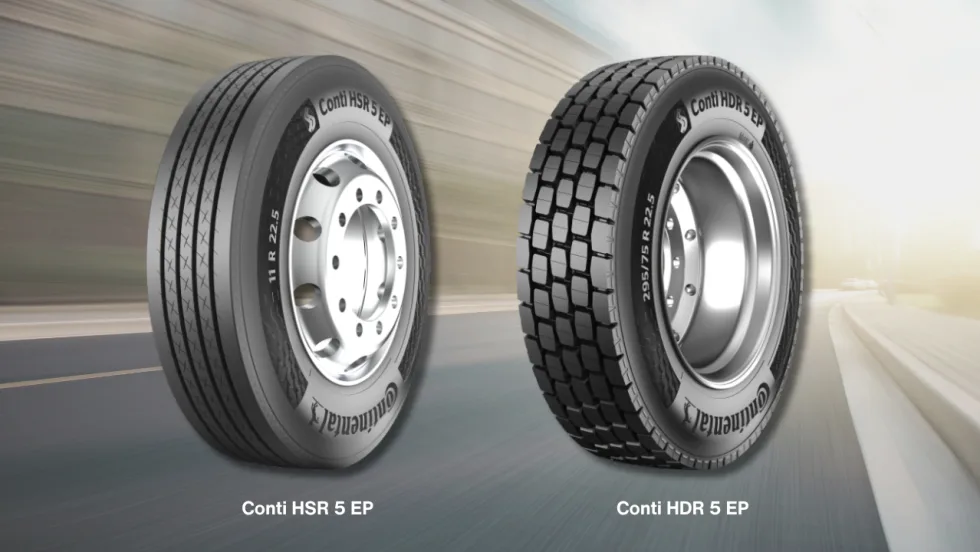
Continental Introduces New Regional Truck Tires
Continental says its new Generation 5 steer and drive tires for regional operations offer longer tread life, with estimated mileage gains of 22% and 19%, respectively.
Read More →
How AI Can Help Your Techs’ Efficiency
The technician shortage isn't going away, and no single fix can close the gap on its own. Trent Broberg makes the case that AI's real job in the shop is protecting the billable hours and job satisfaction of the techs you already have, not asking them to work faster.
Read More →
Wrong Repair Prompts Recall of Freightliner, Western Star 4x2 Trucks
DTNA is recalling more than 2,400 trucks that received an incompatible software fix instead of the hardware repair required to address brake valve corrosion.
Read More →
Truck Drivers Need More Than Another Alert
Fleets have more visibility into truck health, safety events, and driver activity than ever. The next challenge is turning all that information into useful guidance for the person who has to decide what to do next.
Read More →
The Maintenance Checks Trucking Fleets Should Prioritize Before Fall Freight Picks Up
Making it through August isn’t the same as being ready for the next several months of operation. Find out what systems may have suffered from summer heat and need to be checked out before fall.
Read More →
What Three Fleets Are Doing Differently When Buying Truck Parts in 2026
With freight improving but costs still climbing, fleet maintenance executives explain how they're balancing price, quality, and supplier relationships.
Read More →