





Related – Report: Most Fleets Should Consider Low-Viscosity Oil for Fuel Economy
Petroleum Institute Campaigns to Educate About New Oils
The American Petroleum Institute is ramping up efforts to educate diesel engine users about the two new diesel engine oil standards it approved earlier this year, API CK-4 and FA-4.
July 21, 2016
4 min to read

The American Petroleum Institute is ramping up efforts to educate diesel engine users about the two new diesel engine oil standards it approved earlier this year, API CK-4 and FA-4.
Having two different oil categories is likely to cause confusion among truck owners. And putting the wrong oil in your engine will at the least mean it won’t perform like it should and could cause engine damage, according to Kevin Ferrick, senior manager for engine oil licensing at API.
That’s because FA-4 was designed for use in new 2017-model engines that are required to get better fuel economy for lower greenhouse gas emissions. The different viscosity parameters needed in these oils generally won’t work well in older engines.
The new oil categories were the results of a years-long process to develop new standards and tests, a process during which the new oils were known as PC-11.
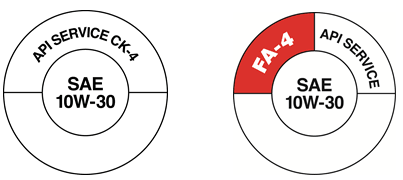
API CK-4 and FA-4 will first appear in the API Service Symbol “Donut” on Dec 1.
Most truck and engine makers will likely recommend truck owners that are currently using API-licensed CJ-4 engine oils start using licensed API CK-4 oils as soon as they are available. API CK-4 oils have been designed to better protect existing diesel engines.
API FA-4 oils, however, are different. The FA-4 standard describes certain lower viscosity oils specifically formulated for use in diesel engines designed to meet 2017 model year on-highway greenhouse gas (GHG) emission standards.
In general, FA-4 oils are not considered backward-compatible. Some engine manufacturers might recommend API FA-4 oils for their previous model-year vehicles, but it is more likely that manufacturers will recommend the oils starting with the 2017 model year engines.
Making things more confusing is the different viscosity standards go beyond the basic 10W-40 or 5W-30 type of nomenclature. In fact, you could have two 10W-30 oils on the shelf, but one would be an FA-4 and one would be a CK-4.
While lower-viscosity oils in general have been shown to improve fuel economy, the FA-4 oils must perform to a more stringent “high-temp/high-shear” viscosity test to stand up to the more punishing environment in the new engines.
Add to all this the fact that most fleets would prefer to run a single oil, and you have potential for “misapplication” — using the wrong oil in your engine.
One way the API has come up with to help truck owners identify the right oil is by changing the Service Symbol Donut. For FA-4 oils, the top of the donut has been divided, with FA-4 on the left-hand side. That part of the donut also will be shaded black or red.
In addition, the API, which in the past has typically let oil marketers handle the announcements about new categories, is using everything from interviews with the press to radio and print ads to a website and social media to get the word out under the moniker “Diesel Oil Matters.” There’s a website, www.dieseloilmatters.com, a Facebook page, and a Twitter feed under @dieselmatters.
Ferrick said he’s concerned that some truck owners “might believe that all oils are the same, and in this case this is not true. If you have two 10w30s side by side on the shelf, we’re worried they may mistakenly grab the wrong one.
"The only way we know to mitigate that is to do the two things we’ve done. We named the oils differently — we called it FA-4 and CK-4, we didn’t call it CK-4A and CK-4B – and we put a new API donut on the FA 4 without changing the CK 4 donut. Between those two things, we hope we get enough information out through our campaign to educate consumers, and if not we hope the difference in the donut will give them pause.”
For fleets that aren’t buying oils off the shelf, Ferrick says, “the other thing I would say gives me some concern is there are a lot of fleets used to having only one oil. They need to come to grips with the idea that as they get new equipment, they may need to start carrying a second oil.”
More Maintenance

Sponsored•September 16, 2026
Color Match Smarter: Tools That Restore & Perform
For fleet managers and collision repair professionals keeping heavy-duty trucks on the road, getting the color right the first time isn't just about appearance — it's about efficiency, turnaround time, and bottom-line results. Discover how today's digital color tools are transforming the repair process from guesswork to precision.
Read More →
Wrong Repair Prompts Recall of Freightliner, Western Star 4x2 Trucks
DTNA is recalling more than 2,400 trucks that received an incompatible software fix instead of the hardware repair required to address brake valve corrosion.
Read More →
Truck Drivers Need More Than Another Alert
Fleets have more visibility into truck health, safety events, and driver activity than ever. The next challenge is turning all that information into useful guidance for the person who has to decide what to do next.
Read More →
The Maintenance Checks Trucking Fleets Should Prioritize Before Fall Freight Picks Up
Making it through August isn’t the same as being ready for the next several months of operation. Find out what systems may have suffered from summer heat and need to be checked out before fall.
Read More →
What Three Fleets Are Doing Differently When Buying Truck Parts in 2026
With freight improving but costs still climbing, fleet maintenance executives explain how they're balancing price, quality, and supplier relationships.
Read More →
Paccar Recalls 2027 Trucks Built This Summer for Possible Electrical Problem
The nearly 6,000 Kenworth and Peterbilt trucks in the recall could potentially lose engine power, among other things.
Read More →
Will API PC-12 Oil Change Trucking Fleet Maintenance?
The new API PC-12 heavy-duty engine oil category reflects the changing demands of modern diesel engines. But fleets like Foodliner are looking to getting their own data before making decisions on adopting the new oils and questions such as extending oil drain intervals.
Read More →
Brake Safety Week to Focus on Drums and Rotors
Commercial vehicle inspectors are focusing on truck brakes during CVSA's Brake Safety Week, August 23-29.
Read More →
Possible Battery-Cable Fires Prompt Recall of 15,000+ International MV and HV Trucks
On the recalled vehicles, manufacturing variations can cause the battery interconnect cable to contact the auxiliary stud and hold down the bracket.
Read More →
Rush, MCT Team Up to Grow Refrigeration Service Network
The joint venture will operate MCT's network of Carrier Transicold dealerships and mobile service locations, with the companies promising greater service capacity and uptime for refrigerated fleets.
Read More →