




Obama Administration Calls for High-Speed Rail to Address Congestion Issues
The Obama administration announced a new U.S. push to transform travel in America, creating high-speed rail lines from city to city, reducing dependence on cars and planes, reducing congestion and greenhouse gases, and spurring economic development
The Obama administration announced a new U.S. push to transform travel in America, creating high-speed rail lines from city to city, reducing dependence on cars and planes, reducing congestion and greenhouse gases, and spurring economic development.
President Obama released a strategic plan outlining his vision for high speed rail in America. The plan identifies $8 billion provided in the American Recovery and Reinvestment Act passed earlier this year, plus $1 billion a year for five years requested in the federal budget, as a down payment to jump-start a potential world-class passenger rail system and set the direction of transportation policy for the future.
The plan identifies two types of projects for funding. One would create new corridors for world-class high-speed rail like the kind found in Europe and Japan. Another would involve making train service along existing rail lines incrementally faster.
The strategic plan will be followed by detailed guidance for state and local applicants. By late summer, the Federal Railroad Administration will begin awarding the first round of grants.
The report identifies 10 high-speed rail corridors as potential recipients of federal funding: California, Pacific Northwest, South Central, Gulf Coast, Chicago Hub Network, Florida, Southeast, Keystone, Empire and Northern New England. Also, opportunities exist for the Northeast Corridor from Washington to Boston to compete for funds to improve the nation's only existing high-speed rail service.
"My high-speed rail proposal will lead to innovations that change the way we travel in America," said President Obama. "We must start developing clean, energy-efficient transportation that will define our regions for centuries to come... High-speed rail is long-overdue, and this plan lets American travelers know that they are not doomed to a future of long lines at the airports or jammed cars on the highways."
Secretary of Transportation Ray LaHood put it this way: "We simply can't build the economy of the future on the transportation networks of the past."
Read more about the administration's high-speed passenger rail plan at www.fra.dot.gov/us/content/31.
More Drivers

Nussbaum, Roehl Announce Second Driver Pay Increase This Year
This year has seen a swath of major truck driver pay increases as freight capacity has tightened.
Read More →
From One Generation to the Next: How Mentorship Builds Safer Truck Drivers
After three decades in trucking, Harold Perry shares what he's learned about driver safety, mentorship, and helping the next generation build confidence behind the wheel.
Read More →
Truck Drivers Need More Than Another Alert
Fleets have more visibility into truck health, safety events, and driver activity than ever. The next challenge is turning all that information into useful guidance for the person who has to decide what to do next.
Read More →
FMCSA Removes 110 Truck Driver Training Schools from Certified ELDT List
Federal regulators also are targeting more than 160 additional training providers and launching a nationwide audit of third-party CDL skills testers as part of a broader crackdown on trucking fraud.
Read More →
Hours of Service Pilot Programs: FMCSA Readies for 2027 Rollout
Two pilot programs could eventually reshape hours-of-service rules, giving truck drivers options to pause their 14-hour clock or use longer split sleeper rest periods.
Read More →
Medical Cards, English Proficiency Reshape Roadcheck Violations
Medical-card violations jumped to the top of the driver out-of-service list during CVSA’s 2026 International Roadcheck, while English-language proficiency violations appeared among the leading violations for the first time.
Read More →
Driver Trust Can Make or Break the Success of Fleet Safety Technology
New Teletrac Navman research suggests that onboarding, transparency about driver data, and positive feedback can play a significant role in how commercial drivers respond to safety and coaching technology.
Read More →
EEOC Sues KLLM Over Alleged Sex Discrimination in Driver Training
KLLM is facing a federal sex-discrimination lawsuit over policies the EEOC alleges put female truck driver trainees at a disadvantage.
Read More →
FMCSA Moves to Codify English Language Requirements for Commercial Drivers
By changing regulations on English-language proficiency requirements for commercial drivers, rather than relying on a guidance memo, the FMCSA said future administrations won't be able to walk back the Trump administration's stricter enforcement with just a memo.
Read More →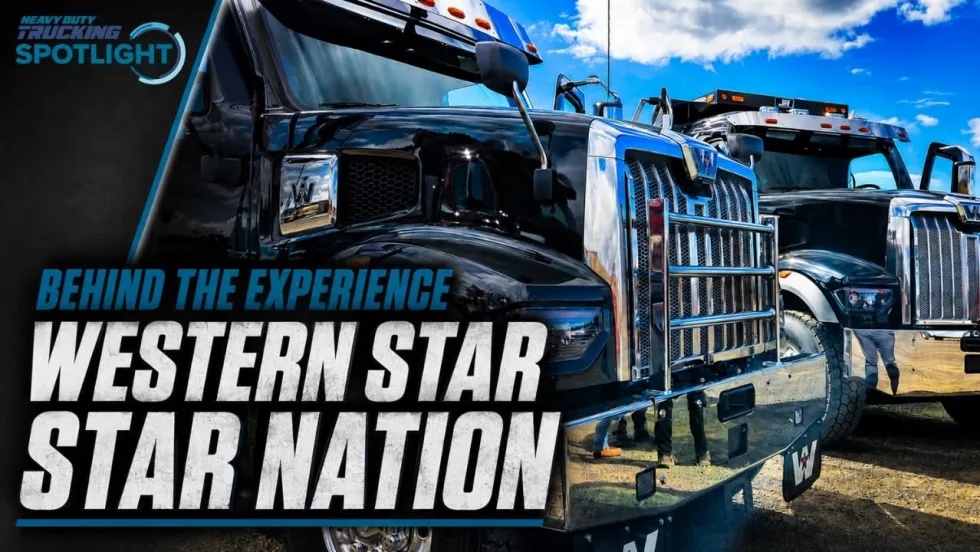
Drivers Put Western Star Trucks to the Test at Star Nation Experience
Watch to get an inside look at the Western Star trucks, technology, and community behind the Star Nation Experience 2026!
Read More →