




Mineta: Private Sector Must Get Involved in Transportation Projects
U.S. investors, including financial, construction and engineering firms, must begin investing in highway, airport and transit projects to help keep pace with the demands of a rapidly growing economy, Secretary of Transportation Norman Y. Mineta
U.S. investors, including financial, construction and engineering firms, must begin investing in highway, airport and transit projects to help keep pace with the demands of a rapidly growing economy, Secretary of Transportation Norman Y. Mineta
said Tuesday at the NASDAQ market in New York City.
Mineta was in New York to outline a new national congestion relief initiative, National Strategy to Reduce Congestion on America’s Transportation Network, and discuss the role the private sector will play in the new plan. He warned that congestion was costing America $200 billion a year, that traffic jams alone waste 2.3 billion gallons of gasoline and 3.7 billion hours each year and that airline delays were robbing the economy of $9.7 billion annually.
The Secretary called on American businesses to get involved in financing and operating transportation networks saying “we know that many private firms are literally knocking on doors in state capitals across the country, willing to invest billions of dollars in transportation projects.”
But, he added that “while many of these firms are international, we believe that transportation infrastructure will be an increasingly attractive opportunity for American investors.”
He announced that, as part of the new initiative, the Department of Transportation was launching an effort to educate state and local officials about the new concept of private transportation financing, adding that he will work to encourage more states to pass the legislation needed to attract billions in new funding, investment and management of transportation projects.
“Private capital will give those communities willing to embrace it an opportunity to augment public funds in order to complete critical transit and highway projects,” Mineta said, adding that “we will never succeed in making today’s traffic a thing of the past without the involvement of this nation’s private sector.”
The secretary noted that the private sector wouldn’t be alone. He said that over the coming months the Department would focus federal resources, funding, staff and technology to cut traffic jams, relieve freight bottlenecks and reduce flight delays. Mineta said he was convening the first meeting of the new highway commission today and said he would task it with crafting “bold” solutions to fund the burgeoning highway and transit system.
“Congestion doesn’t have to be a fact of life,” Mineta said. “We are not going to let transportation be the chokepoint of our economic activities.
To download a copy of the plan, please go to http://isddc.dot.gov/OLPFiles/OST/012988.pdf.
More Drivers
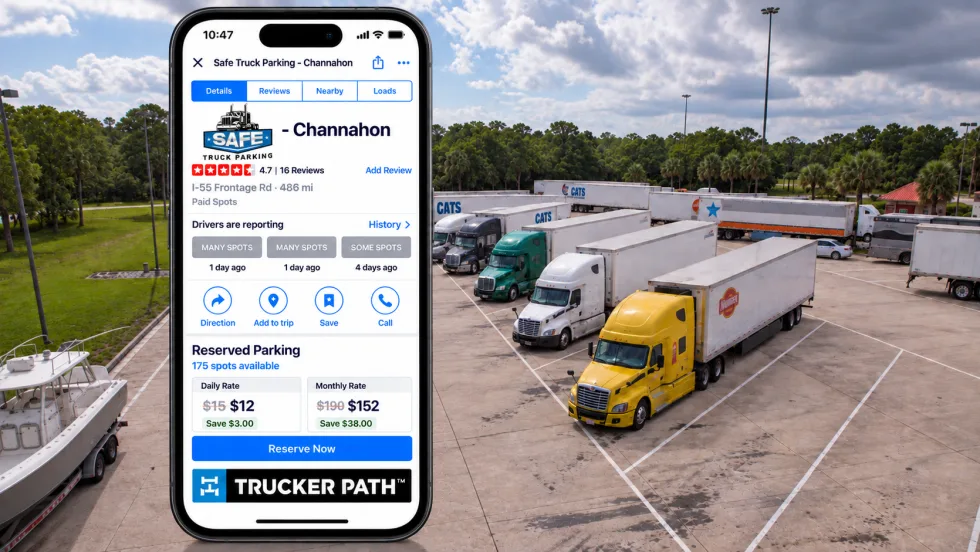
Trucker Path Expands Reserved Parking Network
Trucker Path has added close to 6,000 more truck parking spaces to its Trucker Path Reserved Parking Network with the addition of Safe Truck Parking.
Read More →
EEOC Sues Texas Trucking Company Over Driver Age Limits
The agency says Trancasa USA rejected applicants over 65 and applied tougher driving-record standards to those over 60.
Read More →
Nussbaum, Roehl Announce Second Driver Pay Increase This Year
This year has seen a swath of major truck driver pay increases as freight capacity has tightened.
Read More →
From One Generation to the Next: How Mentorship Builds Safer Truck Drivers
After three decades in trucking, Harold Perry shares what he's learned about driver safety, mentorship, and helping the next generation build confidence behind the wheel.
Read More →
Truck Drivers Need More Than Another Alert
Fleets have more visibility into truck health, safety events, and driver activity than ever. The next challenge is turning all that information into useful guidance for the person who has to decide what to do next.
Read More →
FMCSA Removes 110 Truck Driver Training Schools from Certified ELDT List
Federal regulators also are targeting more than 160 additional training providers and launching a nationwide audit of third-party CDL skills testers as part of a broader crackdown on trucking fraud.
Read More →
Hours of Service Pilot Programs: FMCSA Readies for 2027 Rollout
Two pilot programs could eventually reshape hours-of-service rules, giving truck drivers options to pause their 14-hour clock or use longer split sleeper rest periods.
Read More →
Medical Cards, English Proficiency Reshape Roadcheck Violations
Medical-card violations jumped to the top of the driver out-of-service list during CVSA’s 2026 International Roadcheck, while English-language proficiency violations appeared among the leading violations for the first time.
Read More →
Driver Trust Can Make or Break the Success of Fleet Safety Technology
New Teletrac Navman research suggests that onboarding, transparency about driver data, and positive feedback can play a significant role in how commercial drivers respond to safety and coaching technology.
Read More →
EEOC Sues KLLM Over Alleged Sex Discrimination in Driver Training
KLLM is facing a federal sex-discrimination lawsuit over policies the EEOC alleges put female truck driver trainees at a disadvantage.
Read More →