




LaHood Speaks to ATA Board on Safety, Regulations, Infrastructure
U.S. Transportation Secretary Ray LaHood spoke last week to the American Trucking Associations' Board of Directors, focusing largely on safety issues, but also touching on the economy and infrastructure funding
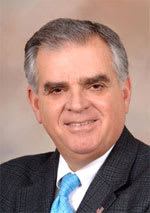
U.S. Transportation Secretary Ray LaHood spoke last week to the American Trucking Associations' Board of Directors, focusing largely on safety issues, but also touching on the economy and infrastructure funding.
"Government and your industry have solved great challenges in the past by working together," he said. "I can think of no better example than in the area of commercial vehicle safety improvement. We have reason to be encouraged that commercial transportation is becoming safer. In each of the past three years, our nation has achieved significant decreases in the number of large truck-related fatalities. During the same time, we also have seen significant increases in the use of safety belts by truck operators. ... This is good progress, but there is still much more to do. Over 4,800 people die in truck crashes each year. We have to continue to work together to increase safety and save lives."
However, he notes, improvements in safety "has to be done at the same time we are working to improve transportation efficiencies. This is vital to energizing our economy."
One of the keys to improving safety, he said, is new "smart" technologies, noting that President Obama has said our future progress is dependent upon creating and deploying new technologies. "The Department has done considerable work with truck manufacturers to test technologies such as forward and side collision warning systems, lane departure systems, and electronic stability," he said. "The goal of all these systems is to save lives by preventing and minimizing the severity of crashes involving commercial trucks.
"I know some of you have already adopted these technologies. For those considering it, I urge you to talk to your counterparts. I know that in these economic times making additional investments can be difficult, but all the data we have say it will pay off in the long run."
He offered a status update on trucking safety regulations that were in progress in the waning days of the Bush administration. The Medical Certification Rule that combines the medical certificate and the CDL went into effect Jan. 30 as scheduled. The New Entrant Rule went into effect Feb. 17. The Intermodal Chassis Rule is moving forward as scheduled and will become effective June 17.
However, the Electronic On-Board Recorder Rule, he said, is still under review. "We want to make sure it is the best rule we can possibly put out."
Another rule proposal that's under way is the establishment of a national drug and alcohol testing database, LaHood said. "There is no room on our highways for CDL drivers who don't comply with the drug and alcohol testing laws." This regulation would close a loophole that allows drivers to simply switch employers following a positive test. The Federal Motor Carrier Safety Administration is anticipating a Notice of Proposed Rulemaking later this year, he said, and the topic will also be included in the upcoming highway reauthorization discussion.
He also touched on infrastructure funding and the upcoming reauthorization of the highway bill. "Tolling and privatization may be part of the solution - but I support this mainly for new construction," he said. "Fuel taxes may also be part of the mix - but we need to examine all options and develop a comprehensive, workable plan."
LaHood told the ATA gathering that "the trucking industry is critical to the health of our national economy. There is no question that trucks move a vast majority of all the country's goods. The vitality of your industry is an indicator of our economic horsepower."
More Drivers

Nussbaum, Roehl Announce Second Driver Pay Increase This Year
This year has seen a swath of major truck driver pay increases as freight capacity has tightened.
Read More →
From One Generation to the Next: How Mentorship Builds Safer Truck Drivers
After three decades in trucking, Harold Perry shares what he's learned about driver safety, mentorship, and helping the next generation build confidence behind the wheel.
Read More →
Truck Drivers Need More Than Another Alert
Fleets have more visibility into truck health, safety events, and driver activity than ever. The next challenge is turning all that information into useful guidance for the person who has to decide what to do next.
Read More →
FMCSA Removes 110 Truck Driver Training Schools from Certified ELDT List
Federal regulators also are targeting more than 160 additional training providers and launching a nationwide audit of third-party CDL skills testers as part of a broader crackdown on trucking fraud.
Read More →
Hours of Service Pilot Programs: FMCSA Readies for 2027 Rollout
Two pilot programs could eventually reshape hours-of-service rules, giving truck drivers options to pause their 14-hour clock or use longer split sleeper rest periods.
Read More →
Medical Cards, English Proficiency Reshape Roadcheck Violations
Medical-card violations jumped to the top of the driver out-of-service list during CVSA’s 2026 International Roadcheck, while English-language proficiency violations appeared among the leading violations for the first time.
Read More →
Driver Trust Can Make or Break the Success of Fleet Safety Technology
New Teletrac Navman research suggests that onboarding, transparency about driver data, and positive feedback can play a significant role in how commercial drivers respond to safety and coaching technology.
Read More →
EEOC Sues KLLM Over Alleged Sex Discrimination in Driver Training
KLLM is facing a federal sex-discrimination lawsuit over policies the EEOC alleges put female truck driver trainees at a disadvantage.
Read More →
FMCSA Moves to Codify English Language Requirements for Commercial Drivers
By changing regulations on English-language proficiency requirements for commercial drivers, rather than relying on a guidance memo, the FMCSA said future administrations won't be able to walk back the Trump administration's stricter enforcement with just a memo.
Read More →
Drivers Put Western Star Trucks to the Test at Star Nation Experience
Watch to get an inside look at the Western Star trucks, technology, and community behind the Star Nation Experience 2026!
Read More →