




How to Maximize Air Disc Brake Life
Solid preventive maintenance promotes air disc brake uptime, performance, and safety.

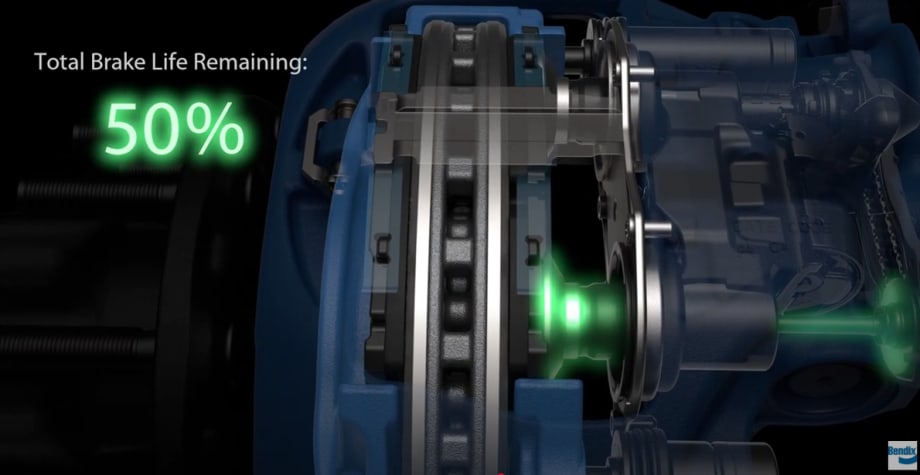
Today’s technologies offer a more proactive, data-driven approach to preventive maintenance for air disc brakes.
Photo: Bendix Commercial Vehicle Systems
Air disc brakes (ADBs) offer compelling benefits. They deliver shorter stopping distances and quicker pad replacement. But realizing their full value over time requires deliberate care.
A new Bendix Tech Tip series addresses actions that fleets and owner-operators can take to protect that investment and extend the life of their ADB pads and rotors.
“As customers increasingly choose air disc brakes, it’s important for us to help them understand how to maximize ADB advantages over the life of the brake, to really get the most out of their investment in the technology,” said Keith McComsey, Bendix technical sales lead, wheel-end. “The good news is that taking care of ADBs to ensure they reach their full potential is a pretty straightforward matter of knowing some basic facts, paying attention to your brakes, and making good choices when it comes to replacement parts.”
Think in Pairs
One of the keys to ADB longevity lies in understanding the relationship between the brake pads and rotor – known as the friction couple.
“In technical terms, the friction couple converts the kinetic energy of the vehicle combination into heat energy by clamping the pads against the rotor, slowing the vehicle,” McComsey said. “The contact between the pad and rotor creates friction, generating heat energy that the wheel-end stores and then dissipates. In fact, one of the reasons ADBs don’t experience the brake fade that is seen in drum brakes is that their design manages the heat dissipation differently.”
The ideal friction couple is engineered as a system. Rotor metallurgy and pad formulation must be matched intentionally – not just for torque output, but also to achieve balanced wear.
“When an OE supplier like Bendix can determine exactly what goes into both the rotor and brake pad individually, we’re able to engineer them to optimize performance – the actual stopping force provided to slow the vehicle – and wear optimally together,” McComsey explained. “We can design specific pads to wear at a rate optimally with the rotor. This protects rotor life and helps ensure a quality friction couple. Suppliers that don’t design for a friction couple (like some non-OE suppliers) may offer pads that last longer but wear out the rotor faster.”
Matching the Right Pad to the Job
Choosing the correct friction material is essential to keeping your ADBs performing as intended.
Fleet type, vehicle configuration, and duty cycle all play a role in determining which pad is right. And when replacement time comes, cutting corners on material quality can result in performance losses.
Not all aftermarket pads meet Federal Motor Vehicle Safety Standard (FMVSS) 121, and some have been shown to increase stopping distances versus OEM-specified friction.
That’s why Bendix said it strongly recommends like-for-like replacements to preserve system integrity and stopping power.
Another factor is environmental compliance. As of January 1, 2025, the final phase of the EPA’s Copper-Free Brake Initiative is in effect, mandating that friction materials contain no more than 0.5% copper (N-Level). Bendix’s response: the BX277 OE-level pad, launched in late 2024 to meet and exceed this regulatory requirement.
Inspect Early, Inspect Often
Regular checks are essential to preserving pad and rotor life – especially as friction material approaches end-of-life. Even though ADBs don’t require lubrication, they still demand close attention to wear conditions.
“The key to ADB preventive maintenance is regular inspection of friction wear,” McComsey said. “Air disc brakes are lubricated for life and don’t need grease fittings or oil spray, so the focus should be on replacing the pads when they near end-of-life, before they could damage the rotor.”
To make that easier, Bendix offers a simple, no-disassembly-needed pad and rotor wear gauge (PN: K109114). It allows technicians to quickly measure thickness on both components and estimate remaining life. The tool is available at B2Bendix.com, and a video demonstrating how to use it is posted on the Bendix YouTube channel:
If your ADB-equipped vehicles operate in muddy, off-road, or debris-prone environments, consider installing ADB pad shields. These prevent foreign materials like rocks from becoming lodged in the brakes and causing damage.
While air disc systems often require service less frequently than drum brakes, McComsey emphasizes that regular inspection remains essential for maintaining peak performance and maximizing component life span.
Smarter Tools for Smarter Maintenance
Visual pad checks remain a reliable method for gauging ADB life – but today’s technologies offer a more proactive, data-driven approach.
Bendix said its iSense and iSense Pro brake wear sensing systems equip fleets with real-time visibility into air disc brake conditions.
The iSense wear sensing system activates when pads are nearing replacement, sending an alert through telematics to a fleet’s home office. If the vehicle lacks that connectivity, technicians can retrieve the same signal via a remote diagnostic tool or Bendix ACom Diagnostic Software.
Bendix’s iSense Pro wear sensing system takes things further, the OE added.
It constantly monitors both pad and rotor wear at each individual wheel-end as a range of 0% to 100%, delivering precise CAN messages that report the percentage of life remaining.
Fleets can use this data to schedule maintenance proactively – helping prevent wear from turning into costly repairs.
“iSense Pro not only identifies specific wheel-ends that require maintenance but provides cross-axle comparison of remaining life,” McComsey said. “Seeing the percentage difference between two sides of the axle can help identify potential brake issues and head off costly damage or unexpected downtime. If one end of the axle has 20% or more remaining life than the other, it should alert the technician to investigate.”
According to McComsey, this kind of proactive insight doesn’t just protect brake components – it also supports system-level safety.
That’s because air disc brake performance directly impacts advanced driver assistance systems (ADAS), including Bendix Fusion and Bendix ESP full-stability technology, extending ADB service life contributes to safer, more responsive driving.
Choosing the right replacement parts and committing to regular, data-informed maintenance helps safeguard both your ADB investment and the broader systems that rely on it.
More Maintenance

Color Match Smarter: Tools That Restore & Perform
For fleet managers and collision repair professionals keeping heavy-duty trucks on the road, getting the color right the first time isn't just about appearance — it's about efficiency, turnaround time, and bottom-line results. Discover how today's digital color tools are transforming the repair process from guesswork to precision.
Read More →
Wrong Repair Prompts Recall of Freightliner, Western Star 4x2 Trucks
DTNA is recalling more than 2,400 trucks that received an incompatible software fix instead of the hardware repair required to address brake valve corrosion.
Read More →
Truck Drivers Need More Than Another Alert
Fleets have more visibility into truck health, safety events, and driver activity than ever. The next challenge is turning all that information into useful guidance for the person who has to decide what to do next.
Read More →
The Maintenance Checks Trucking Fleets Should Prioritize Before Fall Freight Picks Up
Making it through August isn’t the same as being ready for the next several months of operation. Find out what systems may have suffered from summer heat and need to be checked out before fall.
Read More →
What Three Fleets Are Doing Differently When Buying Truck Parts in 2026
With freight improving but costs still climbing, fleet maintenance executives explain how they're balancing price, quality, and supplier relationships.
Read More →
Paccar Recalls 2027 Trucks Built This Summer for Possible Electrical Problem
The nearly 6,000 Kenworth and Peterbilt trucks in the recall could potentially lose engine power, among other things.
Read More →
Will API PC-12 Oil Change Trucking Fleet Maintenance?
The new API PC-12 heavy-duty engine oil category reflects the changing demands of modern diesel engines. But fleets like Foodliner are looking to getting their own data before making decisions on adopting the new oils and questions such as extending oil drain intervals.
Read More →
Brake Safety Week to Focus on Drums and Rotors
Commercial vehicle inspectors are focusing on truck brakes during CVSA's Brake Safety Week, August 23-29.
Read More →Possible Battery-Cable Fires Prompt Recall of 15,000+ International MV and HV Trucks
On the recalled vehicles, manufacturing variations can cause the battery interconnect cable to contact the auxiliary stud and hold down the bracket.
Read More →
Rush, MCT Team Up to Grow Refrigeration Service Network
The joint venture will operate MCT's network of Carrier Transicold dealerships and mobile service locations, with the companies promising greater service capacity and uptime for refrigerated fleets.
Read More →