




GAO: Highway Bridge Program Needs More Work
In a recent study, the U.S. Government Accountability Office said much work remains to be done on the federal Highway Bridge Program, as one in four bridges in the U.S. is either structurally deficient and needs repair or functionally obsolete

According to the GAO, one in four bridges is either structurally deficient or functionally obsolete.
In a recent study, the U.S. Government Accountability Office said much work remains to be done on the federal Highway Bridge Program, as one in four bridges in the U.S. is either structurally deficient and needs repair or functionally obsolete.
GAO said that while the condition of the nation's bridges are improving somewhat, the DOT could take further actions to enhance the impact of federal investment. For fiscal year 2010, states were given about $7 billion through the Highway Bridge Program.
"The HBP does not fully align with GAO's principles for re-examining surface transportation programs in that the program lacks focus, performance measures, and fiscal sustainability," GAO's report said.
The Highway Bridge Program is not focused on a clearly identified national interest, GAO said. In other words, rather than improving deficient bridges, funding has been going towards preventive maintenance and other projects, which could include almost any bridge.
The program also lacks measures to link funding to performance and does not use new tools such as bridge management systems, the report found. The program also faces fiscal sustainability issues, with the nearly $30 billion in additional revenues added to the Highway Account since fiscal year 2008.
"Data indicate that the total number of deficient bridges has decreased over the past 12 years, even as the total number of bridges has increased, because of a reduction in the number of structurally deficient bridges," the report said. "However, the impact of the federal investment in the HBP is difficult to measure, in part because there are no comprehensive and complementary data for state and local bridge spending."
The data do not include state spending on bridges on local roads and local government spending on bridges.
In a testimony before the House Transportation and Infrastructure Subcommittee on Highways and Transit, Malcolm T. Kerley, chief engineer with the Virginia Department of Transportation, called for increased funding levels to keep bridges healthy. "We are facing a perfect storm regarding our bridges," he said. "A huge backlog of bridge needs remains."
According to Kerley, who testified on behalf of the American Association of State Highway and Transportation Officials, states are investing more in state dollars on bridges than is provided by the Highway Bridge Program.
Kerley called on Congress to preserve the health of all bridges through what he called "asset management strategies."
"States need federal funding to reduce the slippage of bridges into the 'structurally deficient' category," Kerley said. "And we all get more bang for our taxpayer buck by preserving a bridge early in its life rather than by having to completely replace it later on down the road. In order to accomplish this, states need to be able to fund a wider range of projects than just their lowest-rated bridges.
"Current law requires states to address the worse deficient bridges first, but this approach doesn't work," Kerley said. "If we had all the funding we needed, states could immediately reconstruct or rehabilitate all structurally deficient bridges - fixing the worst first while simultaneously investing to prevent an even larger number of bridges from deteriorating just enough to push them over the edge to structural deficiency. We call these 'cusp' bridges - those bridges which we can prevent from becoming structurally deficient."
In its report, GAO did not make any new recommendations, beyond those made in 2008. At that time, GAO called on the Secretary of Transportation to work with Congress to identify and define national goals for the Highway Bridge Program; develop and implement performance measures; identify and evaluate best tools and practices; and review and evaluate the program's funding mechanisms to align funding with performance.
More Drivers
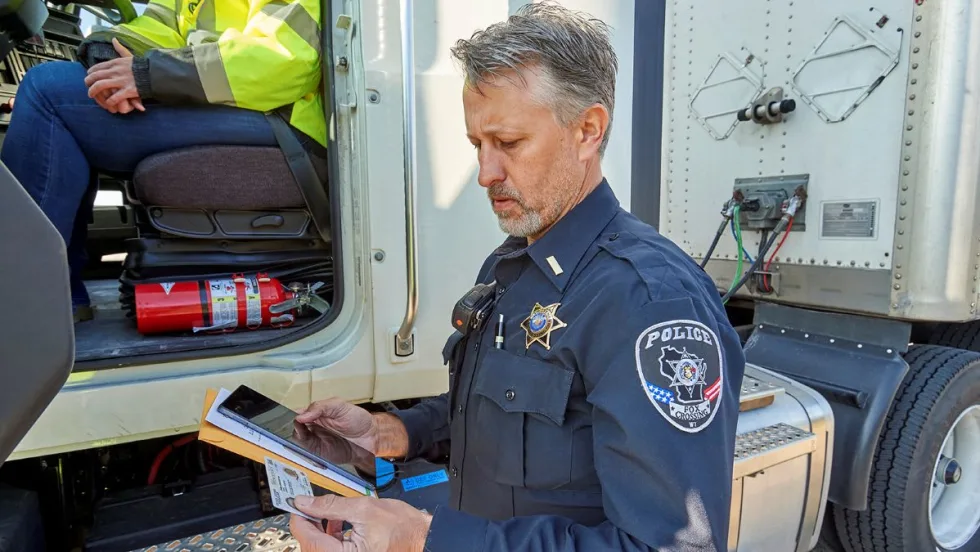
When Language Stops the Truck: The Return of ELP Out-of-Service Orders
English language proficiency rules for commercial drivers aren’t new, but renewed out-of-service enforcement has raised the stakes. Here’s what carriers need to know before a driver reaches a roadside inspection.
Read More →
Samsara Launches Custom AI Agent Builder
Agent Studio lets fleets create AI tools for hours-of-service monitoring, reporting and driver support, including agents that communicate by phone.
Read More →
Trucker Path Expands Reserved Parking Network
Trucker Path has added close to 6,000 more truck parking spaces to its Trucker Path Reserved Parking Network with the addition of Safe Truck Parking.
Read More →
EEOC Sues Texas Trucking Company Over Driver Age Limits
The agency says Trancasa USA rejected applicants over 65 and applied tougher driving-record standards to those over 60.
Read More →
Nussbaum, Roehl Announce Second Driver Pay Increase This Year
This year has seen a swath of major truck driver pay increases as freight capacity has tightened.
Read More →
From One Generation to the Next: How Mentorship Builds Safer Truck Drivers
After three decades in trucking, Harold Perry shares what he's learned about driver safety, mentorship, and helping the next generation build confidence behind the wheel.
Read More →
Truck Drivers Need More Than Another Alert
Fleets have more visibility into truck health, safety events, and driver activity than ever. The next challenge is turning all that information into useful guidance for the person who has to decide what to do next.
Read More →
FMCSA Removes 110 Truck Driver Training Schools from Certified ELDT List
Federal regulators also are targeting more than 160 additional training providers and launching a nationwide audit of third-party CDL skills testers as part of a broader crackdown on trucking fraud.
Read More →
Hours of Service Pilot Programs: FMCSA Readies for 2027 Rollout
Two pilot programs could eventually reshape hours-of-service rules, giving truck drivers options to pause their 14-hour clock or use longer split sleeper rest periods.
Read More →
Medical Cards, English Proficiency Reshape Roadcheck Violations
Medical-card violations jumped to the top of the driver out-of-service list during CVSA’s 2026 International Roadcheck, while English-language proficiency violations appeared among the leading violations for the first time.
Read More →