




Expiration of Biodiesel Credit Leaves Producers and Retailers Uncertain
The biodiesel tax credit expired at the end of last week, leaving biodiesel producers and truckstops in uncertainty over what the next few months may hold, and truckers concerned about possible price increases

A B20 biodiesel and E85 pump in Alabama along I-65.
The biodiesel tax credit expired at the end of last week, leaving biodiesel producers and truckstops in uncertainty over what the next few months may hold, and truckers concerned about possible price increases.
According to Michael Frohlich, director of federal communications at the National Biodiesel Board, there has been some talk of layoffs and shutting down among smaller biodiesel makers, but biodiesel producers have been waiting until after the holidays to announce their final plans for moving forward. These businesses are evaluating how things are going, looking at how much capital they have on hand, and seeing how long they can go on without the subsidy.
Last month, the Senate decided to table the consideration of an extension to the biodiesel tax credit until after the holidays, but some say the delay would force biodiesel producers to cease operations and lay off their workers because consumer demand for the fuel would plunge without the credit. The Senate has been tied up with other priorities, especially the health care debate. Sens. Max Baucus, D-Mont., and Charles Grassley, R-Iowa, have committed to taking up the legislation when Congress reconvenes this month. Although the timing of the legislation is unknown, Frohlich says the $1 per gallon credit will likely pass and could be made retroactive to Jan. 1.
According to NATSO, a national trade association representing travel plaza and truckstop owners and operators, truckstops will likely see a sharp drop in the availability of biodiesel and an increase in prices, until an extension is passed.
Rich Moskowitz, vice president and regulatory affairs counsel at the American Trucking Associations, says the end of the subsidy will essentially cause a direct increase in cost for the trucking industry because of the mandates to use biodiesel. Specifically, the Federal Renewable Fuels Standard requires the use of 650 million gallons of biodiesel in 2010, and without the $1 a gallon credit, this would cost the trucking industry and consumers an additional $650 million this year. In addition, some states have biodiesel requirements, such as Minnesota, which requires diesel fuel to contain 5 percent biodiesel.
However, these mandates will create some artificial demand, Moskowitz says, as some will be forced to buy it. While the 650 million gallons will certainly keep some producers afloat, there are more biodiesel producers out there than are gallons of biodiesel mandated for use, Moskowitz adds.
According to Frohlich, consumers in the states with mandates will end up eating the additional costs for biodiesel. Without the subsidy, the biodiesel industry will not see a whole lot of excess production, he says. The NBB is directing its members to contact their elected officials and tell them about the importance of the tax credit to their business.
With the added financial pressures, biodiesel producers could be cutting corners, Moskowitz says. Three years ago, the industry was having problems with the quality of biodiesel produced in the U.S., causing operational problems for trucking companies. Since then, the NBB has implemented a quality assurance program, but there are still some problems, Moskowitz says. He urges trucking companies to be vigilant in choosing a biodiesel producer during this time.
More Drivers
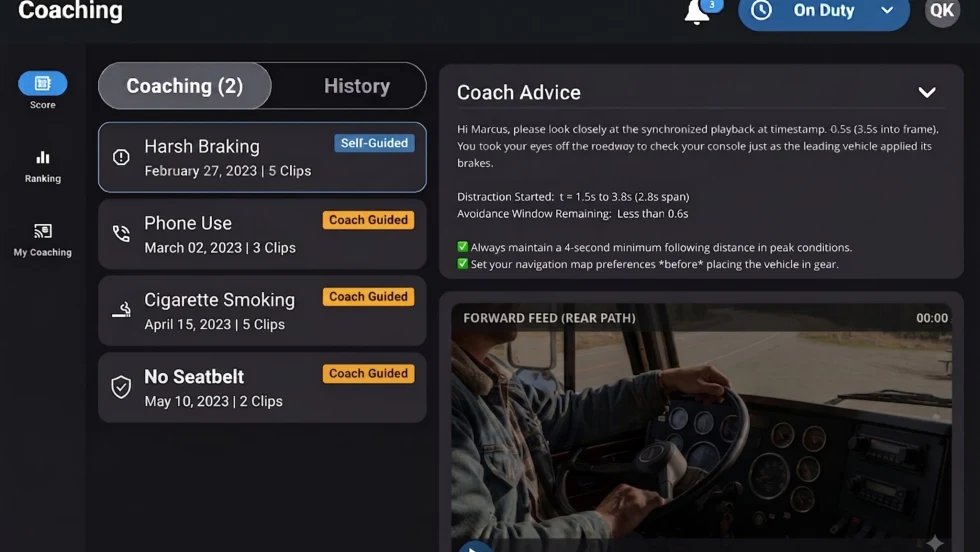
Platform Science Adds Dispatch and Safety Tools
Four additions to PS Fleet help fleets monitor loads, manage driver coaching, share truck locations and adjust video system settings.
Read More →
When Language Stops the Truck: The Return of ELP Out-of-Service Orders
English language proficiency rules for commercial drivers aren’t new, but renewed out-of-service enforcement has raised the stakes. Here’s what carriers need to know before a driver reaches a roadside inspection.
Read More →
Samsara Launches Custom AI Agent Builder
Agent Studio lets fleets create AI tools for hours-of-service monitoring, reporting and driver support, including agents that communicate by phone.
Read More →
Trucker Path Expands Reserved Parking Network
Trucker Path has added close to 6,000 more truck parking spaces to its Trucker Path Reserved Parking Network with the addition of Safe Truck Parking.
Read More →
EEOC Sues Texas Trucking Company Over Driver Age Limits
The agency says Trancasa USA rejected applicants over 65 and applied tougher driving-record standards to those over 60.
Read More →
Nussbaum, Roehl Announce Second Driver Pay Increase This Year
This year has seen a swath of major truck driver pay increases as freight capacity has tightened.
Read More →
From One Generation to the Next: How Mentorship Builds Safer Truck Drivers
After three decades in trucking, Harold Perry shares what he's learned about driver safety, mentorship, and helping the next generation build confidence behind the wheel.
Read More →
Truck Drivers Need More Than Another Alert
Fleets have more visibility into truck health, safety events, and driver activity than ever. The next challenge is turning all that information into useful guidance for the person who has to decide what to do next.
Read More →
FMCSA Removes 110 Truck Driver Training Schools from Certified ELDT List
Federal regulators also are targeting more than 160 additional training providers and launching a nationwide audit of third-party CDL skills testers as part of a broader crackdown on trucking fraud.
Read More →
Hours of Service Pilot Programs: FMCSA Readies for 2027 Rollout
Two pilot programs could eventually reshape hours-of-service rules, giving truck drivers options to pause their 14-hour clock or use longer split sleeper rest periods.
Read More →