




DOT: Trucks Hauling Sand, Water for Fracking Not Exempt from HOS Rules
Truck drivers hauling water and sand to U.S. oil and natural gas shale drilling sites don't qualify for a special oil-field service equipment exemption to extend their daily driving hours.
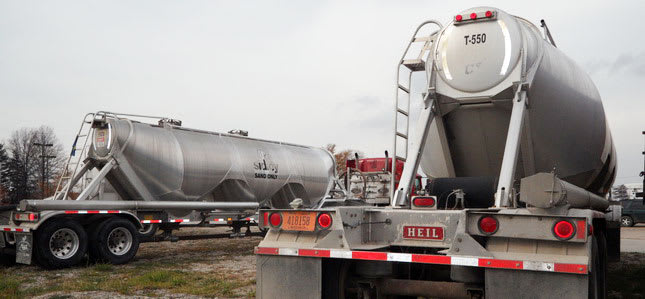
Drivers of tankers delivering to fracking sites are not eligible for the oil-field hours of service exemption.
Truck drivers hauling water and sand to U.S. oil and natural gas shale drilling sites don't qualify for a special oil-field service equipment exemption to extend their daily driving hours.
The rule clarification, or regulatory guidance, from the DOT explains that time spent waiting while water and sand are unloaded at well sites counts toward the maximum 14 hours a day that a truck driver can work under hours of service regulations.
The guidance explains that the "waiting time" oil-field exemption in Sec. 395.1(d)(2), which allows these drivers to count waiting time is off-duty, is available only to operators of commercial motor vehicles that are specially constructed for use at oil and gas well sites, and for which the operators require extensive training in the operation of the complex equipment, in addition to driving the vehicle. In many instances, the operators spend little time driving these CMVs.
The clarification says that drivers of more typical commercial vehicles that haul water and sand in and out of these sites don't qualify for the exemption, "even if there have been some modifications to the vehicle to transport, load, or unload the materials, and the driver required some minimal additional training in the operation of the vehicle, such as running pumps or controlling the unloading and loading processes."
Yes, the DOT noted, these operators "may encounter delays caused by logistical or operational situations," but compared it to other motor carriers experience delays at shipping and receiving facilities.
The hydraulic fracturing process that has made possible a U.S. oil-and-natural-gas boom may require hauling as many as 1,000 truckloads of water and sand for every well.
A recent story on the front page of the New York Times highlighted the oil-field exemption, alleging the exemption's mis-use for drivers of all types of trucks working the oil fields was causing a large number of crashes.
The guidance explains that the other part of the oil field exemption, the 24-hour restart after 70 hours of work in eight days, does apply to carriers that provide direct support to oil and gas well sites, including hauling the water that is used in the fracking process, and hauling waste away from the site.
This new rule clarification limiting the 14-hour exemption may make it necessary for drillers to add drivers, Boyd Stephenson, director of hazardous materials policy for American Trucking Associations, told Bloomberg.
"If you were an operator in the past that was utilizing this exemption for transporting sand and water then, yes, it means you're going to have to have more drivers," Stephenson told Bloomberg. "There were probably some that were utilizing this exemption for sand and water trucks in the past. How many is anybody's guess."
You can read the Federal Register notice here.
More Drivers

Hours of Service Pilot Programs: FMCSA Readies for 2027 Rollout
Two pilot programs could eventually reshape hours-of-service rules, giving truck drivers options to pause their 14-hour clock or use longer split sleeper rest periods.
Read More →
Medical Cards, English Proficiency Reshape Roadcheck Violations
Medical-card violations jumped to the top of the driver out-of-service list during CVSA’s 2026 International Roadcheck, while English-language proficiency violations appeared among the leading violations for the first time.
Read More →
Driver Trust Can Make or Break the Success of Fleet Safety Technology
New Teletrac Navman research suggests that onboarding, transparency about driver data, and positive feedback can play a significant role in how commercial drivers respond to safety and coaching technology.
Read More →
EEOC Sues KLLM Over Alleged Sex Discrimination in Driver Training
KLLM is facing a federal sex-discrimination lawsuit over policies the EEOC alleges put female truck driver trainees at a disadvantage.
Read More →
FMCSA Moves to Codify English Language Requirements for Commercial Drivers
By changing regulations on English-language proficiency requirements for commercial drivers, rather than relying on a guidance memo, the FMCSA said future administrations won't be able to walk back the Trump administration's stricter enforcement with just a memo.
Read More →
Drivers Put Western Star Trucks to the Test at Star Nation Experience
Watch to get an inside look at the Western Star trucks, technology, and community behind the Star Nation Experience 2026!
Read More →
Trump Administration Looks to Put More Veterans Behind the Wheel
The Freedom Haulers program pulls together existing and expanded programs at several federal agencies to recruit veterans to drive commercial heavy-duty trucks and cut the red tape for them to get a CDL, training, and employment.
Read More →
Putting Mack’s Command Steer to the Test
A test drive of Mack’s Command Steer active steering system evaluates how it can make truck driving easier and less tiring.
Read More →
Competition Heating Up for Truck Drivers
New report reveals rising driver hiring costs, the return of sign-on bonuses, growing AI advantages, and the operational factors shaping driver retention.
Read More →
How Fraley & Schilling Improved Logbook Compliance by Over 50%
Fraley & Schilling needed a way to close a compliance workflow gap in its ELD system without adding more work from driver training, reminders, and back-office follow-ups. It found the answer in a custom driver app.
Read More →