




DOT Announces Marine Highway Projects
Just four months after unveiling the America's Marine Highway Program, U.S. Transportation Secretary Ray LaHood announced his selection of marine highway corridors and an initial eight projects and six initiatives along the corridors that will be eligible for federal assistance under the program
Just four months after unveiling the America's Marine Highway Program, U.S. Transportation Secretary Ray LaHood announced his selection of marine highway corridors and an initial eight projects and six initiatives along the corridors that will be eligible for federal assistance under the program.
The Department's Maritime Administration chose the projects and initiatives from 35 applications submitted by ports and local transportation agencies.
"Making better use of our rivers and coastal routes offers an intelligent way to relieve some of the biggest challenges we face in transportation - congestion on our roads, climate change, fossil fuel energy use and soaring road maintenance costs," said LaHood. "There is no better time for us to improve the use of our rivers and coasts for transportation."
The selected corridors are along the West, East and Gulf Coasts, the Great Lakes and many of America's inland waterways. The Maritime Administration will assist the project sponsors in developing marine transportation services and with identifying potential freight and passenger markets. The designated projects are also eligible to compete for future Marine Highway federal funding, including $7 million in initial funding being made available today.
The projects include:
New England Marine Highway Expansion Project (Maine Department of Transportation): This project will expand an existing container-on-barge service operating between Newark, N.J., Boston, and Portland, Maine. Service capacity and reliability will be improved by the addition of a more seaworthy vessel in the service.
Cross Gulf Container Expansion (Ports of Manatee, Fla., and Brownsville, Texas): Will expand an existing container-on-barge operation by increasing the frequency and capacity of the service between Brownsville and Port Manatee across the Gulf of Mexico.
Tenn-Tom Waterway Pilot Project (Port Itawamba, Miss.): This project involves a new container-on-barge service between the Port of Itawamba on the Tennessee-Tombigbee Waterway and the Port of Mobile, Ala., to function as the inland leg of a new route between deep draft Gulf Coast container terminals and manufacturing centers near Port Itawamba.
Gulf Atlantic Marine Highway Project (South Carolina State Ports Authority and Port of Galveston, Texas): This project is intended to transport containerized freight between Gulf, Mid-Atlantic and South Atlantic coastal ports on a modern fleet of U.S. flag vessels.
Trans-Hudson Rail Service (Port Authority of New York & New Jersey): This project proposes to expand the quality and capacity of an ongoing cross-harbor rail float service operating between the Greenville Rail Terminal in Jersey City and Brooklyn.
James River Container Expansion (Virginia Port Authority): This project will expand an existing container-on-barge service between the Hampton Roads region of Virginia and Richmond, Va., by increasing frequency of service and starting a new inter-terminal barge service in Hampton Roads.
The other projects are passenger-focused.
In addition to the America's Marine Highways project designations, Secretary LaHood also identified six initiatives eligible to apply for federal funding for further development of concepts:
Hudson River Food Corridor Initiative (New York City Soil & Water Conservation District): This initiative will evaluate the feasibility of an alternate means of transporting fresh produce from agricultural regions in North-Central New York near the Hudson River and Long Island to the New York-Newark Metropolitan Area via water.
New Jersey Marine Highway Initiative (New Jersey Department of Transportation): This initiative will assess the feasibility and opportunities to develop a network of Marine Highway services within New Jersey and between New Jersey and ports in New York, Massachusetts, Rhode Island, Connecticut, Maryland and Virginia.
East Coast Marine Highway Initiative (Ports of New Bedford, Mass., Baltimore, Md., and Canaveral, Fla): This initiative proposes to develop a Marine Highway service using a fleet of existing and new-build U.S. flag vessels to transport both international containers and trailers to destinations along the I-95 Corridor.
West Coast Hub-Feeder Initiative (Humboldt Bay Harbor, Recreation and Conservation District): This initiative will examine the feasibility of an intermodal distribution network served by a Marine Highway service along the coastlines of the states of Washington, Oregon and California.
Golden State Marine Highway Initiative (Ports of Redwood City, Hueneme and San Diego; and the Humboldt Bay Harbor, Recreation and Conservation District): This initiative is a joint effort by four California ports to improve the efficiency of freight movement by developing a service linking California's ports to form a 1,100-mile Marine Highway along the West Coast.
Illinois-Gulf Marine Highway Initiative (Heart of Illinois Regional Port District): This initiative will examine opportunities for a Marine Highway service to support Midwest industrial production and operating between U.S. Gulf Coast seaports and Peoria, Ill., via the Mississippi and Illinois Rivers.
To date, the Department has awarded $58 million in grants for projects to support the start-up or expansion of Marine Highways services.
Click here for more information about the Marine Highway initiative, and details on individual corridors and projects.
Related news from Truckinginfo.com:
4/8/2010 - New Federal Program Aims to Move Some Cargo to Waterways.
4/9/2010 Marine Highways Not Seen As Big Competitor to Trucking.
5/7/2010 ATA Voices Concerns Over DOT Shift Toward Rail, Maritime.
More Drivers
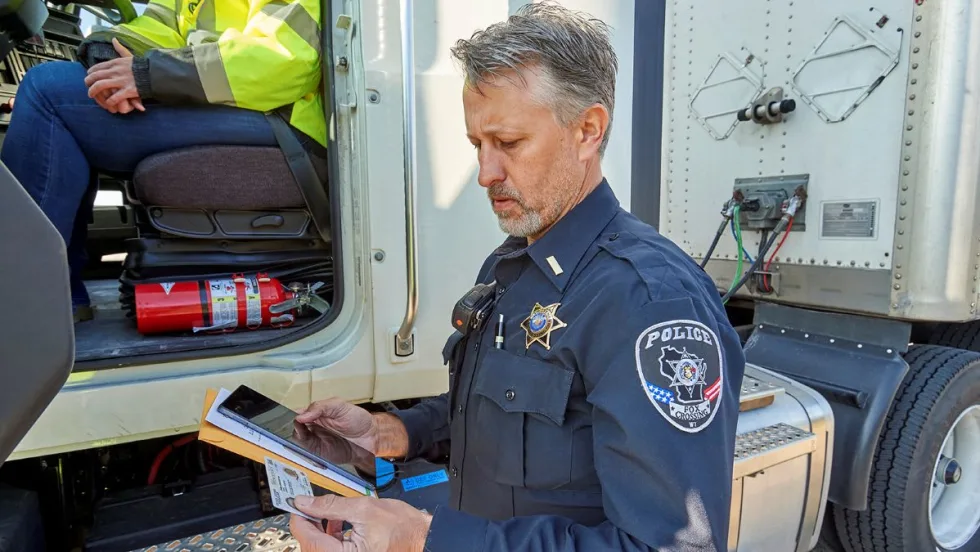
When Language Stops the Truck: The Return of ELP Out-of-Service Orders
English language proficiency rules for commercial drivers aren’t new, but renewed out-of-service enforcement has raised the stakes. Here’s what carriers need to know before a driver reaches a roadside inspection.
Read More →
Samsara Launches Custom AI Agent Builder
Agent Studio lets fleets create AI tools for hours-of-service monitoring, reporting and driver support, including agents that communicate by phone.
Read More →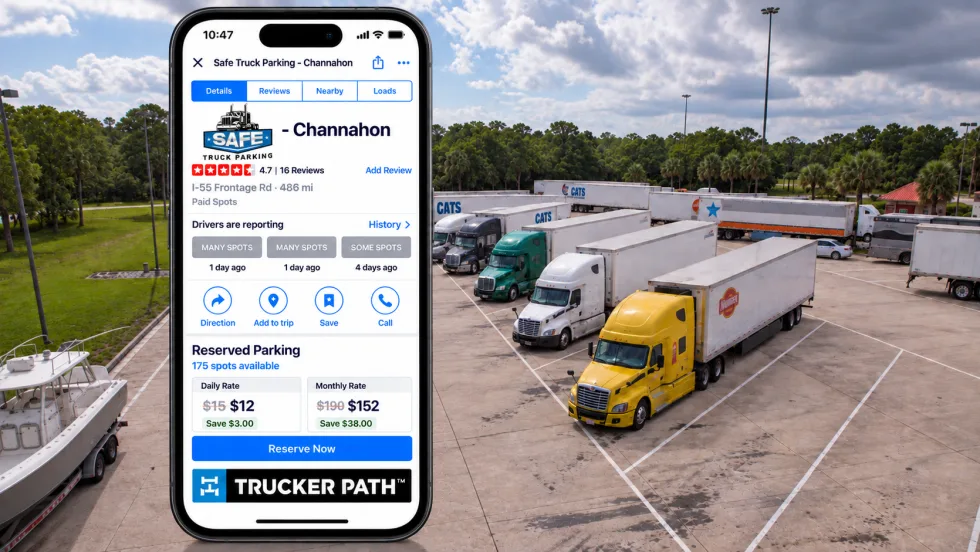
Trucker Path Expands Reserved Parking Network
Trucker Path has added close to 6,000 more truck parking spaces to its Trucker Path Reserved Parking Network with the addition of Safe Truck Parking.
Read More →
EEOC Sues Texas Trucking Company Over Driver Age Limits
The agency says Trancasa USA rejected applicants over 65 and applied tougher driving-record standards to those over 60.
Read More →
Nussbaum, Roehl Announce Second Driver Pay Increase This Year
This year has seen a swath of major truck driver pay increases as freight capacity has tightened.
Read More →
From One Generation to the Next: How Mentorship Builds Safer Truck Drivers
After three decades in trucking, Harold Perry shares what he's learned about driver safety, mentorship, and helping the next generation build confidence behind the wheel.
Read More →
Truck Drivers Need More Than Another Alert
Fleets have more visibility into truck health, safety events, and driver activity than ever. The next challenge is turning all that information into useful guidance for the person who has to decide what to do next.
Read More →
FMCSA Removes 110 Truck Driver Training Schools from Certified ELDT List
Federal regulators also are targeting more than 160 additional training providers and launching a nationwide audit of third-party CDL skills testers as part of a broader crackdown on trucking fraud.
Read More →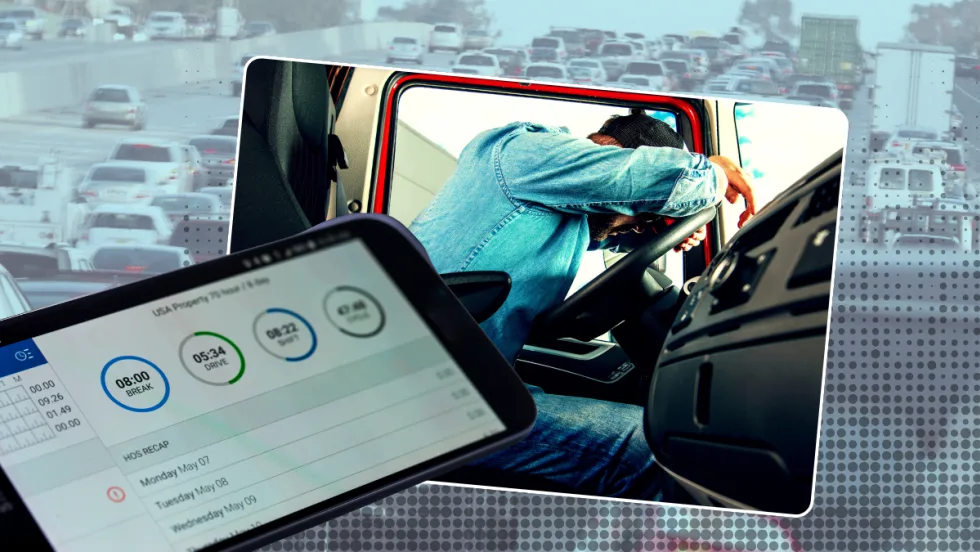
Hours of Service Pilot Programs: FMCSA Readies for 2027 Rollout
Two pilot programs could eventually reshape hours-of-service rules, giving truck drivers options to pause their 14-hour clock or use longer split sleeper rest periods.
Read More →
Medical Cards, English Proficiency Reshape Roadcheck Violations
Medical-card violations jumped to the top of the driver out-of-service list during CVSA’s 2026 International Roadcheck, while English-language proficiency violations appeared among the leading violations for the first time.
Read More →