




Congress Renews Incentives for Alternative Fuels, But Not For Vehicles
The much publicized tax and unemployment-benefits measure passed by Congress last week also contains tax breaks for use of automotive alternative fuels, but not for the vehicles themselves
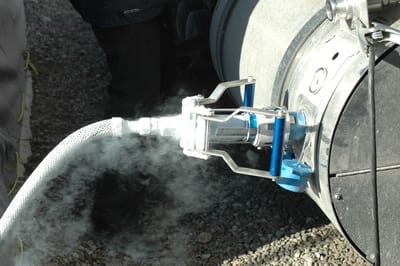
Tax credits 50-cents per gallon apply for compressed and liquefied natural gas when used as a vehicle fuel. (Photo by Jim Park)
The much publicized tax and unemployment-benefits measure passed by Congress last week also contains tax breaks for use of automotive alternative fuels, but not for the vehicles themselves.
The Tax Relief, Unemployment Insurance Reauthorization and Job Creation Act of 2010 renews tax credits for natural gas, biodiesel and ethanol through the end of 2011, and makes them applicable for all of this year.
Liquified petroleum gas for cars and trucks was not mentioned in either the Senate or House versions of the bill, but propane proponents are working to get breaks for this widely used fuel included in other legislation. Hybrid-drive vehicles were not covered, either.
Natural Gas Vehicles for America, a trade association, says the legislation extends through 2011:
* the 50-cent per gallon tax credit for compressed and liquefied natural gas when used as a vehicle fuel. This tax credit, which expired at the end of 2009, is retroactive for 2010.
* the investment tax credit for alternative vehicle refueling property, including natural gas stations. This covers 30% of the cost or $30,000, whichever is less. This credit also includes a $1,000 tax credit for a home refueling unit.
Tax credits for buying natural-gas vehicles themselves, which expire at the end of this year, were not included in the legislation. But NGV America says the industry will work to reinstate them in the new Congress. For a couple of more weeks, those credits are worth $2,500 to $32,000 per vehicle.
The legislation also revives credits for biodiesel and renewable diesel-fuel mixtures that expired at the end of 2009. These include $1 per gallon production tax credit for biodiesel, as well as the small agri-biodiesel producer credit of 10 cents per gallon. The bill also extends through 2011 the $1 per gallon production tax credit for diesel fuel created from biomass.
For ethanol, the bill extends through 2011 the per-gallon tax credits and outlay payments. It extends through 2011 the existing 14.27 cents per liter (54 cents per gallon) tariff on imported ethanol and the related 5.99 cents per liter (22.67 cents per gallon) tariff on ethyl tertiary-butyl ether (ETBE).
Tax credits for alternative fuels now extend to the end of 2011, and are retroactive for all of 2010. Users will be allowed to file a one-time application for tax refunds during 2011; the law calls for the Treasury Department to set up procedures soon and pay the rebates within 60 days of their filing. The rebates also apply to natural gas.
As before, the tax credits encourage use of alternative fuels to reduce the nation's dependence on imported oil, reduce air pollution and cut emissions of greenhouse gases.
Since federal incentives were introduced in 2006, vehicular natural gas usage has increased 25 percent each year, displacing more than 320 million gallons of gasoline, NGV America said. With the continuation of these incentives, the group expects that rate to continue to grow.
The legislation further includes scores of tax breaks for energy efficient home appliances as well as education and other items not related to energy matters.
More Drivers

Truck Drivers Need More Than Another Alert
Fleets have more visibility into truck health, safety events, and driver activity than ever. The next challenge is turning all that information into useful guidance for the person who has to decide what to do next.
Read More →
FMCSA Removes 110 Truck Driver Training Schools from Certified ELDT List
Federal regulators also are targeting more than 160 additional training providers and launching a nationwide audit of third-party CDL skills testers as part of a broader crackdown on trucking fraud.
Read More →
Hours of Service Pilot Programs: FMCSA Readies for 2027 Rollout
Two pilot programs could eventually reshape hours-of-service rules, giving truck drivers options to pause their 14-hour clock or use longer split sleeper rest periods.
Read More →
Medical Cards, English Proficiency Reshape Roadcheck Violations
Medical-card violations jumped to the top of the driver out-of-service list during CVSA’s 2026 International Roadcheck, while English-language proficiency violations appeared among the leading violations for the first time.
Read More →
Driver Trust Can Make or Break the Success of Fleet Safety Technology
New Teletrac Navman research suggests that onboarding, transparency about driver data, and positive feedback can play a significant role in how commercial drivers respond to safety and coaching technology.
Read More →
EEOC Sues KLLM Over Alleged Sex Discrimination in Driver Training
KLLM is facing a federal sex-discrimination lawsuit over policies the EEOC alleges put female truck driver trainees at a disadvantage.
Read More →
FMCSA Moves to Codify English Language Requirements for Commercial Drivers
By changing regulations on English-language proficiency requirements for commercial drivers, rather than relying on a guidance memo, the FMCSA said future administrations won't be able to walk back the Trump administration's stricter enforcement with just a memo.
Read More →
Drivers Put Western Star Trucks to the Test at Star Nation Experience
Watch to get an inside look at the Western Star trucks, technology, and community behind the Star Nation Experience 2026!
Read More →
Trump Administration Looks to Put More Veterans Behind the Wheel
The Freedom Haulers program pulls together existing and expanded programs at several federal agencies to recruit veterans to drive commercial heavy-duty trucks and cut the red tape for them to get a CDL, training, and employment.
Read More →
Putting Mack’s Command Steer to the Test
A test drive of Mack’s Command Steer active steering system evaluates how it can make truck driving easier and less tiring.
Read More →