




California Leads Nation in Poor Roads
California's major urban roadways are the roughest in the nation, while overall, driving on rough roads costs the average American motorist approximately $400 a year in extra vehicle operating costs
California's major urban roadways are the roughest in the nation, while overall, driving on rough roads costs the average American motorist approximately $400 a year in extra vehicle operating costs.
The report, "Rough Road Ahead: Fix Them Now or Pay for it Later," was released last week by the American Association of State Highway and Transportation Officials and The Road Informaiton Program. It evaluated pavement conditions on major urban roadways in the nation's largest urban areas and calculated the extra vehicle operating cost to motorists of driving on roads in poor condition. Extra vehicle operating costs include accelerated vehicle depreciation, additional repair costs and increased fuel consumption and tire wear.
The report found that the continued increase in traffic is putting significant wear and tear on roads at a time when transportation funding is inadequate to keep pace with the rate of roadway deterioration. One-third of the nation's major highways, including Interstates, freeways and major roads, are in poor or mediocre condition. Roads in urban areas, which carry 66 percent of the traffic, are in much worse shape.
The report found that the 20 large urban regions (500,000+ population), with the greatest share of major roads and highways with pavements in poor condition are: Los Angeles, 64%; San Jose, 61%; San Francisco-Oakland, 61%; Honolulu, 61%; Concord, CA, 54%; New York - Newark, 54%; San Diego, 53%; New Orleans, 49%; Tulsa, 47%; Palm Springs - Indio, CA, 47%; Riverside-San Bernardino, 44%; Baltimore, 44%; Sacramento, 44%; Omaha, 41%; Oklahoma City, 41%; San Antonio, 38%; Mission Viejo, CA, 37%; Albuquerque, 36%; Philadelphia, 36%; and Detroit, 36%.
Drivers living in urban areas with populations over 250,000 are paying upwards of $750 more annually because of accelerated vehicle deterioration, increased maintenance, additional fuel consumption, and tire wear caused by poor road conditions.
"The American people are paying for rough roads multiple times," said Kirk T. Steudle, Director
of the Michigan Department of Transportation, at a news conference held to release the report. "Rough roads lead to diminished safety, higher vehicle operating costs and more expensive road repairs. It costs $1 to keep a road in good shape for every $7 you would have to spend on reconstruction. It's another drag on the economy."
The report uses the latest government statistics to show pavement conditions in all 50 states
and vehicle operating costs by state and urban areas. The report also finds that:
• 30 to 60 percent of the roads in the nation's largest urban areas are in poor condition.
• 36 percent of the roads in the Detroit urban area are in poor condition compared to the Los
Angeles area and surrounding communities, which have 64 percent of their roads in poor
condition.
• 61 percent of rural roads are in good condition.
• 72 percent of the Interstate Highway System is in good condition, but age, weather
conditions and burgeoning traffic are eroding ride quality.
"The whole system is cracking," says Mark Watts, executive director of Transportation California. "Almost half of the urban areas with the worst road conditions are found in California. Despite our successes in increasing transportation infrastructure investment over the past few years, we are not even close to digging ourselves out of the hole that years of neglect created."
The current federal transportation program expires on September 30. Congress will need to authorize a new federal surface transportation program or extend the current program to allow federal highway dollars to continue to be provided to the states.
Report available at: www.tripnet.org
More Drivers

Nussbaum, Roehl Announce Second Driver Pay Increase This Year
This year has seen a swath of major truck driver pay increases as freight capacity has tightened.
Read More →
From One Generation to the Next: How Mentorship Builds Safer Truck Drivers
After three decades in trucking, Harold Perry shares what he's learned about driver safety, mentorship, and helping the next generation build confidence behind the wheel.
Read More →
Truck Drivers Need More Than Another Alert
Fleets have more visibility into truck health, safety events, and driver activity than ever. The next challenge is turning all that information into useful guidance for the person who has to decide what to do next.
Read More →
FMCSA Removes 110 Truck Driver Training Schools from Certified ELDT List
Federal regulators also are targeting more than 160 additional training providers and launching a nationwide audit of third-party CDL skills testers as part of a broader crackdown on trucking fraud.
Read More →
Hours of Service Pilot Programs: FMCSA Readies for 2027 Rollout
Two pilot programs could eventually reshape hours-of-service rules, giving truck drivers options to pause their 14-hour clock or use longer split sleeper rest periods.
Read More →
Medical Cards, English Proficiency Reshape Roadcheck Violations
Medical-card violations jumped to the top of the driver out-of-service list during CVSA’s 2026 International Roadcheck, while English-language proficiency violations appeared among the leading violations for the first time.
Read More →
Driver Trust Can Make or Break the Success of Fleet Safety Technology
New Teletrac Navman research suggests that onboarding, transparency about driver data, and positive feedback can play a significant role in how commercial drivers respond to safety and coaching technology.
Read More →
EEOC Sues KLLM Over Alleged Sex Discrimination in Driver Training
KLLM is facing a federal sex-discrimination lawsuit over policies the EEOC alleges put female truck driver trainees at a disadvantage.
Read More →
FMCSA Moves to Codify English Language Requirements for Commercial Drivers
By changing regulations on English-language proficiency requirements for commercial drivers, rather than relying on a guidance memo, the FMCSA said future administrations won't be able to walk back the Trump administration's stricter enforcement with just a memo.
Read More →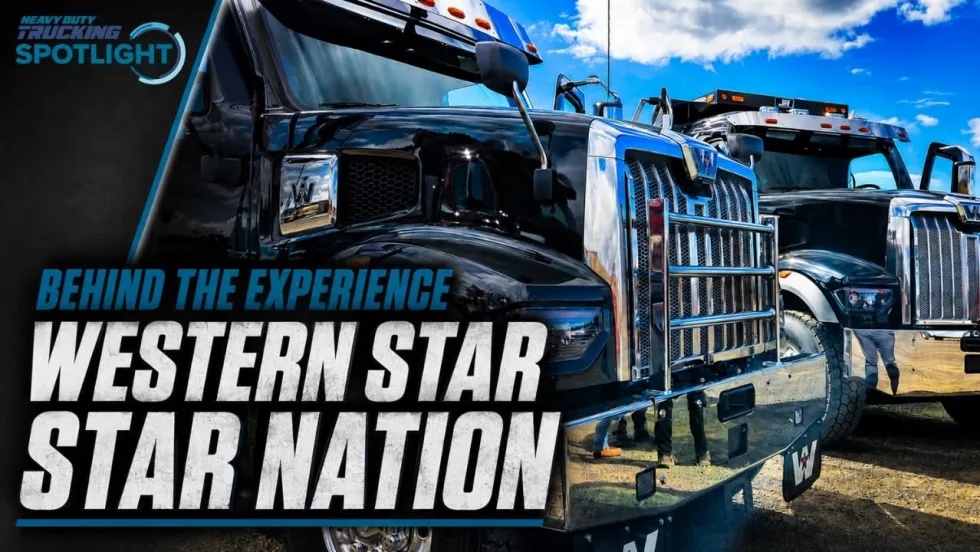
Drivers Put Western Star Trucks to the Test at Star Nation Experience
Watch to get an inside look at the Western Star trucks, technology, and community behind the Star Nation Experience 2026!
Read More →