




Bush Administration Unveils New Approach for Infrastructure
A clean and historic break with the past is needed to encourage the future vitality of our country's transportation network, said Transportation Secretary Mary Peters Tuesday in unveiling the Bush Administration's plan to change the national approach to transportation
A clean and historic break with the past is needed to encourage the future vitality of our country's transportation network, said Transportation Secretary Mary Peters Tuesday in unveiling the Bush Administration's plan to change the national approach to transportation.
"Without a doubt, our federal approach to transportation is broken. And no amount of tweaking, adjusting or adding new layers on top will make things better," Peters said. "It is time for a new, a different and a better approach."
She said the plan sets a course for reforming the nation's transportation programs by outlining a renewed federal focus on maintaining and improving the Interstate highway system, instead of diverting funds for wasteful pet projects and for programs clearly not federal priority areas like restoring lighthouses.
Addressing urban congestion and giving greater flexibility to state and local leaders to invest in their most needed transit and highway priorities is another key focus of the reform plan, said Peters. Local leaders will have greater freedom and significantly more resources to fund new subways, bus routes or highways as they choose, based on the needs of local commuters instead of the dictates of Washington.
As part of this focus on congestion, the plan would create a Metropolitan Innovation Fund that rewards cities willing to combine a mix of effective transit investments, dynamic pricing of highways and new traffic technologies.
The reform plan also calls for greatly reducing over 102 federal transportation programs which have proliferated over the last two decades replacing them with eight comprehensive, intermodal programs that will help focus instead of dilute investments, and cut the dizzying red-tape forced upon local planners, Peters said.
A hallmark of the plan is a refocused and redoubled emphasis on safety, using a data and technology-driven approach that also gives states maximum flexibility to tackle their toughest safety challenges. Using a data-driven approach, she said, we are and must continue focusing on issues that put drivers, commercial drivers, passengers and pedestrians at risk, including crashes involving drunk drivers, motorcycles, work zones and rural roads.
And to improve the current 13-year average it takes to design and build new highway and transit projects in the United States, Peters said the federal review process would be streamlined to ask the same stringent environmental and planning questions, but get answers more quickly.
She emphasized that central to any reform for transportation is finding new revenue sources to supplement the unpredictable and unsustainable gas tax, in order to fund maintenance and pay for new needed projects. She said the gas tax is an antiquated mechanism, underscored by the current climate of high gas prices. Americans are driving less and taking advantage of transit options, but less driving also results in less revenue for transit operations.
More direct pricing options like tolling are needed, Peters said, and states must be empowered to take advantage of the over $400 billion available worldwide for infrastructure investments from the private sector. "The idea is simple: use federal funds to encourage new sources of investments for transportation, instead of replacing them," she said.
"Our plan will make it easier to pay for and build roads and transit systems. It will deliver fewer traffic tie ups, better transit services and a stronger economy. It will make our roads safer and give Americans new confidence that the money they invest in transportation will actually deliver results," Peters said.
The plan lays out the Administrations' framework for completely overhauling the way U.S. transportation decisions and investments are made, and is intended to spur local, state and federal debate about how best to incorporate the new reforms into surface transportation legislation slated to be considered by Congress in 2009. She will personally brief members of Congress on the contents of the plan this week.
A copy of the reform plan is available at www.fightgridlocknow.gov.
A copy of the remarks can be found at http://www.dot.gov/affairs/peters072908.htm.
More Drivers

Driver Trust Can Make or Break the Success of Fleet Safety Technology
New Teletrac Navman research suggests that onboarding, transparency about driver data, and positive feedback can play a significant role in how commercial drivers respond to safety and coaching technology.
Read More →
EEOC Sues KLLM Over Alleged Sex Discrimination in Driver Training
KLLM is facing a federal sex-discrimination lawsuit over policies the EEOC alleges put female truck driver trainees at a disadvantage.
Read More →
FMCSA Moves to Codify English Language Requirements for Commercial Drivers
By changing regulations on English-language proficiency requirements for commercial drivers, rather than relying on a guidance memo, the FMCSA said future administrations won't be able to walk back the Trump administration's stricter enforcement with just a memo.
Read More →
Drivers Put Western Star Trucks to the Test at Star Nation Experience
Watch to get an inside look at the Western Star trucks, technology, and community behind the Star Nation Experience 2026!
Read More →
Trump Administration Looks to Put More Veterans Behind the Wheel
The Freedom Haulers program pulls together existing and expanded programs at several federal agencies to recruit veterans to drive commercial heavy-duty trucks and cut the red tape for them to get a CDL, training, and employment.
Read More →
Putting Mack’s Command Steer to the Test
A test drive of Mack’s Command Steer active steering system evaluates how it can make truck driving easier and less tiring.
Read More →
Competition Heating Up for Truck Drivers
New report reveals rising driver hiring costs, the return of sign-on bonuses, growing AI advantages, and the operational factors shaping driver retention.
Read More →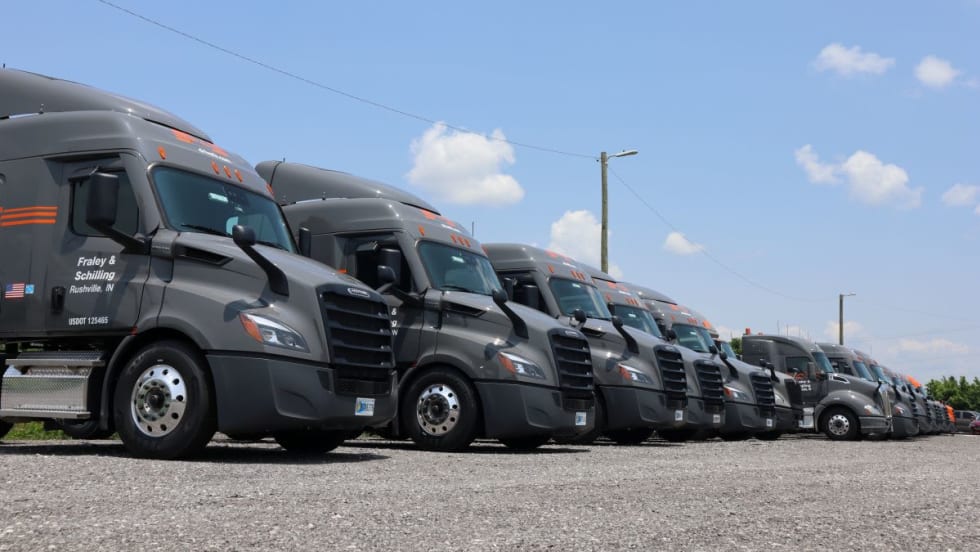
How Fraley & Schilling Improved Logbook Compliance by Over 50%
Fraley & Schilling needed a way to close a compliance workflow gap in its ELD system without adding more work from driver training, reminders, and back-office follow-ups. It found the answer in a custom driver app.
Read More →
Volvo Goes Gaming
Volvo has roared into American Truck Simulator with two new flagship trucks.
Read More →
What the Best Fleets to Drive For Teach About Driver Retention
Survey fatigue, AI-powered routing, owner-operator expectations, and the decline of social media all emerged as themes from this year's Best Fleets to Drive For program.
Read More →