




ATA Opposing Privatization of U.S. Toll Facilities
The board of directors of the American Trucking Associations this week voiced strong opposition to the privatization or leasing of existing toll facilities to fund highway infrastructure projects
The board of directors of the American Trucking Associations this week voiced strong opposition to the privatization or leasing of existing toll facilities to fund highway infrastructure projects.
ATA President and Chief Executive Officer Bill Graves, announced the decision at the national trade association’s 2006 Management Conference and Exhibition in Grapevine, Texas.
Graves told more than 2,000 participants, “ATA strongly opposes the lease or sale of existing toll roads, bridges or tunnels to private parties,” and called on government to abandon these financing techniques, which generate revenue “at great expense to the trucking industry and taxpayers and with potential negative impacts on highway safety, security and the motoring public.”
The trucking industry supports the objective of a toll-free national highway system where funds to finance highway improvement primarily come from highway user fees such as the fuel tax.
“Policymakers have to ask if it’s worth the economic risk and loss of control in determining the future use, renovation and expansion of our nation’s vital strategic assets, of which highway infrastructure may be of greatest importance,” Graves said. “ATA is prepared to lead a national coalition of highway users in opposition to these financing schemes that offer a short-term windfall but a long-term recipe for disaster.”
Graves cited the sheer volume of freight moved by truck, the pervasive number of communities served by trucks, and the trucking industry’s relevance in responding to natural disasters as benchmarks for gauging ATA’s position.
ATA’s board established a 10-point policy on privatization for those cases where toll facilities might end up in the hands of the private sector. Recommendations include: restricting the use of revenues generated by the sale of the lease to un-tolled highway projects; setting toll rates that only cover costs related to the toll facility plus a reasonable return on investment; providing adequate facilities for the trucking industry; rebating state fuel taxes paid by facility users; applying constraints on private operators’ ability to impose fees and restrictions on vehicles; establishing a “sinking fund” for continued maintenance and operation; preventing clauses that restrict improvements to competing roads; requiring open road tolling and making the technology compatible with that used on other Interstate toll roads; and creating performance specifications that ensure operations and maintenance which guarantee safety and provide for acceptable traffic flows.
Any privatization agreement also should create an oversight group with representation from major stakeholders, including the trucking industry.
More Drivers
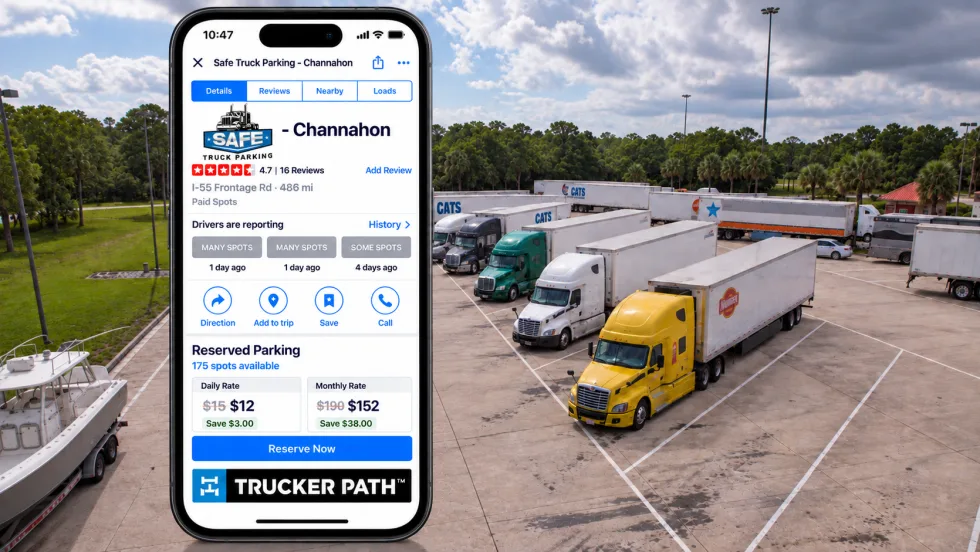
Trucker Path Expands Reserved Parking Network
Trucker Path has added close to 6,000 more truck parking spaces to its Trucker Path Reserved Parking Network with the addition of Safe Truck Parking.
Read More →
EEOC Sues Texas Trucking Company Over Driver Age Limits
The agency says Trancasa USA rejected applicants over 65 and applied tougher driving-record standards to those over 60.
Read More →
Nussbaum, Roehl Announce Second Driver Pay Increase This Year
This year has seen a swath of major truck driver pay increases as freight capacity has tightened.
Read More →
From One Generation to the Next: How Mentorship Builds Safer Truck Drivers
After three decades in trucking, Harold Perry shares what he's learned about driver safety, mentorship, and helping the next generation build confidence behind the wheel.
Read More →
Truck Drivers Need More Than Another Alert
Fleets have more visibility into truck health, safety events, and driver activity than ever. The next challenge is turning all that information into useful guidance for the person who has to decide what to do next.
Read More →
FMCSA Removes 110 Truck Driver Training Schools from Certified ELDT List
Federal regulators also are targeting more than 160 additional training providers and launching a nationwide audit of third-party CDL skills testers as part of a broader crackdown on trucking fraud.
Read More →
Hours of Service Pilot Programs: FMCSA Readies for 2027 Rollout
Two pilot programs could eventually reshape hours-of-service rules, giving truck drivers options to pause their 14-hour clock or use longer split sleeper rest periods.
Read More →
Medical Cards, English Proficiency Reshape Roadcheck Violations
Medical-card violations jumped to the top of the driver out-of-service list during CVSA’s 2026 International Roadcheck, while English-language proficiency violations appeared among the leading violations for the first time.
Read More →
Driver Trust Can Make or Break the Success of Fleet Safety Technology
New Teletrac Navman research suggests that onboarding, transparency about driver data, and positive feedback can play a significant role in how commercial drivers respond to safety and coaching technology.
Read More →
EEOC Sues KLLM Over Alleged Sex Discrimination in Driver Training
KLLM is facing a federal sex-discrimination lawsuit over policies the EEOC alleges put female truck driver trainees at a disadvantage.
Read More →