




AASHTO: Crisis Ahead For U.S. Transportation System
The U.S. transportation system is facing a serious crisis in years ahead, with another 1.8 million trucks expected to be on the roads in 10 years, according to a recent study by the American Association of State Highway and Transportation Officials (AASHTO)
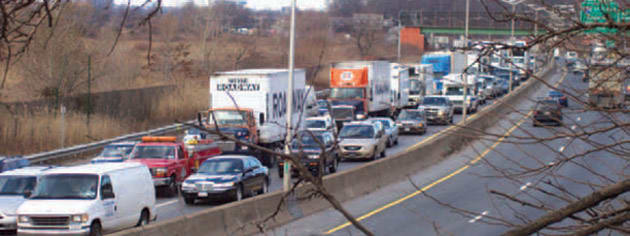
(Photo courtesy of New York DOT)
The U.S. transportation system is facing a serious crisis in years ahead, with another 1.8 million trucks expected to be on the roads in 10 years, according to a recent study by the American Association of State Highway and Transportation Officials (AASHTO).
According to AASHTO, in 20 years, there will be an additional truck for every two on the road today, adding to our nation's already congested bottlenecks.
In Unlocking Freight, AASHTO finds that our highways, railroads, ports, waterways, and airports require investments well beyond current levels to maintain - much less improve - their performance. The report identifies key projects in 30 states that would improve freight delivery and dependability, and offers a three-point plan to address what is needed to relieve freight congestion, generate jobs and improve productivity.
"The simple fact is: no transportation, no economy," said Larry L. "Butch" Brown, AASHTO president and Mississippi DOT executive director. "They are inseparable. We must invest to maintain and strengthen the American 'transconomy.'"
Despite more long-distance freight being moved by intermodal rail, the report finds that trucks will still carry 74 percent of the load. On average, 10,500 trucks a day travel some segments of the Interstate Highway System today. By 2035, this will increase to 22,700 commercial trucks for these portions of the Interstate, with the most heavily used segments seeing upwards of 50,000 trucks a day.
"It's unfortunate that many of the 35 million travelers who hit the road for the Fourth of July holiday this past weekend spent hours of their vacation time stuck in traffic," said John Horsley, AASHTO's executive director. "Ten thousand commercial trucks face that kind of gridlock everyday."
"To accommodate this predicted growth in freight movement, we need to think nationally, regionally, and on a multi-modal level," said Tennessee Department of Transportation Commissioner Gerald Nicely, which hosted a news conference on the issue. "Central to this effort should be the creation of a National Multimodal Freight Plan to ensure that transportation investments are coordinated and made where most needed. By linking trucks, rail, waterway transport, and aviation, freight can be moved more efficiently throughout the nation."
What Can Be Done
AASHTO's report outlines three key areas our nation should focus on to address the anticipated transportation system crisis. First, we need to build the capacity improvements that are needed.
The group recommends the highway system be expanded by:
* adding 32,000 lane-miles
* upgrading 14,000 lane-miles of the national highway system
* adding 14,000 lane-miles to NAFTA corridors
* adding 8,000 lane-miles of truck-only toll facilities
* adding 400 lane-miles accessing key port and intermodal facilities
The second recommendation is to create and fund a freight program, such as the one included in the authorization bill proposed by Chairman James Oberstar in the House of Representatives. AASHTO believes the highway program should be funded at $375 billion over six years, with $3 billion annually apportioned to the states for freight investment from the Highway Trust Fund, and $7 billion provided annually through freight fees outside the Highway Trust Fund.
The group also recommends the DOT develop a National Multimodal Strategic Freight Plan.
Lastly, the report points to investment in intermodal connector improvements, including dredging deeper harbors and addressing bridge clearances that are too low for the vessels that will come through the Panama Canal. AASHTO believes surplus in the federal Harbor Maintenance Trust Fund should be used for dredging and harbor maintenance.
"The intermodal freight connectors of the National Highway System (NHS) are the first and last miles of roadway used by truckers to travel between major highways of the NHS and the nation's ports, rail terminals, and air cargo hubs," the report said. "They are usually local roads and often weave their way through older industrial and residential neighborhoods. They are critical connectors but are often the weakest links in the freight transportation network. Without attention to the "last mile" of freight transportation, the value of the investment in national highway and rail connectivity is much reduced."
Unlocking Freight is the second in a series of reports generated by AASHTO to identify the need to increase capacity in our transportation system.
For more information, go to expandingcapacity.transportation.org.
More Drivers

When Language Stops the Truck: The Return of ELP Out-of-Service Orders
English language proficiency rules for commercial drivers aren’t new, but renewed out-of-service enforcement has raised the stakes. Here’s what carriers need to know before a driver reaches a roadside inspection.
Read More →
Samsara Launches Custom AI Agent Builder
Agent Studio lets fleets create AI tools for hours-of-service monitoring, reporting and driver support, including agents that communicate by phone.
Read More →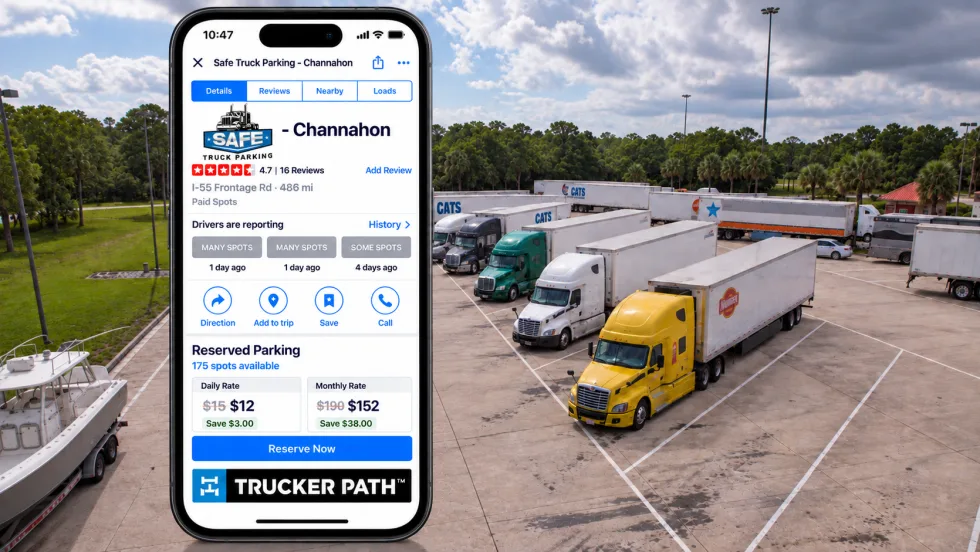
Trucker Path Expands Reserved Parking Network
Trucker Path has added close to 6,000 more truck parking spaces to its Trucker Path Reserved Parking Network with the addition of Safe Truck Parking.
Read More →
EEOC Sues Texas Trucking Company Over Driver Age Limits
The agency says Trancasa USA rejected applicants over 65 and applied tougher driving-record standards to those over 60.
Read More →
Nussbaum, Roehl Announce Second Driver Pay Increase This Year
This year has seen a swath of major truck driver pay increases as freight capacity has tightened.
Read More →
From One Generation to the Next: How Mentorship Builds Safer Truck Drivers
After three decades in trucking, Harold Perry shares what he's learned about driver safety, mentorship, and helping the next generation build confidence behind the wheel.
Read More →
Truck Drivers Need More Than Another Alert
Fleets have more visibility into truck health, safety events, and driver activity than ever. The next challenge is turning all that information into useful guidance for the person who has to decide what to do next.
Read More →
FMCSA Removes 110 Truck Driver Training Schools from Certified ELDT List
Federal regulators also are targeting more than 160 additional training providers and launching a nationwide audit of third-party CDL skills testers as part of a broader crackdown on trucking fraud.
Read More →
Hours of Service Pilot Programs: FMCSA Readies for 2027 Rollout
Two pilot programs could eventually reshape hours-of-service rules, giving truck drivers options to pause their 14-hour clock or use longer split sleeper rest periods.
Read More →
Medical Cards, English Proficiency Reshape Roadcheck Violations
Medical-card violations jumped to the top of the driver out-of-service list during CVSA’s 2026 International Roadcheck, while English-language proficiency violations appeared among the leading violations for the first time.
Read More →