




The Weight is Over: New Front-End Introductions
Fleets spec'ing new trucks are suffering several stages of sticker shock. For one, the price has just jumped another $10,000 for EPA 2010-compliant engines
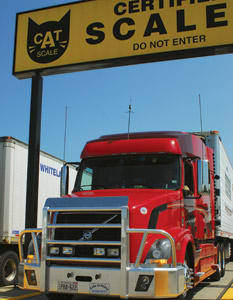
Trucks are getting heavier, especially on the front axle. But help is at hand with new weight-saving front-end introductions. (Photo by Jim Park)
Fleets spec'ing new trucks are suffering several stages of sticker shock. For one, the price has just jumped another $10,000 for EPA 2010-compliant engines.
For another, the weight of the trucks - especially on the front axle - has jumped to where it is becoming increasingly difficult to move the same payload that's been the norm.
Truck manufacturer and supplier response has been to escalate from the industry standard for over-the-road trucks of 12,000 pounds on the front axle to 12,500 or 13,200 just to be legal. But that takes available weight within the 80,000 pounds gross off the truck or trailer tandem.
Then there's the upcoming stopping-distance regulation calling for bigger brakes. Something has to give.
According to Dan Souhan, product manager for steer axles at Dana, weight savings, maintenance reductions, reliability improvements and the need to accommodate the industry's move to larger brakes are the primary factors currently influencing steer axle designs.
"The new emissions requirements require components that are adding unwanted weight gains to the front end of vehicles," Souhan said. "To help offset those increases, we have been concentrating engineering resources on reducing the weights of our systems as much as possible, with of course, no sacrifice to reliability."
He singled out Dana's E-1202 steer axle as one example where an optimized knuckle design has resulted in "significant weight savings due to the compact package that is a key element of this axle."
That same line-haul axle, he added, has a patented power rib beam and a wealth of other patented or patent-pending features that will help the trucking industry's transition into shorter stopping distances. "The key here is to maintain excellent handling capabilities, reduce maintenance, and improve performance," Souhan said.
Addressing overall reliability issues, Dana is now concentrating on improving the integrity of key components that tend to wear out fastest, such as tie rod ends and king pin joints.
Sean Coleman, who's responsible for truck products at Hendrickson, said his company's response has been to look long and hard at what they can do to take weight out of the front-end components they manufacture to pass along real weight savings to the fleets. An example is the newly released SofTek at International, Coleman said. It can take 92 pounds off the front-end compared with conventional solutions.
This introduction is one of the ways Hendrickson is working with a truck manufacturer to optimize a design in a "virtual integration" process. In this case, working with Navistar engineers, Hendrickson has optimized the axle in its mounting and the steering attachments so additional weight has been carved out of the final design.
The axle is also rated at 12,350 pounds, keeping the weight on other axles of the combination but giving at least a little leeway on the SofTek, which is now standard on the LoneStar and optional on the ProStar.
The same axle optimization has been achieved with International's MaxxPower Air Suspension, which is a little different from others in using a five-rod axle location with the air spring carrying the vehicle weight.
According to Coleman, the modern front suspension is a far cry from the earlier three-leaf steel spring that used to be a feature of truck front ends. That has given way to a two-leaf, or as on Freightliner, a leaf-and-a-half. The key to these designs is that there is a redundancy in the design where if the main leaf fails, there is still a positive connection to the front spring shackle to retain the axle in position to maintain steering control. The unique feature of the SofTek spring is in the redundancy of the front shackle that ensures that if a failure were to occur, the monoleaf SofTek would still retain the axle in position. And as it is a single leaf, the suspension is as light as it can be.
Weight savings has been Hendrickson's claim to fame throughout the 10 years the fabricated SteerTek axle has been in production. The fabricated beam has distinguished this axle and brought significant weight savings over the conventional I-beam axle.
That story is not finished yet. The axle will be further optimized for the bigger brakes coming along for the new regulation that hits in 2011.
The full AirTek axle and air spring has been a very successful product for Hendrickson and is offered at Freightliner, where it was introduced, and is now available at International, Volvo and Mack.
Over at Paccar, weight-saving air front suspension is available through proprietary systems - the AG130 from Kenworth and the Front Air Leaf at Peterbilt. Both of these use air springs to support 75 percent of the vehicle weight, with the balance provided by the monoleaf spring, which has a second half-leaf to locate the axle. They are also lighter than the all-steel two-leaf setup used by both nameplates, saving 20 to 26 pounds depending on model.
These suspensions are also compatible with disc brakes, which offers a second avenue for weight savings - not so much today but come the shorter stopping distance in 2011, that changes. According to Gary Ganaway, Bendix director of marketing and global development, the biggest savings come with the Bendix splined disc, which can be used in association with aluminum hubs. The savings come 2011 could be as much as 30 pounds per wheel end for an additional system saving of 60 pounds, depending on which bigger drum brake it is compared to.
Steering systems
The introduction by Freightliner of rack and pinion steering at the Mid-America Trucking Show in 2006 saw a flurry of activity in new designs for heavy truck steering and suspension that could also save weight. We test drove the demo truck at the show and were impressed with the precision and feel of the steering.
At the following show, there were prototype steering systems from TRW and from Sheppard. In the interim, ZF had retrofitted a Volvo VN with its European rack and pinion steering, and we had an opportunity to drive this sharp-steering truck.
At around the same time, independent front suspensions were getting an airing. Dana had put together a technology demonstration truck with a double-wishbone independent front suspension. Freightliner Custom Chassis Corp. was already building an RV chassis at its plant in South Carolina. ZF was also supplying a light IFS for bus and RV applications in Europe.
At the 2007 Mid-America show, Reyco Granning showed an IFS setup for commercial vehicles. This is now available as the OptiRide IFS1800 and is available at an 18,000-pound rating for RV and fire markets.
The Oshkosh TAK-4 is also an IFS for these industries. This suspension is packaged with the Sheppard rack and pinion steering, and it's a very robust system. However, the demands of the on-highway truck are far less severe, and the current air suspensions, lightweight steel springs and conventional steering gears, like the new D series engineered for the International ProStar, do an excellent job.
The flurry of activity on the steering side has been greatly set back by the faltering truck market. The only product that made it to market on a heavy truck, Freightliner's rack and pinion option, has now disappeared from the marketplace despite rave reviews.
ZF is strong in Europe, so it is possible that its rack and pinion and independent front suspension could see a debut on truck chassis there in the 2013 timeframe (the date set for the switch to Euro 6 emissions). That could result in a return of the technology here.
Shock absorbers
Two developments in the wings involve varying the amount of damping according to load, road and speed to add stability to the suspension. A second target is the recovery of the damping energy currently wasted to the air.
The German components supplier ZF, through its subsidiary Sachs, is a major force in all types of susp
More Maintenance

Color Match Smarter: Tools That Restore & Perform
For fleet managers and collision repair professionals keeping heavy-duty trucks on the road, getting the color right the first time isn't just about appearance — it's about efficiency, turnaround time, and bottom-line results. Discover how today's digital color tools are transforming the repair process from guesswork to precision.
Read More →
Wrong Repair Prompts Recall of Freightliner, Western Star 4x2 Trucks
DTNA is recalling more than 2,400 trucks that received an incompatible software fix instead of the hardware repair required to address brake valve corrosion.
Read More →
Truck Drivers Need More Than Another Alert
Fleets have more visibility into truck health, safety events, and driver activity than ever. The next challenge is turning all that information into useful guidance for the person who has to decide what to do next.
Read More →
The Maintenance Checks Trucking Fleets Should Prioritize Before Fall Freight Picks Up
Making it through August isn’t the same as being ready for the next several months of operation. Find out what systems may have suffered from summer heat and need to be checked out before fall.
Read More →
What Three Fleets Are Doing Differently When Buying Truck Parts in 2026
With freight improving but costs still climbing, fleet maintenance executives explain how they're balancing price, quality, and supplier relationships.
Read More →
Paccar Recalls 2027 Trucks Built This Summer for Possible Electrical Problem
The nearly 6,000 Kenworth and Peterbilt trucks in the recall could potentially lose engine power, among other things.
Read More →
Will API PC-12 Oil Change Trucking Fleet Maintenance?
The new API PC-12 heavy-duty engine oil category reflects the changing demands of modern diesel engines. But fleets like Foodliner are looking to getting their own data before making decisions on adopting the new oils and questions such as extending oil drain intervals.
Read More →
Brake Safety Week to Focus on Drums and Rotors
Commercial vehicle inspectors are focusing on truck brakes during CVSA's Brake Safety Week, August 23-29.
Read More →Possible Battery-Cable Fires Prompt Recall of 15,000+ International MV and HV Trucks
On the recalled vehicles, manufacturing variations can cause the battery interconnect cable to contact the auxiliary stud and hold down the bracket.
Read More →
Rush, MCT Team Up to Grow Refrigeration Service Network
The joint venture will operate MCT's network of Carrier Transicold dealerships and mobile service locations, with the companies promising greater service capacity and uptime for refrigerated fleets.
Read More →