




Synthetic Oils & Lubes: Made to Measure
Synthetic oils make up only a small part of the lubricant market, but they are set to take on a more significant role

Synthetic engine lubricants are not new, but their cost has made them unattractive. That may be changing.
Synthetic oils make up only a small part of the lubricant market, but they are set to take on a more significant role.
Additional demands are being made of engine protection with predicted longer trade cycles. They can help with fuel economy for lower operating costs and help diesel engine manufacturers meet mandated fuel economy targets.
Already, the U.S. Environmental Protection Agency's stringent controls on NOx and particulate emissions have prompted the use of more synthetics in some of the latest CJ-4 oils. As more fleets start buying trucks again, there will be more pressure to switch from CI-4 to the newer category.
Thanks to all these factors, the market for synthetic oils is expected to increase from its current 10 percent share. Predictions range from 3 percent, according to Valvoline's director for C&I marketing, Pete Thomson, to 7 percent per year as reported by George Gill in Lubes'n'Greases magazine earlier this year.
About synthetics
What is a synthetic lubricant? It is a lubricating oil with a base stock from one of three categories of base stock oils. These "Groups" range from the severely hydrogenized mineral oils of Group III to the "designer" oils manufactured from natural gas: the poly alpha olefins (PAO) of Group IV and the esters of Group V, explains Valvoline's Thomson. The first Groups in the series - I and II - are the conventional mineral oils or mildly hydrogenized oils.
For the heavy-duty diesel engine - and the truck driveline - the synthetic base stocks we are most concerned with are the Group III and Group IV oils that have significant additional manufacturing costs. Lube oils that use them as the base stocks are more expensive than base mineral oil. By the time they are formulated, packaged and placed on the shelves, they are at least twice as expensive.
According to all-synthetic oil formulator Amsoil, the price of synthetics today is on a much more equal footing with straight mineral oils than used to be the case, when they were five to 10 times as costly. Part of the reason, says Spokesman Ed Newman, is that the reformulation of diesel lubes through CI-4, CI-4+ and the latest CJ-4 API oil classifications has been very costly. The research and qualification for the classification, plus the increased cost of the base oils (some of them being Group III synthetic), has raised the cost of the lubricant. At the same time, however, the price of a full Group III-based (and especially a Group IV-based) oil has remained pretty stable.
The important thing about Group III and IV synthetics is that the less desirable characteristics found in components of conventional mineral oils are engineered out. Thus, as a general rule, the higher the Group category of the base stocks, the better the performance, the better the temperature stability and the better the pumpability.
This is what allows synthetics to perform at low temperatures, easing the cranking and speeding the delivery of lubricant to the engine's working surfaces much more quickly in cold weather. It also makes them more stable and oxidation-proof at high temperatures, resisting viscosity increase over time and making longer extended drains possible.
In fact, says Mark Betner, Citgo heavy duty lubricants manager, Citgo's Citgard SynDurance has a 25- to 30-degree cold cranking advantage over lubes based on straight mineral oils. This confers a number of advantages that offset the synthetics' higher price. Northern-based fleets have discovered that even down to very low ambient temperatures, they can dispense with plugging the truck block heaters in overnight. With electricity a dollar per kW per day, the savings for a big fleet can be significant. And wherever a truck is based, the engine turns over easier in any start, with oil flowing sooner to protect in the first few moments of the engine firing up.
Dan Arcy, Shell's OEM technical manager, says tests have shown a significant difference in the energy consumed in starting a truck lubricated by a conventional 15W-40 compared with a synthetic 5W-40. That means less wear and tear on the batteries and starting system. And since the electric energy to swing the starter comes ultimately from the fuel tank, it also is a contributor to fuel economy. In the days of 40 percent idle time, this was likely unmeasurable. With idle time now coming down to 10 percent or less, more engine starts are required, and the energy savings start to add up. Certainly, the good pumpability of the synthetic should help offset any additional wear such increased starting activity might be promoting.
Arcy also suggests that the synthetic lube's low-temperature starting performance and its stability at high temperatures means that it is a natural lubricant to use in an auxiliary power unit. After all, you want the APU to start on demand - otherwise it is worthless - and to run in the hottest of summer temperatures. With a sump capacity of only about a gallon, the slightly higher cost of synthetic lubes is insignificant.
Fuel economy
The improvement in fuel economy has long been a claim of synthetic lube suppliers. Amsoil's Newman says the company has done extensive testing for economy. The difference between a truck with no synthetic lubes in the engine, drivetrain and hubs and one with synthetics throughout has measured out at an 8 percent fuel economy improvement, he says.
With just a switch from a regular 15W-40 to its 5W-40 synthetic, Valvoline's Thomson says there is a measurable economy improvement. In fact, in the fall of 2009, Valvoline announced its Fuel Proof Guarantee, where the company would offer participating fleets fuel economy gains of 4 percent or more underwritten by a guarantee. To qualify, a fleet must run Valvoline's synthetic Premium Blue Extreme engine oil and Syn Gard transmission and axle lube together. (They must also use the innovative tiwi driver performance device introduced at the same time.)
Thomson says the actual economy improvement varies by fleet and vocation, and the Fuel Proof Guarantee target is reached by local field people working with each fleet and application.
Citgo's Betner agrees that the economy benefits will vary by vocation. He says some fleets test and test and find no measurable advantage, while others are delighted with the improvements. Certainly there was a flurry of activity a few years ago when fuel was $4 to $5 a gallon, with big Citgo fleet customers looking for economy. Many switched to 5W-40 synthetics at that time.
Part of the reason behind the fuel economy improvements is the lower viscosity rating of the oils. But it's the synthetic base stocks that have helped allow these lower viscosity oils to still offer the protection needed by today's heavy-duty engines.
Economy mandates
Betner also points to European engine manufacturers and trucking fleets, which operate in a $6 and $7 fuel environment. There the use of synthetic lubes is widespread for their economy advantage. And with the current administration mandating fuel economy improvements for heavy-duty diesels in the 2014 timeframe, he believes engine manufacturers may well be driven to the first fill of synthetic lubes as a relatively easy way to kick up fuel economy.
The new 12.9-liter Paccar MX in both Peterbilt and Kenworth is factory filled with 5W-40 in Europe, where it powers the heaviest Paccar DAF trucks - and has done so very successfully for four years.
Underscoring this argument is the experience in the passenger car environment, where CAFE standards have forced an ever-increasing use of wide-temperature-range low-viscosity synthetics. Just recently, Toyota switched to a 0W-20 oil!
Additive packages
Because they have a premium price point, synthetics also generally get a more robust additive package. Newman says Amsoil's formulation includes "a beefier additive package" that also offers significantly more
More Maintenance

Color Match Smarter: Tools That Restore & Perform
For fleet managers and collision repair professionals keeping heavy-duty trucks on the road, getting the color right the first time isn't just about appearance — it's about efficiency, turnaround time, and bottom-line results. Discover how today's digital color tools are transforming the repair process from guesswork to precision.
Read More →
Wrong Repair Prompts Recall of Freightliner, Western Star 4x2 Trucks
DTNA is recalling more than 2,400 trucks that received an incompatible software fix instead of the hardware repair required to address brake valve corrosion.
Read More →
Truck Drivers Need More Than Another Alert
Fleets have more visibility into truck health, safety events, and driver activity than ever. The next challenge is turning all that information into useful guidance for the person who has to decide what to do next.
Read More →
The Maintenance Checks Trucking Fleets Should Prioritize Before Fall Freight Picks Up
Making it through August isn’t the same as being ready for the next several months of operation. Find out what systems may have suffered from summer heat and need to be checked out before fall.
Read More →
What Three Fleets Are Doing Differently When Buying Truck Parts in 2026
With freight improving but costs still climbing, fleet maintenance executives explain how they're balancing price, quality, and supplier relationships.
Read More →
Paccar Recalls 2027 Trucks Built This Summer for Possible Electrical Problem
The nearly 6,000 Kenworth and Peterbilt trucks in the recall could potentially lose engine power, among other things.
Read More →
Will API PC-12 Oil Change Trucking Fleet Maintenance?
The new API PC-12 heavy-duty engine oil category reflects the changing demands of modern diesel engines. But fleets like Foodliner are looking to getting their own data before making decisions on adopting the new oils and questions such as extending oil drain intervals.
Read More →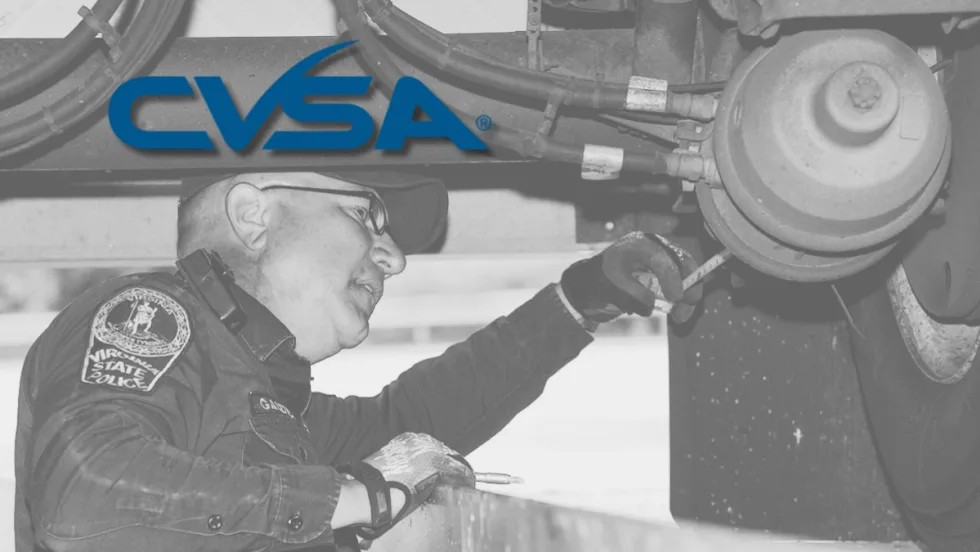
Brake Safety Week to Focus on Drums and Rotors
Commercial vehicle inspectors are focusing on truck brakes during CVSA's Brake Safety Week, August 23-29.
Read More →Possible Battery-Cable Fires Prompt Recall of 15,000+ International MV and HV Trucks
On the recalled vehicles, manufacturing variations can cause the battery interconnect cable to contact the auxiliary stud and hold down the bracket.
Read More →
Rush, MCT Team Up to Grow Refrigeration Service Network
The joint venture will operate MCT's network of Carrier Transicold dealerships and mobile service locations, with the companies promising greater service capacity and uptime for refrigerated fleets.
Read More →