




Spec’ing a Low-Maintenance Trailer
Knowing when and where to save money when spec'ing a trailer can prevent headaches in the long run.

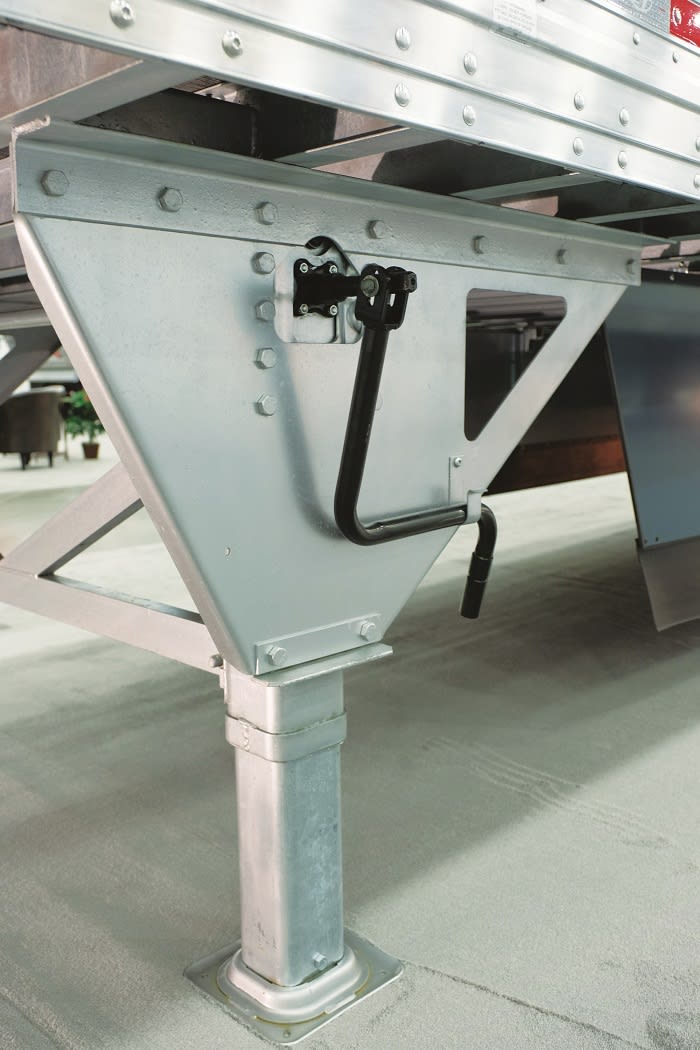
Galvanizing is a cost-effective hedge against corrosion, but the upcharge might not pencil out on a short-life-cycle trailer. Photo: Jim Park
Trailers, like tractors, wear out in time; maybe five years, maybe 10 or 15. Truckload carriers tend to have the shortest trade cycles, while some grocery companies keep trailers 12 years or more, says Darry Stuart, contract fleet maintenance manager and a former general chairman of the Technology & Maintenance Council of American Trucking Associations.
“The food service fleets will keep trailers in service for a long time because they build them to last in low-mileage, high-cycle operations,” he says. ”The truckload fleets build them light and cheap, and after five years, they are done.”
Maintenance practices differ accordingly. Trailers tend to run fewer miles than tractors in truckload service because of tractor-to-trailer ratios, so running gear won’t wear out as fast. Electrical problems can be greatly reduced with high-quality wiring harnesses, but electrics are subject to impact damage and often improper repairs, Stuart warns.
“The harnesses are not the issue,” he says. “The suppliers are building good product today, but we still see problems with the connectors after five years. The problems usually start where somebody has made an ugly repair on one of the wires. Moisture gets in there once it’s opened up and the wicking starts. There’s not much you can do from a spec’ing point of view, but a lot of fleets could do with a review of their trailer electrical repair procedures.”
Stuart says the trailer spec really depends on a fleet’s maintenance program. If it’s spotty, then spec’ing more reliability into the trailer will pay off, such as automatic tire inflation systems and air disc brakes. “Neither will eliminate the need for regular maintenance, but they might get you through longer periods without touching the trailer,” he says. “Fleets that see trailers regularly might not see the benefit of up-spec’ing equipment.”
There are a few ways to spec more reliability or durability into a trailer, but of course there will be an upcharge:
Galvanized running gear: At this year’s Mid-America Trucking Show, there were several galvanized trailers, including vans and flatbeds. Some had galvanized wheels, too, something new to the market. “Galvanize everything under a trailer,” insists Stuart. “People are smart enough now to know that trailers rust out. If they don’t galvanize everything, they are making a huge mistake.”
More batteries and solar panels for liftgates: “When you add a liftgate, you need to think about the reserve capacity of the batteries or even add batteries,” says Joe Puff, vice president of truck technology & maintenance at NationaLease. “In many cases, spending an extra few hundred bucks up front on more or better batteries, higher output alternators and even solar panels can save thousands of dollars over the life of the asset. People will often blame a failed component for a breakdown, but the problem often starts with not understanding the duty cycles and the demand on a component when spec’ing the truck.”
Related: Avoid Headaches by Spec'ing the Right Truck
More Maintenance

Color Match Smarter: Tools That Restore & Perform
For fleet managers and collision repair professionals keeping heavy-duty trucks on the road, getting the color right the first time isn't just about appearance — it's about efficiency, turnaround time, and bottom-line results. Discover how today's digital color tools are transforming the repair process from guesswork to precision.
Read More →
Wrong Repair Prompts Recall of Freightliner, Western Star 4x2 Trucks
DTNA is recalling more than 2,400 trucks that received an incompatible software fix instead of the hardware repair required to address brake valve corrosion.
Read More →
Truck Drivers Need More Than Another Alert
Fleets have more visibility into truck health, safety events, and driver activity than ever. The next challenge is turning all that information into useful guidance for the person who has to decide what to do next.
Read More →
The Maintenance Checks Trucking Fleets Should Prioritize Before Fall Freight Picks Up
Making it through August isn’t the same as being ready for the next several months of operation. Find out what systems may have suffered from summer heat and need to be checked out before fall.
Read More →
What Three Fleets Are Doing Differently When Buying Truck Parts in 2026
With freight improving but costs still climbing, fleet maintenance executives explain how they're balancing price, quality, and supplier relationships.
Read More →
Paccar Recalls 2027 Trucks Built This Summer for Possible Electrical Problem
The nearly 6,000 Kenworth and Peterbilt trucks in the recall could potentially lose engine power, among other things.
Read More →
Will API PC-12 Oil Change Trucking Fleet Maintenance?
The new API PC-12 heavy-duty engine oil category reflects the changing demands of modern diesel engines. But fleets like Foodliner are looking to getting their own data before making decisions on adopting the new oils and questions such as extending oil drain intervals.
Read More →
Brake Safety Week to Focus on Drums and Rotors
Commercial vehicle inspectors are focusing on truck brakes during CVSA's Brake Safety Week, August 23-29.
Read More →Possible Battery-Cable Fires Prompt Recall of 15,000+ International MV and HV Trucks
On the recalled vehicles, manufacturing variations can cause the battery interconnect cable to contact the auxiliary stud and hold down the bracket.
Read More →
Rush, MCT Team Up to Grow Refrigeration Service Network
The joint venture will operate MCT's network of Carrier Transicold dealerships and mobile service locations, with the companies promising greater service capacity and uptime for refrigerated fleets.
Read More →