




Ready for Reman
The average age of a truck in the U.S. fleet is now about 6.7 years. That's about 11 months older than the historical average and the oldest it has ever been, according to ACT data going back to 1979

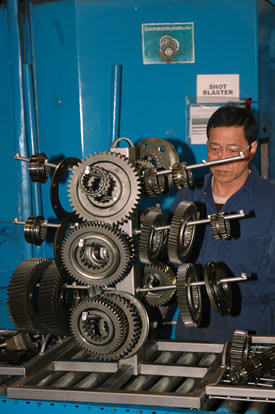
The average age of a truck in the U.S. fleet is now about 6.7 years. That's about 11 months older than the historical average and the oldest it has ever been, according to ACT data going back to 1979.
Deciding, mid-course, to squeeze another year or two out of in-service rolling stock came with its share of problems. It's not that the equipment wasn't up to the challenge, or that the established maintenance and repair schedules weren't sufficient, it was that many of the trucks scheduled for trade out - but are still now in revenue service - are out of warranty.
Especially today, it takes a little more than baling wire and prayer to keep a fleet that old rolling. Whether you just started keeping your trucks longer or you are in a vocation or business where keeping your equipment longer just makes sense, remanufactured parts can help.
Darry Stuart of DWS Fleet Management Services in Wrentham, Mass., notes that there is value for the fleet in all sorts of parts buying decisions, if they know up front what they want and need.
"How much a fleet should pay for a part, and where it comes from is dictated by what the fleet will do with the part," Stuart says. "How much are they willing to pay for the peace of mind that the part has warranty and a reputable supplier? If you're going to slap a part on a truck that never leaves the neighborhood, what value is national warranty? How long does the part need to last? If a fleet buys a part to keep a truck running for three to six months, a rebuild will be fine in most cases. If a fleet wants three or four years out of it, they may have go up-market."
Somewhere between the OE part with 24-month warranty and the white-box pays-your-money-and-takes-your-chances will-fit part is the name-brand remanufactured part.
Once upon a time, fleets could depend on pricing based on the history of a component. If it was new, you get the part for, say, $100. A remanufactured part would cost $80, and a rebuilt part might cost $60. The emergence of product manufactured in so-called low-cost countries like China, India, and Mexico, has blurred the pricing structure to where brand new parts can be had for less than the cost of a reman part - especially the so-called commodity parts like air valves and brake shoes.
Joe Stillson of Precision Rebuilders in St. Clair, Mo., used to sell a ton of reman air valves, among other things. But he says today he's almost unable to compete on price alone with new parts made overseas.
"We used to sell air compressor governors in lots of 1,000, and push them out the door all day long," Stillson says. "Today, we don't sell 500 a year."
It's the same with spring brakes, starters and alternators, and other commodity items that used to be the remanufacturer's bread and butter.
As Stuart points out, what you will be willing to pay for a part should be governed by its intended application. And the cost is often determined by how much goes into the product.
A remanufactured part and a rebuilt part are similar, but not exactly the same, say Bill Gager, president of the Automotive Parts Remanufacturers Association (which includes both automotive and heavy-duty members).
"A remanufactured part is completely disassembled, and all the worn and broken pieces are discarded or recycled. The parts have to be thoroughly inspected and cleaned, and the worn or broken bits are replaced or reconditioned to basically a new spec," he says. "And usually they're performance-tested before they are shipped.
"A rebuilt part is one that has generally just been repaired, which is to say, the broken pieces are replaced. It might have been cleaned up, and repainted before it's returned to market, but that's about it."
However, you will still sometimes see the terms used interchangeably. Just look at the name of Stillson's company - it uses the word "Rebuilders," but they're doing reman. Ask questions of your supplier about their process so you know what you're getting.
Joe Kripli, global business enterprise Leader at Wabco Reman Solutions, says the objective is to maintain the original OE quality level in the remanufactured product. Given the sophistication of truck systems today, there's little room for the B-team, especially in electronics.
"We don't fundamentally change the design or the component integrity when we reman an ECM or an ABS controller, for example," he says. "We use all the original design-specified components or their latest upgrades. Plus, we have the benefit of 20-20 engineering hindsight in that knowing the warranty history of the component, we can design out the troublesome parts and rebuild the unit with appropriate replacements. That means you're sometimes getting better-than-OE reman components."
In addition, the remanufactured part automatically gets the latest software revisions, ensuring that the finished product has the benefit of both the latest hardware and software updates when it is released to the field again.
"Our big selling point is failure analysis," says Bruce Purkey of Purkey's Fleet Electric in Rogers, Ark. "I can tell a fleet it has a problem even before the fleet knows it has a problem, and I can help them drill down to the real problem."
Take a shorted battery cell. The alternator works harder to overcome the short, heats up and burns out. The tech replaces the alternator. Has the problem been solved? No.
Purkey does failure analysis to reveal the real problems with take-off parts - which are sometimes perfectly good.
"I don't just remanufacture and rebuild starters and alternators," he says, "I can tell a fleet what is causing the problems and save them money previously wasted replacing the wrong parts or doing repairs by process of elimination. And when I rebuild a part, I can design around its weakness, and can usually give you back a better product than you took off," he says.
Transmissions and axles may demand less sophisticated remanufacturing processes than electrics and electronics, but they are no less good-as-new when they leave the plant.
Eaton's Fuller-brand Reman parts are stripped to the core and all internal components are inspected to ensure tolerances are maintained. Worn parts are replaced with new parts as required, and all the seals are upgraded to the latest generation. Then each unit is reassembled, bench tested and verified to as-new specifications.
ArvinMeritor's Mascot brand remanufactured parts also are completely dismantled, cleaned, inspected and returned to as-new condition. All synchronizers, bearings, seals, gaskets, hoses and valves are replaced. Every gear is examined and if worn or damaged is replaced with a new part.
They are as close to new as you'll get, and both major names back the product with substantial warranty - something that you won't get with a lot of rebuilt product.
One of the more costly and complex components that could cause trouble in later years are turbochargers. Once the OE warranty runs out, it's every man for himself, but at what point in the lifecycle of the vehicle does a reman component make more sense than a new one?
Thom Miles, marketing manager, North American aftermarket at BorgWarner Turbo Systems, says it depends on the warranty and how long you need the part to last.
"Looking at the failure modes of the original components, you'll have an idea of where the weaknesses are, and how long a replacement will last," he says. "A remanufactured turbo uses original equipment parts, returned to like new condition. They will be less costly, and will perform every bit as well as original, but they won't have the OE warranty."
Remanufacturing is increasingly handled by larger companies in order to handle the sophisticated l
More Maintenance

Truck Drivers Need More Than Another Alert
Fleets have more visibility into truck health, safety events, and driver activity than ever. The next challenge is turning all that information into useful guidance for the person who has to decide what to do next.
Read More →
The Maintenance Checks Trucking Fleets Should Prioritize Before Fall Freight Picks Up
Making it through August isn’t the same as being ready for the next several months of operation. Find out what systems may have suffered from summer heat and need to be checked out before fall.
Read More →
What Three Fleets Are Doing Differently When Buying Truck Parts in 2026
With freight improving but costs still climbing, fleet maintenance executives explain how they're balancing price, quality, and supplier relationships.
Read More →
Paccar Recalls 2027 Trucks Built This Summer for Possible Electrical Problem
The nearly 6,000 Kenworth and Peterbilt trucks in the recall could potentially lose engine power, among other things.
Read More →
Will API PC-12 Oil Change Trucking Fleet Maintenance?
The new API PC-12 heavy-duty engine oil category reflects the changing demands of modern diesel engines. But fleets like Foodliner are looking to getting their own data before making decisions on adopting the new oils and questions such as extending oil drain intervals.
Read More →
Brake Safety Week to Focus on Drums and Rotors
Commercial vehicle inspectors are focusing on truck brakes during CVSA's Brake Safety Week, August 23-29.
Read More →
Possible Battery-Cable Fires Prompt Recall of 15,000+ International MV and HV Trucks
On the recalled vehicles, manufacturing variations can cause the battery interconnect cable to contact the auxiliary stud and hold down the bracket.
Read More →
Rush, MCT Team Up to Grow Refrigeration Service Network
The joint venture will operate MCT's network of Carrier Transicold dealerships and mobile service locations, with the companies promising greater service capacity and uptime for refrigerated fleets.
Read More →
ConMet Expands Aftermarket Brake Drum Lineup With TruCast
A new heavy-duty truck brake drum option in the aftermarket gives customers more flexibility within the ConMet product family.
Read More →
Mack Expands Premium Service Contract Coverage to Medium-Duty MD
With a service contract, inspections, preventive maintenance and repairs can be handled in a single visit instead of multiple ones.
Read More →