Heavy Duty Trucking Logo
MenuMENU
SearchSEARCH

Maintenance is Key To Retread Longevity

TMC’s latest fleet tire survey shows retreaded tires are going longer and further than some may expect – but maintenance is the key.

Jim Park
Jim ParkFormer HDT Equipment Editor
Read Jim's Posts
May 28, 2015
Maintenance is Key To Retread Longevity

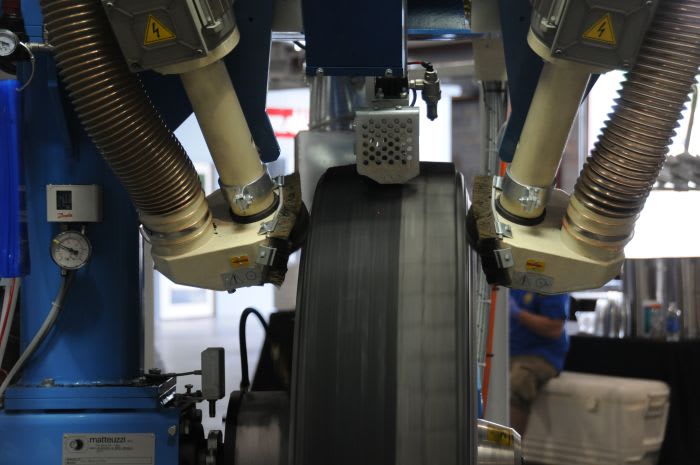
Retreading gives a second or even third life to a casing, increasing the payback on the initial investment.

4 min to read


Retreading gives a second or even third life to a casing, increasing the payback on the initial investment.

Retreaded tires take it on the chin every day. Complaints range from alligators on the highway to just plain wearing out too soon. The facts about retreaded tires, however, tell a different story.

Research done by the U.S. DOT and other groups shows tire debris is as likely to be from new tires as retreads. And now, a fleet tire survey suggests retreads are keeping up with, and sometimes outlasting, virgin tires.

Ad Loading...

The American Trucking Associations’ Technology & Maintenance Council surveyed 51 fleets late last year to get a snapshot of low-rolling-resistance tire and retread use. The vast majority of the respondents were linehaul and regional operators running Class 7-8 vehicles, split about 50/50 between less than or more than 500 trucks. 

Peggy Fisher, president of Tire Stamp and regular contributor to TMC’s S.2 Tire & Wheel Study Group, shared the survey’s findings.

The percentage of fleets opting to retread shows a distinct preference for giving non-fuel-efficient tires a second life, but not low-rolling resistance tires or wide-base single tires. Also, the trend is to retread most tires twice or more, but to retread wide-base tires only once.

When using retreads on drive axles, the mileages fleets reported varied from single to tandem axles, but the interesting result shows low-rolling-resistance tires and wide-base tires outlived the non-fuel-efficient tires by significant margins in some cases. (Don’t put too much stock in the actual mileage figures in the accompanying chart; it’s the trend that’s worth a second look. Fisher told us the mileage figures presented in these graphs are “gross estimates” based on averages.)

Perhaps the most interesting result comes from the trailer position. Retreaded low-rolling-resistance and wide-base tires outlived standard tires by 20,000 miles or more. What’s more, survey data not shown on the graph compared mileages from the trailer position recorded with original tires, and except for standard tires, retreads lasted longer than new tires (Standard: 173,684; LRR: 169,828; wide base: 166,667).

Ad Loading...

The survey didn’t address the question of “why,” but Fisher has some theories.

“As to why LRR tires outlived standard tire retreads, perhaps it is due to more diligent maintenance or improvements in the raw materials used in tread rubber that reduce rolling resistance while providing good tire mileage,” she guesses. “I’d like to think that fleets that are fuel efficient would also have slightly better tire maintenance although I have no data to support that.”

Maintenance is key

Photo: Jim Park

While it would probably be a combination of all the factors Fisher mentions, none of them would get you very far without solid maintenance. For fleets actively retreading, that includes a casing preservation strategy — one that begins with quality casings.

A good Tier 1 or 2 casing can be retreaded multiple times. Multiple retreads extend casing life and cost recovery on the initial purchase cost.

As with all tires, inflation management is vital in preserving casing integrity. Tires allowed to run under-inflated or overloaded can suffer internal damage that often can be spotted only during the retreader’s intake inspection using a shearography machine. 

Ad Loading...

“Tire related failures can be proactively avoided with a tire pressure monitoring program or automatic tire inflation system,” notes Paul Crehan, director of product marketing with Michelin Truck Tires. “Those tools will not only prevent or reduce the frequency of on-road failures, they help protect the fleet’s tire and casing assets.”

An important part of any tire maintenance program is the decision on what tread depth to pull the tire, whether new or retreaded. Maximizing miles out of a tread demands leaving the tire in service as long as possible, but running the treads down too thin increases the likelihood of casing damage due to penetrations or stone drilling.

Considering the up-front cost of wide-single tires, leaving an extra 32nd of an inch of rubber on the casing is a bit of insurance against casing damage. While only Goodyear offers an internal puncture repair technology, Duraseal, other sealants have proven relatively effective in reducing pressure-loss-related tire failures.

And of course following proper repair procedures will help ensure the casing retains its retreading value. Improperly repaired tires will likely be rejected by the retreader.

While TMC’s tire survey results are interesting in that they show better mileage for retreads than new tires in several instances, the why remains a mystery. Ever since SmartWay decided to include retreaded tires on its list of verified tires, the number of LRR retreads has been growing. Perhaps as that number grows, additional evidence of what smart fleets already know will surface: retreads work.

Are retreads under siege?

Despite nearly 5% growth in retread tire production, retreaders are expecting a pretty flat 2015.

“I don’t think anyone is forecasting much in the way of growth,” said David Stevens, managing director of the Tire Retread and Repair Information Bureau, in a story in our sister publication, Modern Tire Dealer. “The hope is that with some of the continued investment in trucks, you get more trucks out there, so there’s more replacement demand that will go to the retread business. But putting constraints on that is competition with low-cost import tires,” he says.

Retreaders themselves say competition with imports is hurting retread production, and it is affecting casing supply.

Tom Bowman, vice president of the commercial division of Belle Tire in Allen Park, Mich., says as more carriers turn to imported tires, the supply of major-brand casings is tightening.

“With all the Tier 3 and Tier 4 imports flooding our North America market, the quality is getting tougher to find in the Tier 1 and Tier 2 casings,” he says.

Casing quality is vital in retreading. A well-maintained top or good quality casing can be retreaded multiple times, which really improves the lifecycle cost of a new tire. But in some instances, casing quality just isn’t there.

Customers choose a lower cost tire because they don’t understand cost per mile, according to Rick Majewski, vice president of Wilson County Tire and Retreading in Lebanon, Tenn. “If everyone retreads a premium product, the retread will outrun the [imported] tire in mileage. But people don’t look at long-term cost, they look at acquisition cost. That’s the problem.”

Whether or not cheap imports are a “problem” for trucking is debatable. Certainly cheaper tires help keep costs down in the short term. But as Majewski points out, a top-tier tire has many more retreading opportunities, and the casing quality, and likely the tread quality and its rolling resistance, aren’t likely to be as good as Tier 1 or even Tier 2 tires. The best tire for the money isn’t necessarily the cheapest to acquire, but it will provide a better payback over time.

Of course, not all imported tires are inferior. Do the research and you’ll easily find good value in that group of tires, including many that can be retreaded more than once.


Subscribe to Our Newsletter

More Maintenance

SponsoredFebruary 1, 2026

Reducing Fleet Downtime with Advanced Diagnostics

This white paper examines how advanced commercial vehicle diagnostics can significantly reduce fleet downtime as heavy duty vehicles become more complex. It shows how Autel’s CV diagnostic tools enable in-house troubleshooting, preventive maintenance, and faster repairs, helping fleets cut emissions-related downtime, reduce dealer dependence, and improve overall vehicle uptime and operating costs.

Read More →
SponsoredFebruary 1, 2026

Stop Watching Footage, Start Driving Results

6 intelligent dashcam tactics to improve safety and boost ROI

Read More →
Brake telematics in heavy trucks.
Maintenanceby Jack RobertsJanuary 30, 2026

Why Are Brake Telematics So Tough for Class 8 Trucks?

Brakes are the final frontier for telematics on Class 8 trucks. But Hendrickson is close to a breakthrough that could change the game in getting real-time brake system information back to fleets.

Read More →
Ad Loading...
Warehouse aisle with pallet racking filled with boxed inventory at a distribution center.
Maintenanceby News/Media ReleaseJanuary 28, 2026

Phillips Opens High-Tech Distribution Center for Faster Parts Delivery

Phillips Industries’ new Cincinnati-area distribution center is now shipping aftermarket trucking parts nationwide, aiming to speed up delivery times for customers.

Read More →
Cummins MFlex4 heavy-duty brake pad.
MaintenanceJanuary 20, 2026

Cummins Launches MFlex4 Air Disc Brake Pad for Heavy Duty Aftermarket

Cummins used Heavy Duty Aftermarket Week (HDAW) to introduce a new brake pad platform aimed squarely at one of the aftermarket’s biggest pain points: Complexity.

Read More →
SponsoredJanuary 19, 2026

3 New Ways Fleet Software Pays: ROI opportunities for modern fleet managers

Safety, uptime, and insurance costs directly impact profitability. This eBook looks at how fleet software is evolving to deliver real ROI through proactive maintenance, AI-powered video telematics, and real-time driver coaching. Learn how fleets are reducing crashes, defending claims, and using integrated data to make smarter operational decisions.

Read More →
Ad Loading...
SponsoredJanuary 19, 2026

Basic Tracking vs Next Generation Fleet Technology

Fleet software is getting more sophisticated and effective than ever, tying big data models together to transform maintenance, safety, and the value of your existing tech stack. Fleet technology upgrades are undoubtedly an investment, but updated technology can offer a much higher return. Read how upgrading your fleet technology can increase the return on your investment.

Read More →
MaintenanceJanuary 16, 2026

What is AI Doing for Pilot's Fleet Maintenance Program? [Video]

Artificial intelligence gets plenty of attention at tech shows like CES — but what does it look like in a real trucking maintenance shop? Watch what Brent Hickman has to say about how one of the largest fuel-hauling fleets in the country is using AI.

Read More →
Maintenanceby News/Media ReleaseJanuary 16, 2026

ACC Fleet Solutions Launched to Address Recurring Heavy-Duty Truck Parts Failures

ACC Fleet Solutions is a new offering that allows fleets to address recurring part failures with higher-performing, custom-engineered solutions developed at no up-front cost.

Read More →
Ad Loading...
Henrickson aftermarket parts.
Maintenanceby News/Media ReleaseJanuary 15, 2026

Hendrickson to Highlight Aftermarket Portfolio at HDAW 2026

In addition to suspension components, Hendrickson will highlight a range of complementary systems and technologies at HDAW 2026.

Read More →