




Maintaining APUs
The auxiliary power unit has come a long way since the first commercially available units hit the streets in the late 1980s

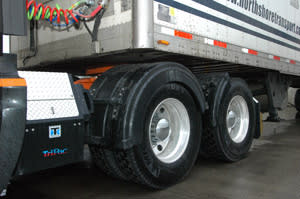
APUs have come a long way in the past five years, but you can't ignore the maintenance. (Photo by Jim Park)
The auxiliary power unit has come a long way since the first commercially available units hit the streets in the late 1980s.
Prior to that, we saw homemade versions strapped to tractors belonging to mechanically inclined owner-operators looking to save a few bucks on fuel. Often, they were gasoline-powered home generators cranking out only a few kilowatts - enough to run a coffee maker, a TV, a portable heater, and maybe a store-bought air conditioner mounted under the bunk.
At best, they could be described as mechanical contrivances, but they fulfilled their purpose - even if they didn't hold together that long. Fuel-fired cab and coolant heaters were popular at the time, but all they could manage was heating. The APU addressed the cooling issue.
Before gaining mainstream acceptance about a decade ago, APUs were offered by a handful of providers turning out 500-1,000 units a year from small shops and garages all over the country. Standards were non-existent, consistency in manufacturing and installation was spotty. But the concept was too good to ignore. A few bigger players entered the market in the mid- to late-'90s and engineering improved. Manufacturing became more centralized, and they began doing durability and reliability testing.
The product improved, and the moment of truth for APU manufacturers came in 2004 when sales soared. Some of the product on the market made the grade, some didn't. The tales told about the latter are, to say the least, entertaining.
But as is the case with anything mechanical, no matter how well it's put together, it won't run forever without a little attention.
Hostile environments
Established maintenance intervals aside, to keep an APU running, you have to consider where it lives: hanging on a truck frame. You won't find a more hostile environment anywhere, with constant vibration, occasional jolting impacts, corrosive road spray, and extreme heat and cold. Most APU failures can be traced back to one or more of these factors. Since you can't eliminate them, the best you can do is guard against component damage.
That means keeping a close eye out for physical problems such as cracks forming on the component mounts, and around the radiators, mufflers, and other external bits. Be wary of possible contamination and corrosion, especially on the seals and connectors. Regular and thorough washing is highly recommended. Electrical connections should be sealed with dielectric grease and then left alone. Opening the connector renders them prone to incursion by corrosion-causing liquids and road salts.
Itamar Levine, the director of maintenance and purchasing at Bison Transport of Winnipeg, Manitoba, notes that when his company first went down the APU road, generators were lasting weeks because of the anti-icing material they use on the roads. "Without exaggerating, each unit we had went through four or five rads in three years. Exhaust systems would last two or three months before they flew off the truck," he says. "We had a technician in each of our shops who did nothing but service and repair APUs."
His recommendation? Buy premium product, and service it with premium parts.
"Synthetic oil, for example, will improve cold starting capability, and ensure good lubrication, just in case you go over the service interval," says Levine. "Don't scrimp on the materials, and maintain a good relationship with the product service manager."
Somebody buying an APU today will do much better than Levine did five years ago. He's now running what he considers today's top brands, and says the product on the market now is vastly superior, though there's still room for improvement (including Levine says, real factory installation).
Dwayne Cowan, the APU product manager at Thermo King, told us the design and testing that goes into today's premium products has improved reliability a lot.
"We do a lot of corrosion testing now because we've seen what happened in the past," he says. "We've got 1,000-hour salt spray tests, shaker tests, 250,000 mile failure analysis programs, and more."
That's what it takes to keep one of these units ticking these days - plus careful adherence to the maintenance recommendations.
Timing is everything
Coordinating service intervals is a never-ending challenge. Adding a device with its own, often separate, maintenance intervals poses difficulties.
"Part of the issue with APUs is the maintenance cycle is often quite different than the truck maintenance cycle," says Bill Gordon, spokesman for Bergstrom, which makes the Nite battery-operated idle-reduction system.
Adding to the challenge is that tractor service intervals are mileage-based, while APU intervals are time-based. How many miles is 500 hours of APU run time? That depends on the time of year and other factors.
Carrier's maintenance recommendations for its ComfortPro APU include an oil and filter change at 1,000 hours, a valve-lash adjustment, as well as specific points that need cleaning and/or inspection such as the radiator and condenser fins, and more.
The 500-hour interval includes inspections of the fuel system, coolant hoses and clamps, belt tension and alignment, a chassis inspection including the exhaust system, mounts etc., and an air filter inspection.
The 2,000-hour inspection is a more comprehensive service interval requiring, among other things, examining the performance parameters of the fuel injectors, generator and alternator output, starter, and HVAC system.
In general terms, Carrier's Dean Lande tells us, "The 1,000-hour service is a six-month interval for a typical over-the-road operator. The 2,000-hour service is an annual event."
Some APU owners will tell you their units are in the shop far more frequently - and somewhat less predictably. Al Smith, the director of sales at Impco Technologies (Impco recently purchased Teleflex, which builds Carrier's ComfortPro APU), was on the ground floor back in 1988 when Napsack and 4000P APUs were launched by Advanced Thermodynamics. He's seen incredible strides in reliability and performance in these products over the years, but he admits the industry still has a bit of a hangover resulting from experience with inferior product.
"Until you've had 5,000 of these things in service for three years or more, there's no way you can predict how they will perform and hold up to the elements," Smith says. "Reliability and maintenance costs over time should be carefully considered when purchasing product."
Changing technology
Bison's Levine cites marketing brochures for two brand-name products (both now defunct) that he has had in service over the years indicating annual maintenance costs would be in the $250 range per year. "On a three-year trade cycle, our costs exceeded $1,000 per unit per year," he says. "Much of that was repair work."
Makers of some newer idle-reduction technologies say less maintenance is an advantage over traditional APUs. Bergstrom's aftermarket Nite system, for instance, is a sealed, no-maintenance system. The factory-installed version only requires washing of filters every 60 to 90 days. The Espar unit that provides heating for the Nite system only requires you run it 10 minutes a month in the off season and periodic replacement of glow plugs and the fuel filter screen, Gordon says.
It's like that old television commercial: "Pay me now, or pay me later." Diligence in the spec'ing decision and attention to detail in the shop will pay off in the long run.
From the November 2009 issue of Heavy Duty Trucking.
More Maintenance

Color Match Smarter: Tools That Restore & Perform
For fleet managers and collision repair professionals keeping heavy-duty trucks on the road, getting the color right the first time isn't just about appearance — it's about efficiency, turnaround time, and bottom-line results. Discover how today's digital color tools are transforming the repair process from guesswork to precision.
Read More →
Wrong Repair Prompts Recall of Freightliner, Western Star 4x2 Trucks
DTNA is recalling more than 2,400 trucks that received an incompatible software fix instead of the hardware repair required to address brake valve corrosion.
Read More →
Truck Drivers Need More Than Another Alert
Fleets have more visibility into truck health, safety events, and driver activity than ever. The next challenge is turning all that information into useful guidance for the person who has to decide what to do next.
Read More →
The Maintenance Checks Trucking Fleets Should Prioritize Before Fall Freight Picks Up
Making it through August isn’t the same as being ready for the next several months of operation. Find out what systems may have suffered from summer heat and need to be checked out before fall.
Read More →
What Three Fleets Are Doing Differently When Buying Truck Parts in 2026
With freight improving but costs still climbing, fleet maintenance executives explain how they're balancing price, quality, and supplier relationships.
Read More →
Paccar Recalls 2027 Trucks Built This Summer for Possible Electrical Problem
The nearly 6,000 Kenworth and Peterbilt trucks in the recall could potentially lose engine power, among other things.
Read More →
Will API PC-12 Oil Change Trucking Fleet Maintenance?
The new API PC-12 heavy-duty engine oil category reflects the changing demands of modern diesel engines. But fleets like Foodliner are looking to getting their own data before making decisions on adopting the new oils and questions such as extending oil drain intervals.
Read More →
Brake Safety Week to Focus on Drums and Rotors
Commercial vehicle inspectors are focusing on truck brakes during CVSA's Brake Safety Week, August 23-29.
Read More →Possible Battery-Cable Fires Prompt Recall of 15,000+ International MV and HV Trucks
On the recalled vehicles, manufacturing variations can cause the battery interconnect cable to contact the auxiliary stud and hold down the bracket.
Read More →
Rush, MCT Team Up to Grow Refrigeration Service Network
The joint venture will operate MCT's network of Carrier Transicold dealerships and mobile service locations, with the companies promising greater service capacity and uptime for refrigerated fleets.
Read More →