




Maintaining Antifreeze/Coolant Will Help You Survive Extreme Winter Cold
The wrath of winter’s impact on heavy-duty diesel engines across North America has been thoroughly tested so far this year. For many of those stranded during the winter cold snap, it was decisions made about what to do (or what not to do) with their antifreeze/coolant systems that may have sealed their fate.
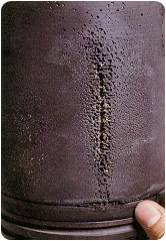
Improper maintenance of a heavy duty coolant system can create cavitation pitting. If engine metals lack proper protection, the damage can affect the entire coolant system and engine operation.

Improper maintenance of a heavy duty coolant system can create cavitation pitting. If engine metals lack proper protection, the damage can affect the entire coolant system and engine operation.
The wrath of winter’s impact on heavy-duty diesel engines across North America has been thoroughly tested so far this year. Arctic sub-zero temperatures and double-digit wind-chills left many trucks stranded or with incapacitated equipment.
For many of those stranded during the winter cold snap, it was decisions made about what to do (or what not to do) with their antifreeze/coolant systems that may have sealed their fate.
At a glance, coolant maintenance may seem to be as simple as pouring in new coolant. However, given the vast number of new antifreeze/coolant technologies and formulations, making decisions regarding their maintenance is a very serious matter that can potentially affect the bottom line of any fleet. Ask anyone who may have been stranded or stuck in the shop during any brutal winter cold snap.
The primary components of antifreeze, both glycol and water, can freeze; however, a combination of both has the ability to prevent freezing to a lower temperature.
While recognizing glycol levels in antifreeze/coolant is essential to maintaining a properly operating heavy-duty vehicle, it is by no means less of a concern than corrosion within the engine. During extreme temperatures, fleets are not thinking so much about corrosion protection as they are trying to make sure the necessary percent of glycol is correct in their formula. Corrosion protection is a daily concern for the heavy duty engine, and freezing concerns tend to be seasonal.
“A solid practice for antifreeze/coolant maintenance would be to take the opportunity to check the overall effectiveness of coolant while also checking for seasonal freezing protection," says Peter Woyciesjes, worldwide research development and engineering coolants manager for Prestone.
There are three steps for such an inspection:
Test your glycol for freeze-point.
Test it for inhibitors to make sure you’re still getting the correct corrosion protection.
Make sure you’ve got the right volume in your cooling system so you’re not getting air pockets.
“Air entrapment in the engine is a serious problem for any engine,” Woyciesjes says. “Seasonal cold weather testing is the ideal time to make sure your engine is full and topped-off.”
A routine loss of coolant due to leaks and other maintenance issues can be expected. In these cases, topping off with the appropriate 50% pre-diluted coolant is ideal. If an engine has encountered cooling system failure, draining and replacing the coolant with a fresh fill of a quality coolant is recommended.
“I would not recommend that coolant collected from a leaking system or a system being drained be reused,” Woyciesjes says. “Given everything within the engine that relies on the cooling system, it is much safer to refill the system with a fresh batch of antifreeze/coolant.”
Antifreeze/coolant should:
Provide freezing protection to the lowest temperature encountered.
Provide effective inhibition of corrosion for all cooling system metals through a wide range of temperatures.
Provide efficient transfer of engine heat to help control critical metal temperatures.
Maintain minimum engine temperature for fuel and lubrication efficiencies.
Increase the cooling index to help prevent boilover and over-heating failures.
Unless routine testing reveals a change is needed earlier, following engine manufacturer guidelines is the best practice for ensuring appropriate antifreeze/coolant protection.
Effective antifreeze/coolant maintenance is not just a seasonal concern and it is not just about protecting an engine from running too hot or too cold. Responsible testing recognizes coolant has key protective characteristics that can minimize additional issues such as corrosion or scaling buildup.
Colin Dilley is the director of technology for Prestone Products Corp. He can be reached at Colin.Dilley@Prestone.com. Prestone manufactures and markets Prestone Command antifreeze/coolant and related products. You can find more at www.prestonecommand.com.
Related Story:
How Much Do You Know About Heavy-Duty Coolants?
More Maintenance

Color Match Smarter: Tools That Restore & Perform
For fleet managers and collision repair professionals keeping heavy-duty trucks on the road, getting the color right the first time isn't just about appearance — it's about efficiency, turnaround time, and bottom-line results. Discover how today's digital color tools are transforming the repair process from guesswork to precision.
Read More →
Wrong Repair Prompts Recall of Freightliner, Western Star 4x2 Trucks
DTNA is recalling more than 2,400 trucks that received an incompatible software fix instead of the hardware repair required to address brake valve corrosion.
Read More →
Truck Drivers Need More Than Another Alert
Fleets have more visibility into truck health, safety events, and driver activity than ever. The next challenge is turning all that information into useful guidance for the person who has to decide what to do next.
Read More →
The Maintenance Checks Trucking Fleets Should Prioritize Before Fall Freight Picks Up
Making it through August isn’t the same as being ready for the next several months of operation. Find out what systems may have suffered from summer heat and need to be checked out before fall.
Read More →
What Three Fleets Are Doing Differently When Buying Truck Parts in 2026
With freight improving but costs still climbing, fleet maintenance executives explain how they're balancing price, quality, and supplier relationships.
Read More →
Paccar Recalls 2027 Trucks Built This Summer for Possible Electrical Problem
The nearly 6,000 Kenworth and Peterbilt trucks in the recall could potentially lose engine power, among other things.
Read More →
Will API PC-12 Oil Change Trucking Fleet Maintenance?
The new API PC-12 heavy-duty engine oil category reflects the changing demands of modern diesel engines. But fleets like Foodliner are looking to getting their own data before making decisions on adopting the new oils and questions such as extending oil drain intervals.
Read More →
Brake Safety Week to Focus on Drums and Rotors
Commercial vehicle inspectors are focusing on truck brakes during CVSA's Brake Safety Week, August 23-29.
Read More →Possible Battery-Cable Fires Prompt Recall of 15,000+ International MV and HV Trucks
On the recalled vehicles, manufacturing variations can cause the battery interconnect cable to contact the auxiliary stud and hold down the bracket.
Read More →
Rush, MCT Team Up to Grow Refrigeration Service Network
The joint venture will operate MCT's network of Carrier Transicold dealerships and mobile service locations, with the companies promising greater service capacity and uptime for refrigerated fleets.
Read More →