




How to Spec and Protect Truck Electronics
Electronics are not noted for being robust systems. They are susceptible to failure due to environmental conditions such as dust or moisture, extremely hot and cold temperatures, mud, grime and grit, anti-icing chemicals – all the things a truck deals during a routine day’s work.

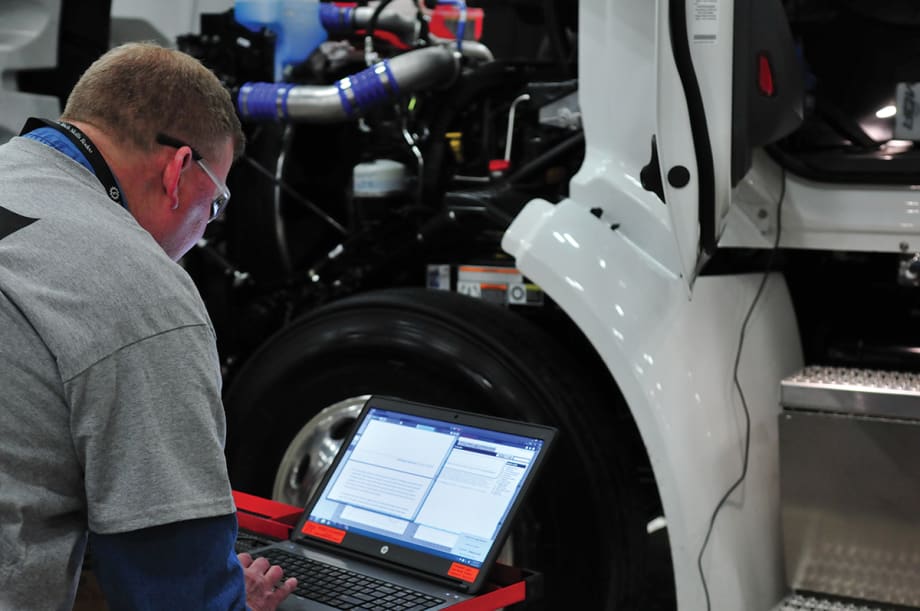
Electronics maintenance will become a priority for fleets as systems become both more common and more complex.
Photo: Jim Park
Truck cabs are crammed with integrated and add-on electronic systems and devices, many unheard of a decade ago. Pop open the hood and scan a modern diesel engine, and you’ll quickly discover numerous sophisticated electronic control modules that dictate virtually every facet of the combustion and propulsion process – from skip-shifting automated transmissions down to sensors that adjust fuel spray patterns into a combustion chamber in milliseconds.
But that can create a problem: Electronics are not noted for being robust systems. They are susceptible to failure due to environmental conditions such as dust or moisture, extremely hot and cold temperatures, mud, grime and grit, anti-icing chemicals – all the things a truck deals during a routine day’s work.
Truck OEMs typically design ECMs to meet a set of standards that define environmental and life requirements in three categories, according to Alan Steines, principal engineer, electronics and controls, Jacobs Vehicle Systems.
“The ECM must be capable of operating properly when exposed to various environmental stimuli,” he says. “For example, the ECM must operate properly and reliably when exposed to a specified temperature range. Similar requirements exist for things like vibration, shock, humidity, and other environmental effects.”
Electromagnetic compatibility, which has to do with the ECM’s ability to operate properly when exposed to static discharge, voltage variations, electric fields such as radio transmitters, and other electromagnetic phenomena, is another critical design consideration, Steines says. “ECMs cannot emit too much of these phenomena, in which case, it might interfere with the operation of other ECMs on the vehicle.”
Finally, Steines says, “The ECM must pass a life test, which is a long, endurance and performance evaluation designed to ensure the ECM will be able to operate for a long time under varying environmental conditions.”
OEMs do the best they can in preparing electronics for hard lives in trucking. But is your fleet doing enough to protect the electronic systems onboard your trucks?
Adding these critical items to your ongoing preventive maintenance schedule is a fairly easy add-on for your technicians and can help you minimize electronics headaches.
Make Electronic Systems a Priority
There are two initial steps a fleet must undertake in order to make a proactive maintenance program for your vehicles’ electronic systems a reality, says Ryan Laskey, vice president, engineering for Vocis, a subsidiary of Dana Inc. that specializes in transmission and driveline control system engineering, software, hydraulic and electrical actuation systems.
The first step is to understand the importance of electronics system at the beginning of your equipment life cycle, starting with the spec’ing process.
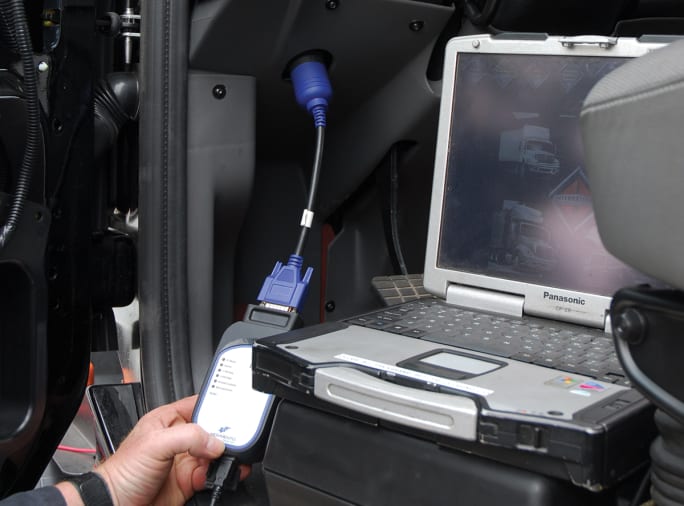
Keeping ECMs clean, dry and contaminant-free goes a long way toward keeping electronics systems functioning properly.
Photo: Jim Park
“It is important that the electronic components themselves are designed and validated to the appropriate standards for their use location,” Laskey says. “For fleet managers considering new vehicles, this includes keeping an eye out for features like appropriate enclosures with correct ingress protection (IP) ratings and appropriate thermal ratings. In other words, is the ECM tucked away nicely in the cabin, or in the engine bay next to an exhaust system? Keep in mind that these electronic systems need protection from all external elements, and OEMs should stipulate the required IP rating and temperature/vibration profile for where the ECM will be located. The supplier must then validate their ECM(s) meet those requirements.”
“To prevent issues, one must first have the right specs,” agrees Gerry Mead, executive director of innovations for Phillips Industries and longtime industry maintenance executive. There are guidelines available from the American Trucking Associations’ Technology & Maintenance Council that can help fleet managers make sure the electrical systems on new vehicles meet their requirements. “Recommended Practice (RP) 173 Design Guidelines for ECM Harness and Connectors offers design guidelines for ECM harnesses and connectors and are your best starting place to that criteria is met,” he notes.
Your next step for implementing a more effective electronics protection and repair program is to make sure your technicians understand how important these systems are for modern trucks to perform properly on the road.
“Educating your technician force is the second step in prevention after the right spec,” Mead says. “As we embrace the future of electronics in trucks, leveraging technologies for peak efficiency and safety by providing live actionable data, the components that allow for system integration that produce cross-functional data will be vital for success. And none of those things happen unless your technicians are on board.”
“The ECMs will almost certainly be involved in critical vehicle functions, from engine control, transmission control, braking systems, and many others,” Laskey adds. “And some of which will be safety critical, as well. So their importance cannot be understated. It is vital that your technicians understand that these systems are now priority maintenance items going forward.”
Clean, Contained and Connected
Once electronics have been established as a critical maintenance item, you can move to the nitty-gritty in troubleshooting and repairing any problems as they arise. Steines says for most fleets, the primary responsibility on this front is to follow the manufacturer’s maintenance schedules and to respond to fault codes as they come up.
“Typically, not much special regarding an ECM would be required unless it was part of the manufacturer’s scheduled maintenance,” he notes, since most problems tend to occur because of external factors such as climate and operating environment.
As Mead points out, there are an awful lot of such factors out there daily for commercial trucks. “There are plenty of events that can damage an ECM,” he says. “Some of these are out of a fleet’s control such as age and acts of nature. Other items, such as corrosion, water damage, and surges in electricity, can be prevented through following proper recommended repair methods.”
“With more and more sensors being added to a vehicle, warning signs can be from ghost failure codes to diminished performance or even a shutdown situation leaving you stranded on the side of the road,” Laskey says. “To limit these problems, it helps to understand the data flow and monitoring key performance items looking for problems. Warning signs can include issues such as degraded functionality, or faults for open-circuit connections to sensors/actuators, which is typical of water ingress into connectors. But a sudden, inexplicable drop in fuel economy on a vehicle, for example, can be critical in determining early electronic failures and heading off the problem before it gets worse.”
“Remember,” Mead cautions, “any connection point is vulnerable for undesirable elements to enter the system and cause a nightmare to diagnose. Any place where a wire is exposed due to a poke, rub, or cut is the second place where you’re vulnerable. Proper spec and repair inspection practices prevent poor performance. Fleets that follow best practices and spec the RP, as well as ensure proper wiring routing and connector care, while using dielectric grease and connector cleaner, will protect from all common worries.”
The importance of establishing good electronic system maintenance programs now is critical, Mead notes. Trucking will only dive deeper and deeper into integrated connected systems in the future. And the need for seamless communication within the system is critical to its success.
More Maintenance
Shell Prepares Rotella Oils for 2027
New CL-4 and FB-4 formulations will begin arriving in early 2027, with improved protection against oil breakdown, wear and deposits, according to Shell.
Read More →
Mack Expands Extended Coverage With Four Chassis System Plans
Mack Trucks' new system-specific coverage options allow heavy-duty fleets to select protection for driveline, cab, HVAC, electronics, and advanced safety components.
Read More →
What an Out-of-Service Order Really Costs, and How to Plan for One
The repair invoice is the first number you see — and often one of the smallest. Here’s what else an out-of-service order can cost a fleet, and how planning can reduce the damage.
Read More →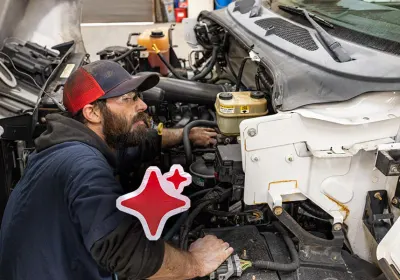

International Launches Online Truck Parts Store
Fleetrite.com lets fleets and repair shops find OEM and all-makes parts, check prices and availability, and order without calling a parts counter.
Read More →
Continental Introduces New Regional Truck Tires
Continental says its new Generation 5 steer and drive tires for regional operations offer longer tread life, with estimated mileage gains of 22% and 19%, respectively.
Read More →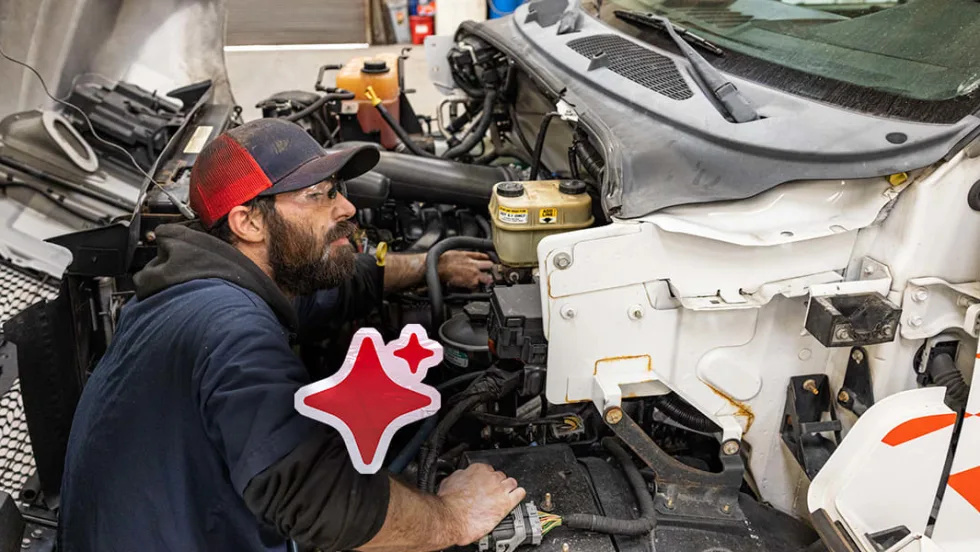
How AI Can Help Your Techs’ Efficiency
The technician shortage isn't going away, and no single fix can close the gap on its own. Trent Broberg makes the case that AI's real job in the shop is protecting the billable hours and job satisfaction of the techs you already have, not asking them to work faster.
Read More →
Wrong Repair Prompts Recall of Freightliner, Western Star 4x2 Trucks
DTNA is recalling more than 2,400 trucks that received an incompatible software fix instead of the hardware repair required to address brake valve corrosion.
Read More →
Truck Drivers Need More Than Another Alert
Fleets have more visibility into truck health, safety events, and driver activity than ever. The next challenge is turning all that information into useful guidance for the person who has to decide what to do next.
Read More →
The Maintenance Checks Trucking Fleets Should Prioritize Before Fall Freight Picks Up
Making it through August isn’t the same as being ready for the next several months of operation. Find out what systems may have suffered from summer heat and need to be checked out before fall.
Read More →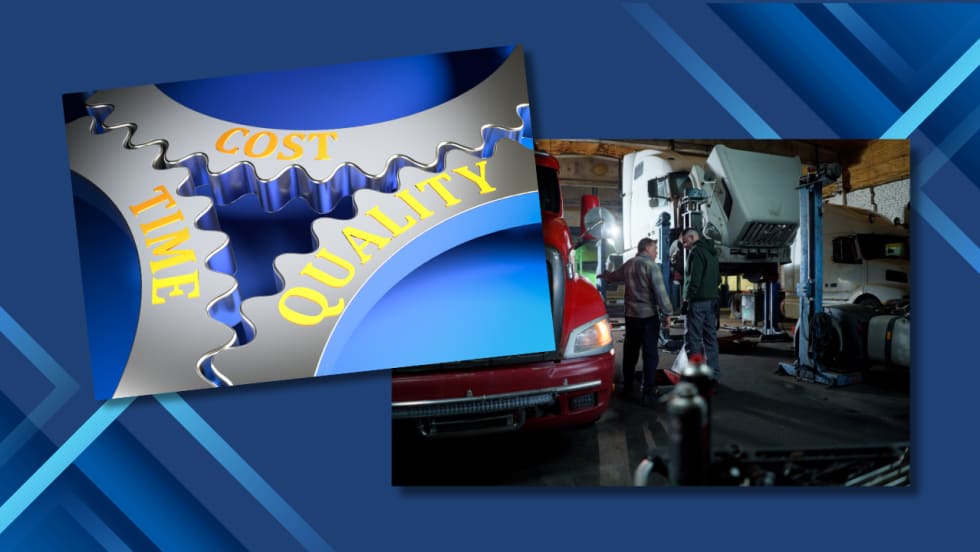
What Three Fleets Are Doing Differently When Buying Truck Parts in 2026
With freight improving but costs still climbing, fleet maintenance executives explain how they're balancing price, quality, and supplier relationships.
Read More →