




Choosing the Optimal Tool Cart
Tool carts are available in just about every possible variety, from a simple two tray unit, to super wide units with six or more drawers and a flip lid, not to mention roll cabinet
Tool carts are available in just about every possible variety, from a simple two tray unit, to super wide units with six or more drawers and a flip lid, not to mention roll cabinets
. So how does one decide among the wide selection of tool carts on the market?
If the tool user is moving from job to job several times per day or rolling several hundred feet per day, a minimum caster size of 5 by 2 inches provides protection from obstacles and grates, manufacturers such as Snap-on offer 6- by 2-inch casters. Soft monoprene caster material that is quieter on bumpy floors will also keep tools from shaking around. If the technician uses the cart for drawer storage and accesses those drawers often, consider the comfort of the drawer pulls. Some pulls offer very little finger room and use cumbersome detents.
If the top of the cart is used as a work surface, consider the weight capacity and parts' sizes. Some lids are constructed of stainless steel or heavy gauge material. It the material flexes, it is probably not designed to be a work surface. Consider the construction: chrome plated tubular stock, L-brackets, or a welded case design. An L-bracket design usually supports more weight than square stock. Carts which use a welded design, usually associated with tool boxes, have a more rigid case, giving the cart both high mobility and durability.
What about security? In many cases, a cart may need to be locked and unlocked several times per day. A simple, single hook lock may not last long in this scenario. Consider an internal locking lever/switch and two point lock bars for extra security. A lock with an independent rotating collar will outperform a simple cylinder lock and welded locking tabs on the back of the drawer add security against prying.
Is the cart a permanent location for the primary tools? Expandability may be required; some carts have an optional end cab that can be added. A 16 to 18 inch width is common for the lower cost carts; 20 to 24 inches provides more tool space and more drawer space. An open bottom tray is a convenient way to transport large bulky items. That is less expensive than all drawers, but it depends on the need for security. If open space is needed in the bottom tray, then the cost is much lower; if the bottom section needs to be secure, the cost is higher.
Welded case designs with more wide drawers, more tool box-like construction and locking drawers that can be opened or locked when the lid is down may be found in premium storage units. Studying the features below, one can see where value comes in.
• Overall Size - Any cart over 32 by 20 inches is considered large.
• Drawer Capacity - High-end carts offer 100 pounds per drawer; value carts offer 50 pounds or less
• Drawer Width/Count - Wide, deep drawers are the most expensive.
• Top Compartment Depth - A deep (five inches or greater) functional top compartment provides convenient space.
• Lid Functionality - Simple open top trays may be lower cost, but tend to be catch basins for junk. Flip lids and sliding lids cost more but have advantages such as secure storage in the top compartment. Some flip lids open automatically when unlocked. That may be an inconvenience when moving around the shop. Sliding lids can either be split in the middle and slide in both directions, or they can be one-piece and slide all at once. The value of either design depends on the size, weight and clearance required. A solid lid that can be used as a work surface and will hold more than 100 pounds is harder to find.
• Drawer Retention - Some carts have retaining latches to keep drawers from sliding open and damaging nearby vehicles, some carts, for example, are equipped with a latch that keeps drawers from drifting open.
• Caster Quality - Available options include anything from lower cost four by one inch stem casters to more expensive six by two inch 4-bolt vibration dampening casters.
• Bumpers - Protect carts and nearby objects.
• Drawer Pulls - Premium carts tend to offer more finger room and comfort. The more a drawer is used, the more a generous drawer pull is appreciated.
• Liners - Simple six pound foam is found in less expensive carts and non-slip material in the higher end carts. Some carts can be upgraded.
• Pry Bar/Screwdriver Storage - Some carts offer hanging/organizing space within the lid or as a side attachment.
• Welds/Steel Gauge/Stiffness - A fully welded design, such as a Snap-on 40 inch cart, is tested to endure a lifetime of use. Required length of service is always an important consideration. The real yearly cost is the overall price divided by anticipated years of use. For example, a $1,000 cart that lasts 10 years ($100 per year) might be a better choice than a $600 cart that lasts three years ($200 per year).
• Color Palette and Paint - Normally powder coat is more expensive and chemical resistant, and higher end carts tend to offer more color options.
Jobs and tools come in different sizes and functions, distinctive to the various ways in which professional technicians work. Understanding the needs of the tool users and choosing carts with the technician and job in mind is the key to choosing the optimal cart for each unique situation.
From a Snap-on Tools White Paper from August 2009.
More Maintenance

Color Match Smarter: Tools That Restore & Perform
For fleet managers and collision repair professionals keeping heavy-duty trucks on the road, getting the color right the first time isn't just about appearance — it's about efficiency, turnaround time, and bottom-line results. Discover how today's digital color tools are transforming the repair process from guesswork to precision.
Read More →
Wrong Repair Prompts Recall of Freightliner, Western Star 4x2 Trucks
DTNA is recalling more than 2,400 trucks that received an incompatible software fix instead of the hardware repair required to address brake valve corrosion.
Read More →
Truck Drivers Need More Than Another Alert
Fleets have more visibility into truck health, safety events, and driver activity than ever. The next challenge is turning all that information into useful guidance for the person who has to decide what to do next.
Read More →
The Maintenance Checks Trucking Fleets Should Prioritize Before Fall Freight Picks Up
Making it through August isn’t the same as being ready for the next several months of operation. Find out what systems may have suffered from summer heat and need to be checked out before fall.
Read More →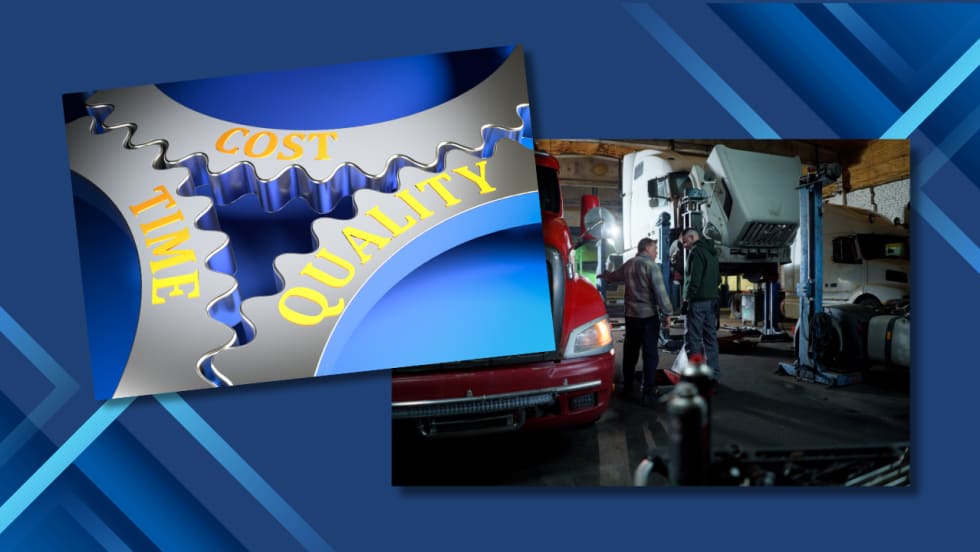
What Three Fleets Are Doing Differently When Buying Truck Parts in 2026
With freight improving but costs still climbing, fleet maintenance executives explain how they're balancing price, quality, and supplier relationships.
Read More →
Paccar Recalls 2027 Trucks Built This Summer for Possible Electrical Problem
The nearly 6,000 Kenworth and Peterbilt trucks in the recall could potentially lose engine power, among other things.
Read More →
Will API PC-12 Oil Change Trucking Fleet Maintenance?
The new API PC-12 heavy-duty engine oil category reflects the changing demands of modern diesel engines. But fleets like Foodliner are looking to getting their own data before making decisions on adopting the new oils and questions such as extending oil drain intervals.
Read More →
Brake Safety Week to Focus on Drums and Rotors
Commercial vehicle inspectors are focusing on truck brakes during CVSA's Brake Safety Week, August 23-29.
Read More →Possible Battery-Cable Fires Prompt Recall of 15,000+ International MV and HV Trucks
On the recalled vehicles, manufacturing variations can cause the battery interconnect cable to contact the auxiliary stud and hold down the bracket.
Read More →
Rush, MCT Team Up to Grow Refrigeration Service Network
The joint venture will operate MCT's network of Carrier Transicold dealerships and mobile service locations, with the companies promising greater service capacity and uptime for refrigerated fleets.
Read More →