




Better Stopping Performance Now Built Into Highway Tractors as New Rules Take Effect
Emerging from truck factories in the U.S. right now are road tractors that can stop in substantially shorter distances than those built last week. That's because new government stopping-distance requirements took effect August 1st

Emerging from truck factories in the U.S. right now are road tractors that can stop in substantially shorter distances than those built last week. That's because new government stopping-distance requirements took effect August 1st.
The changes to Federal Motor Vehicle Safety Standard 121, the air-brake performance regulation, require most highway tractors to stop in about 30% less distance than before during high-speed panic situations.
Three-axle tractors grossing up to 59,600 pounds must stop no more than 250 feet from when brakes are applied at 60 mph, compared to 355 feet under the old rule.
Heavier three- and four-axle tractors, and two-axle tractors, will be affected later. As before, trailers are not affected because although they add weight to a combination, their extra axles and brakes help a rig stop within the required distances.
Because the vast majority of stops are routine and gradual, drivers won't notice the stronger brakes unless they get into a panic situation, manufacturers say.
To get the higher performance, manufacturers are using larger front and rear S-cam drum brakes, or in some cases air disc brakes. Fasteners in the brakes are also slightly larger. Front axles and suspensions are also slightly stronger to take greater forward weight transfer that comes in the more severe panic-type stops.
Traditional 15-inch-diameter by 5-inch-wide drum brakes on steer axles have been replaced with 16.5- by 5-inch or a 16.6- x 6-inch size, brake manufacturers say. Some drive-axle drum brakes are wider, with 16.5 by 7 and 16.5 by 8-5/8 sizes predominating.
More lining area means thermal capacity, the ability to absorb heat without fading on long downgrades, is greater than before, and the linings should last longer. That's why some truckers already use 16.5-inch front brakes.
Those who use engine or driveline retarders won't need much of the increased thermal performance, but it's there as a safety factor.
Compared to the old 15-inch brakes, the bigger drum brakes and their associated gear are heavier, by about 60 to 80 pounds per steer axle. And they're somewhat more expensive, but the costs are built into the vehicles' list prices so are hard to pin down.
Air disc brakes are not needed to meet the new stopping distances, but they offer other benefits. In some cases they'll be equal in weight or lighter than drums, though drums can be ordered with lightweight mounting spiders and hubs.
Discs are inherently self-adjusting while drums use separate slack-adjuster mechanisms that don't always work and themselves require periodic attention. Disc pads are easier to change than drum linings, though some quick-change drum designs make changing shoes almost as fast as disc pads.
Manufacturers say they've made many advancements in drum brakes. That, along with reasonable prices and complete familiarity to users, have kept them popular, and they will continue to be used on most tractors and trucks. Air disc brakes are optional from most truck builders and they're standard on the steer axles of some Peterbilt models.
More Maintenance
Will API PC-12 Oil Change Trucking Fleet Maintenance?
The new API PC-12 heavy-duty engine oil category reflects the changing demands of modern diesel engines. But fleets like Foodliner are looking to getting their own data before making decisions on adopting the new oils and questions such as extending oil drain intervals.
Read More →
Brake Safety Week to Focus on Drums and Rotors
Commercial vehicle inspectors will be focusing on brakes during CVSA's Brake Safety Week, August 23-29.
Read More →
Possible Battery-Cable Fires Prompt Recall of 15,000+ International MV and HV Trucks
On the recalled vehicles, manufacturing variations can cause the battery interconnect cable to contact the auxiliary stud and hold down the bracket.
Read More →
Rush, MCT Team Up to Grow Refrigeration Service Network
The joint venture will operate MCT's network of Carrier Transicold dealerships and mobile service locations, with the companies promising greater service capacity and uptime for refrigerated fleets.
Read More →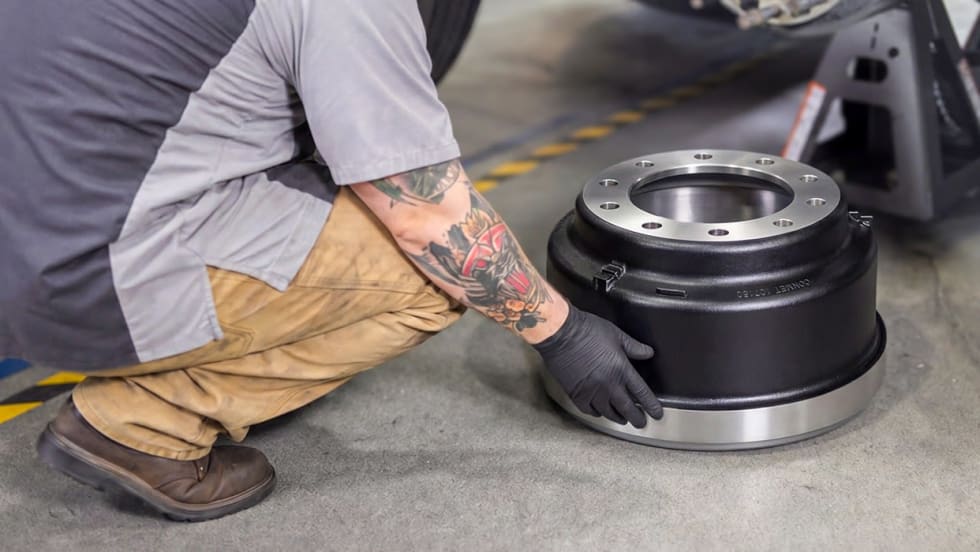
ConMet Expands Aftermarket Brake Drum Lineup With TruCast
A new heavy-duty truck brake drum option in the aftermarket gives customers more flexibility within the ConMet product family.
Read More →
Mack Expands Premium Service Contract Coverage to Medium-Duty MD
With a service contract, inspections, preventive maintenance and repairs can be handled in a single visit instead of multiple ones.
Read More →
Maintenance in the Messy Middle Part 5: Battery-Electric Trucks
No oil changes. No diesel exhaust fluid. No exhaust aftertreatment. But NACFE battery-electric trucks still require specialized maintenance procedures.
Read More →
Trucking Fleets Faced Record Operating Costs During Third Year of Freight Recession
ATRI's annual operational cost report shows carriers trimmed fleets, delayed equipment purchases, and ran older trucks as expenses continued to outpace freight rates.
Read More →
Noregon Launches CAN Mentor to Simplify Vehicle Network Diagnostics
New Noregon software helps technicians identify CAN network issues without requiring advanced diagnostic equipment or specialized training.
Read More →
Maintenance in the Messy Middle Part 4: Renewable Natural Gas
The keys to running renewable natural gas as a fleet fuel depend on specialized technician training, rigorous inspection schedules and an understanding of high-pressure fuel systems.
Read More →