Inspecting your Suspension
Beginning with the day you put a new truck into service, air suspensions must be inspected and prepared to go to work. Start by verifying the drive axles are parallel by measuring the distance between the axle-centers and the sidewall-to-frame clearance. Then check the ride height for the proper setting and verify fastener torque values are set to the manufacturer’s specification. If those items are all within tolerance, you won’t be putting any undue stress on the suspension components.
The American Trucking Associations’ Technology & Maintenance Council’s Recommended Practice 643A strongly recommends the suspension U-bolt lock nuts be retorqued after the first 1,000 miles, at the first A service (approximately 15,000 miles) and then annually after that for on-highway service, or every 25,000 miles for severe-service applications.
According to Mike Beckett of MD Alignment of Des Moines, Iowa, the average 3.5- to 4-year-old truck with half a million miles on it will have loose suspension U-bolts. This can cause alignment issues and deflect the air spring’s perfectly vertical travel.
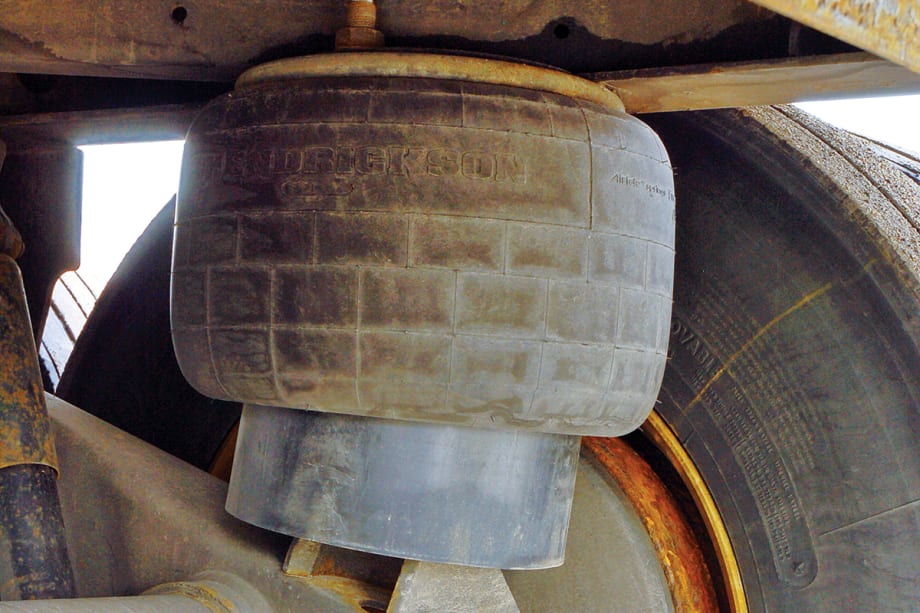
“When you see air bags cocked in at the bottom, that usually indicates the U-bolts have stretched and the axle is moving within the assembly,” he notes. “This can be difficult to detect when looking down at the assembly. The usual signs are not obvious from that vantage point, such as rust streaks running from the bolt. Get under it and look.”
Additionally, misalignment of an air spring may cause it to make offset contact with the internal bumper. “This could pinch the rubber portion of the air spring, significantly decreasing the life of the air spring,” says Mark Hilburger, executive director of marketing for air spring manufacturer Firestone Industrial Products.
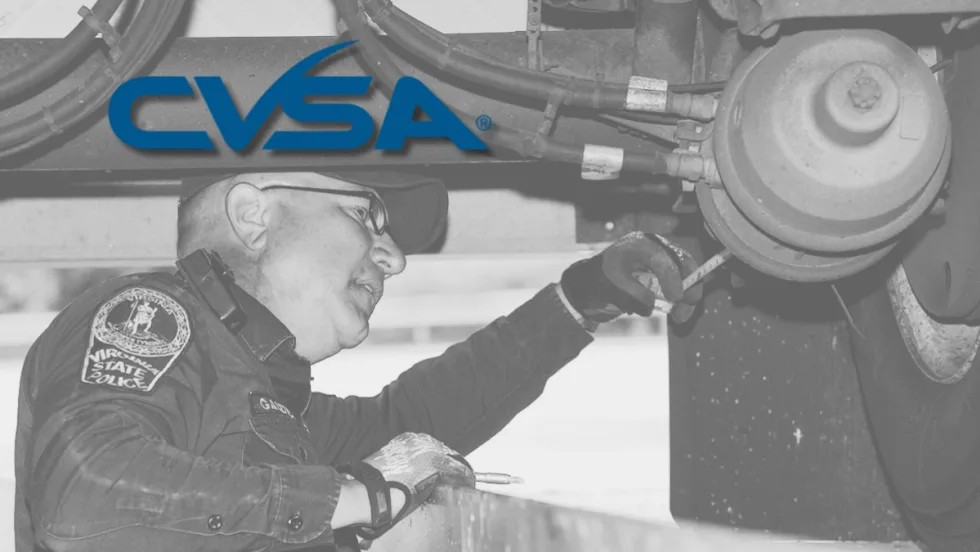
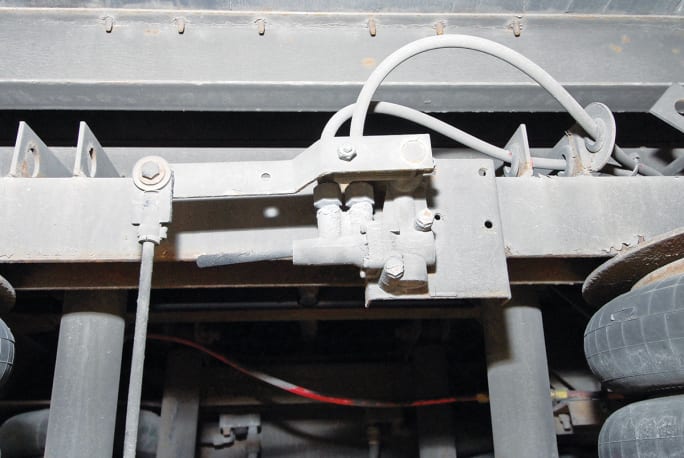
Additional A- and B-service inspection points should include the suspension ride height and the height control valve, the condition of the shock absorbers, leaks and signs of suspension-related tire wear such as cupping. Annual inspections should include retorquing the U-bolts, inspecting the air system filter (if equipped), and the suspension and shock absorber bushings.