Even with the greatest preventive maintenance programs, trucks are still going to break down. Yet not all fleets do a good job of managing the breakdown process. Here’s a look at common mistakes fleets make when it comes to emergency roadside service.
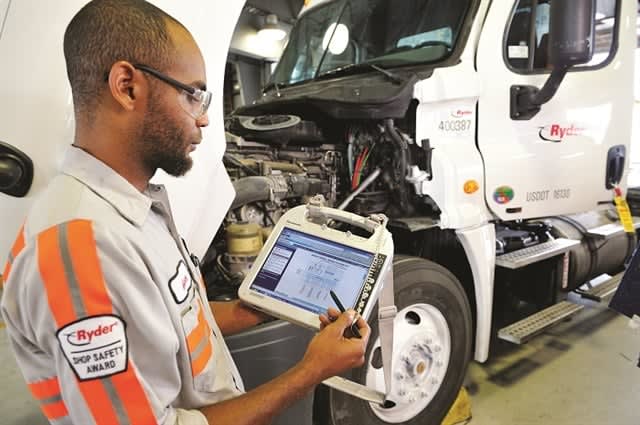
Having the right information helps determine if a technician with tools should be sent to the site of the repair or if a tow truck is needed.Photo: Ryder
7 min to read
Having the right information helps determine if a technician with tools should be sent to the site of the repair or if a tow truck is needed.Photo: Ryder
With roadside breakdowns, it’s more a matter of when than if, according to Bill Dawson, vice president of maintenance operations and engineering for Ryder. While there are things a fleet can do to try to decrease the number of roadside events, “failures happen in the best of circumstances. Even with the greatest [preventive maintenance] programs, you still are going to have some failures. You are going to have a tire go out. You are going to have an electrical system issue. You are going to have an aftertreatment system issue,” he says.
Ad Loading...
Breakdowns result in productivity losses and damage customer relations. Yet not all fleets do a good job of managing the breakdown process. Here’s a look at common mistakes fleets make when it comes to emergency roadside service. Avoid these and you can make roadside repairs less of a costly headache.
1. Not maintaining trucks properly
While breakdowns may be inevitable, there are things you can do to reduce the frequency of them.
Ad Loading...
“The biggest thing a fleet needs to do is make sure their pre-trip inspections and PM service are getting done,” says Evan Costner, senior director of roadside quality solutions at FleetNet America. “We have seen it time and time and time again, where if fleets would do proper pre-trips and do their PMs before the trucks even leave the yard, they would alleviate a lot of breakdowns.”
2. Waiting until a breakdown to find a breakdown service
During a breakdown, “having a way to find a provider quickly is critical,” says Peter Gordon, vice president at TruckDown. In order for that to happen, the fleet needs to have reviewed available options and have a list of approved vendors on hand.
Meet with various breakdown service providers and review their offerings. If you choose to go through a call center, ask how often the service providers in its network are graded for performance, suggests Joe Gallick, senior vice president of sales at NationaLease. “Make sure the service providers have been thoroughly vetted by the call center as to what their capabilities are.”
He also suggests that the fleet share information on who needs to be notified when a problem occurs and about the escalation process the call agent needs to follow. “There are different kinds of road service events, from a flat tire to a fault code being emitted to an accident. Let the call center know who needs to be communicated with based on the type of event and the procedures you want them to follow.”
Find out about the depth of the network as well as how consistent levels of service are across that network. Dawson says to ask if the network is a loose connection of individual owner locations or a vertically integrated operation.
Ad Loading...
Ash Makki, product marketing manager at Volvo, believes there is value in choosing a network with service providers the OEM knows and recommends.
Also ask about who is managing the call center. “It is very important that the driver get somebody competent and attentive on the phone in the event of a breakdown, whether that breakdown happens at 3 o’clock on a Friday afternoon or Sunday at 3 in the morning,” Dawson says. You also need to determine if call center employees will be able to “articulate the driver’s concerns to the repair service so they can take appropriate action.”
Choosing a service provider before a breakdown occurs allows them to operate more efficiently during a breakdown.Photo: FleetNet America
3. Being stingy with information
One big mistake fleets make is not accurately completing a unit template, Gallick says. He advises fleets to make sure the breakdown service provider or network puts complete and accurate information on the specs of each vehicle into a database. Having the right information upfront speeds up the process of getting a truck repaired when it breaks down on the road.
“You also want to make sure you have discussed communication protocols, notifications and approval levels for expenses,” he says. Even though doing all this may lengthen the time it takes to get started with a breakdown service provider, it will speed up the actual breakdown repair process.
“We are big proponents of asking our customers for unit information,” says Tim Moore, vice president of roadside operations at FleetNet America, “not to stick our nose into everything, but that way when an event happens we are able to pull up information immediately about the unit.” Having this detailed information means that if, for example, a belt breaks, the service provider can go out with the exact replacement belt. That leads to the truck getting back on the road more quickly.
Ad Loading...
In addition, Gordon says it’s important to build in payment processes and expectations up front, because it prevents issues during an incident. “During a breakdown the provider should be focused on getting the truck back on the road, not working thorough processes to get paid.”
4. Failing to build a relationship
Gordon says having a strong relationship between a driver/fleet and a service provider has enormous benefit when a breakdown occurs.
“Ensuring the provider knows that this may not be a one-off job, but rather an ongoing relationship, helps ensure that the provider provides value on every job,” he explains.
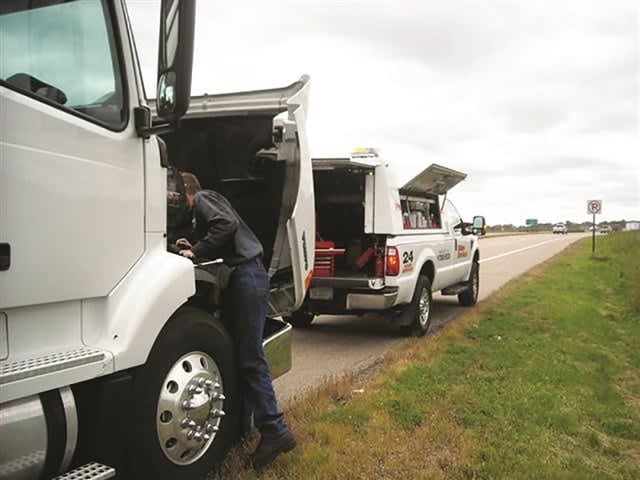
The type of failure dictates what will be sent to the site of the breakdown.Photo: Ryder
5. Looking at price, not value
Costner cautions fleets not to focus solely on price when selecting a breakdown service provider.
“Look at the totality of it and not just how much they are going to charge you,” he says. “Look at what you are getting for your money, because you can get a cheaper rate for service, but then not get any kind of data. Therefore that service provider isn’t doing anything to help you reduce your costs.”
Ad Loading...
6. Not having proper information about the breakdown
Sometimes drivers fail to provide accurate information about their exact location. Valuable time is lost looking for the down vehicle if detailed information about exact location of the truck is not provided.
The same is true when it comes to information about the nature of the problem. “When making the call for help, make sure the driver has all the critical information, whether that is from the fault code on the truck itself or exactly what the driver heard before the failure,” Dawson says. For example, “If the driver was driving with a warning light on and then the vehicle started to lose power, in all likelihood he is experiencing a derate activity. That information, albeit embarrassing, is critically important to the person taking the call.” They need it so they can dispatch the appropriate repair remedy, whether that is a technician with tools or a tow truck.
Even with something that seems simple like requesting a tow, Costner says the driver needs to provide information on “what he is stuck in or on.” He cited an example of a driver who requested a tow but neglected to tell the call center that the trailer was stuck on top of a concrete barrier. “The more information, the better the event can be handled,” he says.
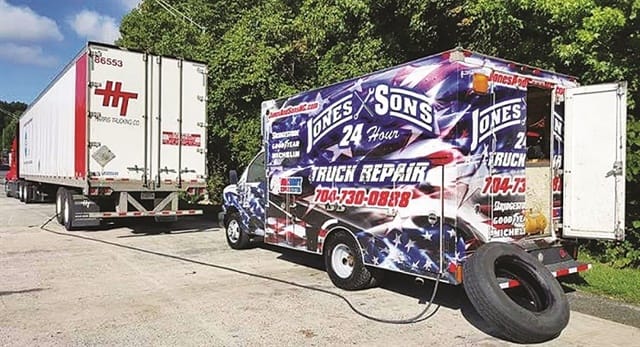
Tire problems are just one of the many reasons a truck is down on the side of the road.Photo: FleetNet America
7. Not leveraging breakdown data
A good service provider will do more than just get the truck up and running following a roadside breakdown. They also will provide you with information and data on all your roadside events. “We let our customers know when we see failure trends with a certain type of brake chamber or certain type alternator, for example,” Costner says.
FleetNet America provides its customers with monthly (more frequently if they request it) reports that provide detailed information about their breakdown events. “It points out things like percent of breakdowns from tire failures, for instance,” Moore explains. This allows the fleet to see if it needs to evaluate its tire maintenance or retread policies, or consider an investment in automatic tire monitoring or inflation.
Ad Loading...
Makki says Volvo is trying to get fleets to shift their mindset from dealing with breakdowns to proactively managing the health of their power units. Looking at reports from breakdowns can help them do this.
A breakdown is a business interruption, and “in this era of CSA, pressure around hours of service, pressure around productivity and the time expectations from the fleet’s customers, fleets really need to carefully think about who they are doing business with in the event of a roadside issue,” Dawson says, “because it is not difficult for a small roadside issue to become a catastrophe for a fleet when delivery windows are missed, customers are upset, and business is lost.”
For fleet managers and collision repair professionals keeping heavy-duty trucks on the road, getting the color right the first time isn't just about appearance — it's about efficiency, turnaround time, and bottom-line results. Discover how today's digital color tools are transforming the repair process from guesswork to precision.
DTNA is recalling more than 2,400 trucks that received an incompatible software fix instead of the hardware repair required to address brake valve corrosion.
Fleets have more visibility into truck health, safety events, and driver activity than ever. The next challenge is turning all that information into useful guidance for the person who has to decide what to do next.
Making it through August isn’t the same as being ready for the next several months of operation. Find out what systems may have suffered from summer heat and need to be checked out before fall.
With freight improving but costs still climbing, fleet maintenance executives explain how they're balancing price, quality, and supplier relationships.
The new API PC-12 heavy-duty engine oil category reflects the changing demands of modern diesel engines. But fleets like Foodliner are looking to getting their own data before making decisions on adopting the new oils and questions such as extending oil drain intervals.
The joint venture will operate MCT's network of Carrier Transicold dealerships and mobile service locations, with the companies promising greater service capacity and uptime for refrigerated fleets.