




Editor's Note: A version of this article originally ran in 2014. It has been updated with current information as of April 2025.
3 Tips to Keep Your Truck Battery Running in Summer Heat
You can't change summer temperatures, but you can take steps to protect your heavy-duty truck batteries from the heat.
by Alan Kohler, EnerSys
May 1, 2025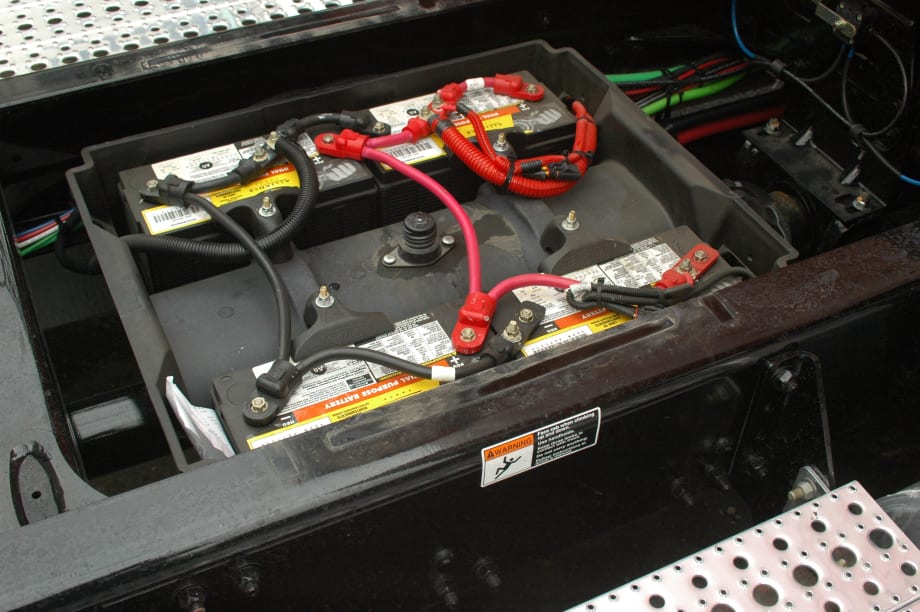
If your heavy-duty truck fails to crank next winter, it could be summer heat to blame.
Photo: Jim Park
4 min to read
Most people know that cold weather affects battery performance in your heavy-duty truck. But what about the effect of summer heat on your truck batteries? The fact is, extreme heat can also be detrimental to battery life.
Some lead acid batteries can suffer water loss in extreme heat — and water is essential to the electrochemical process within the battery.
Lead acid batteries function using an electrochemical process in which lead plates react with an electrolyte. As the temperature rises and a battery absorbs heat, the process speeds up exponentially. This results in an increase in plate corrosion, self-discharge, and over a prolonged period, sulfation.
Sulfation is the development of large crystals on the negative plates, blocking surface area and impeding battery performance.
It's Not Just Summer Heat That's Affecting Today's Truck Batteries
There are other factors that expose heavy-duty batteries to excessive heat other than the ambient temperatures.
Over the past decade, truck designs have been focused on achieving better aerodynamics to improve fuel mileage. In these design modifications airflow is directed over, above and behind the vehicle. That means less air flow to cool the engine and other heat-generating components in the engine compartment and underneath the vehicle.
On top of that, the position of the battery box is closer to heat generating components.
In short, the battery is in a hotter location that isn’t as efficiently cooled. As a result, temperatures can reach 140 degrees and higher.
Simply stated, batteries discharge faster in excessive heat.
Unless the battery design includes features that help protect the battery from the heat, or if preventive measures aren’t taken, battery life and performance are likely to be affected.
It is estimated that constant exposure to heat above 77 degrees cuts battery life in half for every 15-degree rise in temperature.
Watch Out for Parasitic Loads That Affect Your Truck Batteries
Another factor to consider in the summer — and all year-round for that matter — is parasitic loads.
Many of the electronic accessories and systems both in and out of the cab can create parasitic loads that will drain the battery to discharge.
Parasitic loads are small currents, typically of a few milliamps (mA), that the battery must deliver continuously to function properly. Although small, they have a large effect. As the battery is slowly discharged without immediate recharge, sulfation is a common result.
High temperatures, especially when combined with parasitic loads, will shorten the life of the battery.
Knowing that the summer heat already speeds up the rate at which the battery deteriorates, and that the rate of deterioration is further accelerated by parasitic loads, managing these two important factors can help increase the reliability and longevity of the battery.
3 Things You Can Do to Protect Your Heavy-Duty Truck Batteries in Summer Heat
- Choose your heavy-duty truck batteries wisely. Selecting a battery that stands up better to excessive heat is a good place to start. Non-spillable, maintenance-free AGM [absorbed glass mat] batteries manufactured with thin plate pure lead (TPPL) technology can perform in extreme temperatures as high as 176 degrees. They also offer slower self-discharge rates, less corrosion and faster recharging than alternative battery chemistries.
- Know your battery is fully charged. You can’t assume that vehicles in use every day recharge their batteries. Because excessive heat causes faster discharge, it is a good practice to use a maintenance charger on idle vehicles exposed to excessive heat.
- Keep track of the installation date. Plan to replace your battery within the manufacturer’s recommended time frame. Knowing that excessive heat can influence battery life, there’s no need to press your luck.
All things considered, there isn’t a lot you can do about summer temperatures.
However, you can put yourself in a better place down the road by knowing how heat affects a heavy-duty battery — especially when it comes to buying a new battery or getting longer battery life from the product you already own.
Always be sure to follow the manufacturer’s guidelines for battery care and handling and direct any questions to your battery professional.
About the author: Alan Kohler is senior marketing manager, Odyssey battery,at EnerSys. This article was authored under the guidance and editorial standards of HDT's editors to provide useful information to our readers. Opinions may not reflect those of HDT.
Subscribe to Our Newsletter
More Maintenance

Sponsored•September 16, 2026
Color Match Smarter: Tools That Restore & Perform
For fleet managers and collision repair professionals keeping heavy-duty trucks on the road, getting the color right the first time isn't just about appearance — it's about efficiency, turnaround time, and bottom-line results. Discover how today's digital color tools are transforming the repair process from guesswork to precision.
Read More →
Wrong Repair Prompts Recall of Freightliner, Western Star 4x2 Trucks
DTNA is recalling more than 2,400 trucks that received an incompatible software fix instead of the hardware repair required to address brake valve corrosion.
Read More →
Truck Drivers Need More Than Another Alert
Fleets have more visibility into truck health, safety events, and driver activity than ever. The next challenge is turning all that information into useful guidance for the person who has to decide what to do next.
Read More →
The Maintenance Checks Trucking Fleets Should Prioritize Before Fall Freight Picks Up
Making it through August isn’t the same as being ready for the next several months of operation. Find out what systems may have suffered from summer heat and need to be checked out before fall.
Read More →
What Three Fleets Are Doing Differently When Buying Truck Parts in 2026
With freight improving but costs still climbing, fleet maintenance executives explain how they're balancing price, quality, and supplier relationships.
Read More →
Paccar Recalls 2027 Trucks Built This Summer for Possible Electrical Problem
The nearly 6,000 Kenworth and Peterbilt trucks in the recall could potentially lose engine power, among other things.
Read More →
Will API PC-12 Oil Change Trucking Fleet Maintenance?
The new API PC-12 heavy-duty engine oil category reflects the changing demands of modern diesel engines. But fleets like Foodliner are looking to getting their own data before making decisions on adopting the new oils and questions such as extending oil drain intervals.
Read More →
Brake Safety Week to Focus on Drums and Rotors
Commercial vehicle inspectors are focusing on truck brakes during CVSA's Brake Safety Week, August 23-29.
Read More →Possible Battery-Cable Fires Prompt Recall of 15,000+ International MV and HV Trucks
On the recalled vehicles, manufacturing variations can cause the battery interconnect cable to contact the auxiliary stud and hold down the bracket.
Read More →
Rush, MCT Team Up to Grow Refrigeration Service Network
The joint venture will operate MCT's network of Carrier Transicold dealerships and mobile service locations, with the companies promising greater service capacity and uptime for refrigerated fleets.
Read More →