




10 Ways Fleet Maintenance Software Can Help Manage Costs and Boost Profitability
Kenworth offers this information to help truck fleet operators with their own maintenance facilities reduce parts inventory, decrease operating costs and increase productivity
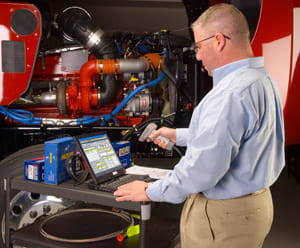
A robust maintenance software system can help a shop be more efficient and productive.
Kenworth offers this information to help truck fleet operators with their own maintenance facilities reduce parts inventory, decrease operating costs and increase productivity.
This article provides tips on what to look for when choosing the right fleet maintenance software and selecting add-on features that will make sense for their operations.
Truck fleets with their own maintenance shops are under increasing pressure to maximize mechanic and technician productivity and minimize parts inventories, particularly in the current challenging economy. By accomplishing these objectives, companies stand a better chance of gaining a competitive advantage and boosting profitability.
"Gathering and sorting through a myriad of information to achieve those objectives, while still directing day-to-day operations, remains one of the biggest challenges facing fleet maintenance directors and shop supervisors," said John Wisdom, director of customer systems for Kenworth PremierCare Connect. "A good maintenance management program can help. It allows managers to track the time taken by mechanics or technicians to perform tasks, such as preventive maintenance and general repairs. Users can also track parts purchasing and inventory so that their shops don't carry more parts than needed."
A robust system should allow users to establish an automated parts reorder process and help track costs through American Trucking Associations' vehicle maintenance reporting standards (VMRS) codes, Wisdom said. For example, a system could track work histories on specific units, enabling mechanics to more accurately diagnose issues and avoid costly repeat or unnecessary repairs. Tracking warranty periods and recalls is also helpful, so that companies can recover reimbursements from manufacturers or suppliers quickly.
A lot of maintenance programs are offered as stand-alone software, which may require users to make expensive upgrades to their computers or existing networks, Wisdom said. Required upgrades may add a significant delay to the implementation process. While providers of such software are starting to offer hosted solutions, users should consider how much experience they have in offering those hosted solutions.
Experienced providers often offer training options and extensive online user manuals that allow employees to train at their own pace, he added. For example, Kenworth PremierCare Connect offers an online library of more than 60 training videos for users. With the video library, employees can be trained to step in for co-workers who leave or go on vacation. Wisdom said companies should also find out how much application and technical support they will receive after system installation and activation.
Fleet maintenance software should be scalable, allowing users to add functions that make sense for their maintenance shops, Wisdom said. A good example would be a module that lets mechanics or technicians scan in work orders so that managers can review their time on and off the job to the nearest minute. Another example is a mileage upload module, which retrieves vehicle mileage readings from fleet management systems from providers, such as Qualcomm or PeopleNet.
Wisdom offers these top 10 ways a fleet maintenance program with add-on features can help fleet managers and shop supervisors manage costs in their shops and boost profitability for their companies:
Maximize equipment uptime. Fleet maintenance software should allow users to create maintenance schedules so that shop supervisors and fleet managers can coordinate repairs and routine maintenance. This helps work to be completed on time and minimizes vehicle time spent in the shop.
Manages parts inventory accurately. This function reduces on-hand inventory and inventory shrinkage by helping shops maintain an accurate physical inventory. Once shops complete an accurate physical parts count, users can maintain that accuracy by tracking when parts arrive and when they are taken out of inventory and issued to specific work orders. By adding optional tethered or portable barcode scanners and barcode label printer, shops can further automate this process, noted Wisdom.
Manages and tracks the cost of parts. Managers can control parts costs with a fleet maintenance management software to eliminate duplicate orders, track special parts orders, or compare a part's current cost to its cost when last ordered. With a robust system, managers can see who created the purchase order and which supplier was used, so that they can identify and correct any potential issues before their companies are billed. If the maintenance management system is connected to a parts supplier, the parts supplier may offer special rebates for purchases made through that system.
Provides an automated parts reorder process. Some systems offer minimum/maximum settings that allow users to maintain a steady supply of parts critical to the company's everyday operations. It also helps users control parts inventory costs. The automated system can be set to always keep any number of critical parts in shop inventory. When a part is issued to a work order, the system places an order with the shop's dealer to replenish the stock to the pre-determined level. The system can be set to require approval for parts orders when the number of parts in inventory reaches a certain level. The system can also suggest a reorder quantity based on past ordering patterns.
Analyzes and tracks costs by VMRS codes. The system should come preloaded with the American Trucking Associations VMRS codes. This allows managers to quickly compare and analyze the cost of parts by component or repair type, such as brakes, engine or air conditioning, said Wisdom.
Provides equipment cost tracking reports. Look for a fleet maintenance management program that offers reports and interactive screens providing managers fast and easy analysis.
Manages fuel costs more effectively. Managers can take control of one of their top vehicle expenses by comparing fuel costs from different suppliers for the same vehicle, noted Wisdom. For example, Kenworth PremierCare Connect offers an optional feature that enables managers to capture fuel costs by fuel type. The feature can produce reports showing cost-per-mile based on vehicle mileage readings, and list fuel purchases by state or province to assist in fuel tax reporting.
Provides frequent updates to mileage readings. This add-on feature allows users to upload vehicle mileage readings from a fleet or fuel management system provider, said Wisdom. The feature improves the accuracy of mileage-dependent reports, such as "maintenance due" and "cost per reading", because it eliminates the need to manually enter mileage data and provides more timely updates. These updates give a shop greater flexibility in scheduling maintenance for the company's vehicles. It also helps fleets avoid costly downtime since preventive maintenance services and mandatory inspections are kept current.
Captures mechanics time on assigned jobs quickly and accurately. By adding this feature to a fleet maintenance management program, service technicians can scan in work orders and managers can compare actual job times with estimated completion times. Since the work orders are scanned instead of manually entered into the system, managers can more accurately monitor productivity and address issues that slow shop operations. This feature allows managers to monitor shop work at a macro level, while looking for exceptions. The system then allows them to dig down further and examine those exceptions on a micro level - job-by-job or time entry-by-time entry.
Provides interoperability with accounting software. This add-on feature increases user productivity by eliminating double entry from the work order into a third-party accounting
More Maintenance

Color Match Smarter: Tools That Restore & Perform
For fleet managers and collision repair professionals keeping heavy-duty trucks on the road, getting the color right the first time isn't just about appearance — it's about efficiency, turnaround time, and bottom-line results. Discover how today's digital color tools are transforming the repair process from guesswork to precision.
Read More →
Wrong Repair Prompts Recall of Freightliner, Western Star 4x2 Trucks
DTNA is recalling more than 2,400 trucks that received an incompatible software fix instead of the hardware repair required to address brake valve corrosion.
Read More →
Truck Drivers Need More Than Another Alert
Fleets have more visibility into truck health, safety events, and driver activity than ever. The next challenge is turning all that information into useful guidance for the person who has to decide what to do next.
Read More →
The Maintenance Checks Trucking Fleets Should Prioritize Before Fall Freight Picks Up
Making it through August isn’t the same as being ready for the next several months of operation. Find out what systems may have suffered from summer heat and need to be checked out before fall.
Read More →
What Three Fleets Are Doing Differently When Buying Truck Parts in 2026
With freight improving but costs still climbing, fleet maintenance executives explain how they're balancing price, quality, and supplier relationships.
Read More →
Paccar Recalls 2027 Trucks Built This Summer for Possible Electrical Problem
The nearly 6,000 Kenworth and Peterbilt trucks in the recall could potentially lose engine power, among other things.
Read More →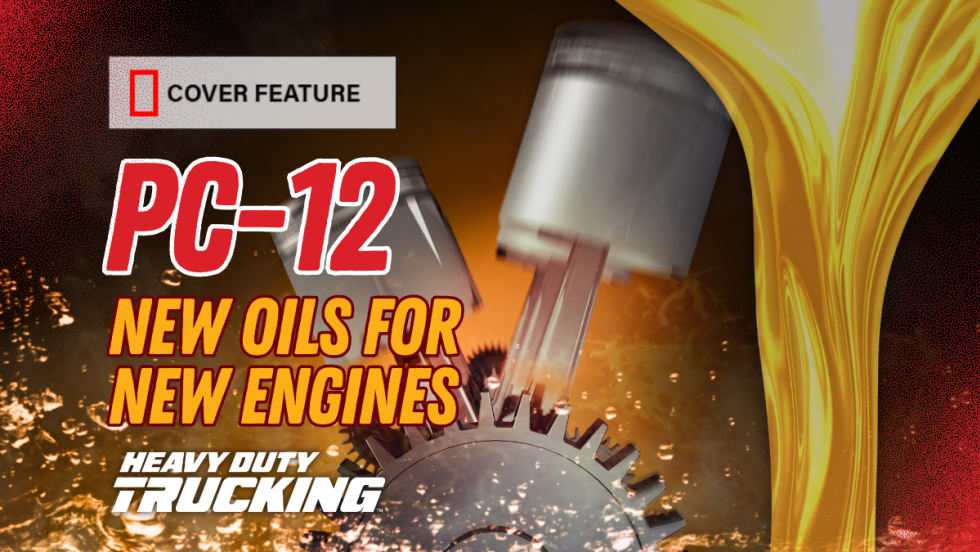
Will API PC-12 Oil Change Trucking Fleet Maintenance?
The new API PC-12 heavy-duty engine oil category reflects the changing demands of modern diesel engines. But fleets like Foodliner are looking to getting their own data before making decisions on adopting the new oils and questions such as extending oil drain intervals.
Read More →
Brake Safety Week to Focus on Drums and Rotors
Commercial vehicle inspectors are focusing on truck brakes during CVSA's Brake Safety Week, August 23-29.
Read More →Possible Battery-Cable Fires Prompt Recall of 15,000+ International MV and HV Trucks
On the recalled vehicles, manufacturing variations can cause the battery interconnect cable to contact the auxiliary stud and hold down the bracket.
Read More →
Rush, MCT Team Up to Grow Refrigeration Service Network
The joint venture will operate MCT's network of Carrier Transicold dealerships and mobile service locations, with the companies promising greater service capacity and uptime for refrigerated fleets.
Read More →