




12 Things You Should Know About Oil & Coolant Analysis
Oil and coolant are like your blood and your sweat, respectively, and they have to work together to keep you alive.

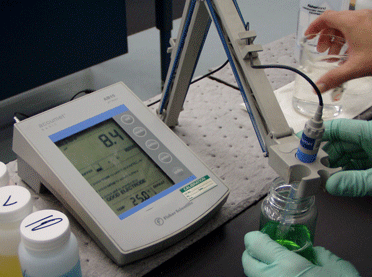
Where a coolant's neutralization number is related to the quantity of acid- or base-forming materials in a solution, pH indicates their intensity - and can indicate things going wrong in the cooling system.
Oil and coolant are like your blood and your sweat, respectively, and they have to work together to keep you alive, explains Dave Tingey, senior data analyst with Polaris Laboratories.
"If your body is sweating while you're running, you're healthy," he explains. "If you stop sweating, your blood is going to heat up, and you're going to die. If your coolant doesn't do its job, it's going to oxidize that oil prematurely, and next thing you know, your vehicle's going to die."
Like your body, your engine fluids should have regular tests to check on their health. Here are 12 things you should know about today's oil and coolant analysis.
1. It's not your granddaddy's engine.
New engines, new fuels and new coolants have affected various aspects of fluid analysis.
"With the constant reformulation of your coolants and your oils, the constant upgrading and redesign of your engines to meet emissions specifications, the loads put on oil have to be understood, and you have to realize how to best manage that piece of equipment," Tingey says. "Oil and coolant analysis give you the ability to do that."
Elizabeth Nelson, coolant program manager at Polaris Laboratories, also notes that today's cooling systems have higher temperatures, higher coolant flow rates and higher pressures. "There's a lot more going on than back in the '70s because of the evolution of that engine."
One area of significant concern is coolant leaks in oil over the past few years. With exhaust gas recirculation coolers a feature on new trucks since 2007, labs and fleets also have reported a frustratingly high number of EGR cooler leaks.
In fact, according to Mark Betner, heavy-duty lubricants manager with Citgo, 50% of premature lube-related engine failures in on-highway trucks are related to coolant contamination.
Oil analysis can help catch coolant contamination in the oil before you see significant engine damage, and coolant analysis can help detect something wrong with the cooling system.
2. There have been advancements in testing.
For instance, the advent of ultra-low-sulfur diesel has required a change in the way labs look for fuel dilution in the oil. In the past, tests would look for trace elements of sulfur. Without as much sulfur, explains Tingey, Polaris Laboratories has switched to gas chromatography to measure the amount of raw fuel in the oil.
ULSD also has affected the importance of measuring TBN - total base number, a measure of the acid-neutralizing capacity of oil.
"Back when we had higher levels of sulfur in the fuel, the engine would generate sulfuric acid, so you needed to follow TBN very closely," says Stede Granger, OEM technical services manager with Shell Lubricants. "With the use of ULSD, we don't generate sulfuric acid in the crankcase anymore. There are other acids that form, but they are not as hard. So the focus on TBN just doesn't have to be what it was before."
Another advancement in testing, says Peter Thompson, director of marketing for Valvoline, is microscopic particle examination. "It really gives detailed information on different wear particles," he explains. Traditional wear metal testing gives you a quantity, say 50 ppm of iron, he says, "but it can't tell you the makeup of that metal and likely where it came from - a liner or camshaft, for instance."
Chuck Hamilton with CHS notes that ferrous metal (iron) content testing has become available at many used oil analysis labs, using a Particle Quantification Index (PQI). This test will pick up the presence of larger iron particles, such as a gear tooth or slivers, which would not be picked up by the more typical spectroscopic iron measurement, which detects particles 8 microns or smaller.
3. Oil analysis can prevent premature wear and catastrophic failure.
With oil analysis, "You can see problems that are coming down the line with the engine," says Henry Neicamp, field services manager for Polaris Laboratories. "So you can correct that situation instead of waiting till the engine has a failure. It doesn't cost that much to do oil sample analysis, but the cost avoidance is significant as opposed to a significant engine repair and its resultant loss of productivity and downtime."
Steph Sabo, maintenance manager for Norrenberns Truck Service, a fleet and repair operation in Nashville, Ill., says while oil analysis has never prevented a catastrophic failure for his fleet, it has found a good many head gasket leaks and dust getting into the engine from bad air cleaner tubing connections.
Shell's Granger says with oil analysis, "you can actually see if you're starting to inhale dirt into the combustion chamber, because you see that in the crankcase in elevated silicates. Years ago I saw an engine where that had happened; it's amazing the amount of engine wear that took place."
Because oil analysis can alert you to situations where the oil's no longer protecting the engine as it should, it's a must if you want to extend your oil drain intervals beyond the standard recommended by your engine maker.
Some of the telltale signs of problems oil analysis looks for in determining drain intervals is viscosity (oil thickening due to soot accumulation and oil oxidation), the ability of the oil to neutralize acid (although that's not as critical as it once was), as well as contaminants such as coolant, fuel, water, debris or wear metals.
4. Coolant analysis is more than checking additive levels.
It's not just oil analysis that can help catch damaging problems early. Traditionally, coolant testing in the field has focused on additive levels and whether there's the right concentration of coolant vs. water. But coolant testing can do much more.
"People tend to put [coolant] in and forget it, but there are mechanical things that take place in the cooling system that will destroy that coolant, and the coolant in turn will attack the metals in the engine," Nelson says.
Laboratory testing can catch cooling system problems early, such as combustion gas leaks, electrical ground problems, localized overheating issues and air leaks.
For instance, Nelson says, pH levels can not only tell you if someone mixed a conventional fluid with an extended-life organic additive coolant, but also whether there is a chemical reaction taking place in the cooling system.
"When pH starts to drop significantly, that's a clue there's something wrong, such as the formation of degradation acids or an air leak," she says. Glycol, the foundation ingredient of coolants, can break down in excessive heat, forming degradation acids, and that can cause severe pitting in the cooling system. "And that can come from something simple like a defective pressure cap, or corrosion and dirt plugging up cooling system passages."
Polaris Laboratories recommends twice a year, before summer and before winter.
5. More coolants mean more potential for mix-ups.
Increasingly popular extended-life coolants are based on organic additive technology, which doesn't work the same as traditional coolants. Sometimes even different brands of extended-life technology don't play well together.
As Shell's Granger explains, "We do not recommend mixing, because your corrosion protection could significantly suffer. The additives in the [traditional] silicate product protect against corrosion in a much different manner than an extended-life coolant. When you mix the two, you may end up without enough of either type of additive to protect against corrosion."
Making it more difficult is that you don't see much in the way of the easy dip-a-strip type of tests for ELC that worked on the traditional coolants.
There are some test kits out there. Shell, for instance, just introduced a new coolant contamination test tool for its Rotella extended-life coolants and other leading brands, which uses two vials and three simple color indications. Its purpose is to make sure traditional coolant has not been mixed in with the ELC.
But don't automatically assume that a test that works for one brand of extended-life coolant will work for others. "There are about 16 different organic additives that can be used, and at different levels," says Nelson.
In addition, there's a new "waterless" coolant on the scene. Evans coolant, because it's made with glycols undiluted by water, boils at a higher temperature than regular coolant, allowing for reduced fan-on time and fuel savings, according to the company. This also means a very different additive package. Without water, non-corrosive additives aren't required, for instance. So for this coolant, the biggest thing to test for is the accidental addition of water.
6. Test results are easier to understand than before.
Once upon a time, you mailed off an oil or coolant sample and it took weeks to get the results back in the mail – and then all too often it was a confusing mishmash that it sseems you needed to be both a mathemetician and chemist to understand. Today, however, the information is transmitted electronically.
"Instead of reading the old paper reports, more and more companies are utilizing software and better electronic delivery methods from used-oil labs to receive quicker data and help them better manage their maintenance programs," explains Len Badal, commercial sector manager, Chevron Lubricants.
With most programs, you can pull up the results via a website and analyze individual vehicles, slice and dice by make of engine or other parameters. E-mail reports can alert you to abnormal and critical results.
Good labs also will have people available to answer questions about your results. "We don't expect fleet operators to be experts on analysis," says Valvoline's Thompson. "Our technical people also get involved to help interpret the results."
More Maintenance
International Launches Online Truck Parts Store
Fleetrite.com lets fleets and repair shops find OEM and all-makes parts, check prices and availability, and order without calling a parts counter.
Read More →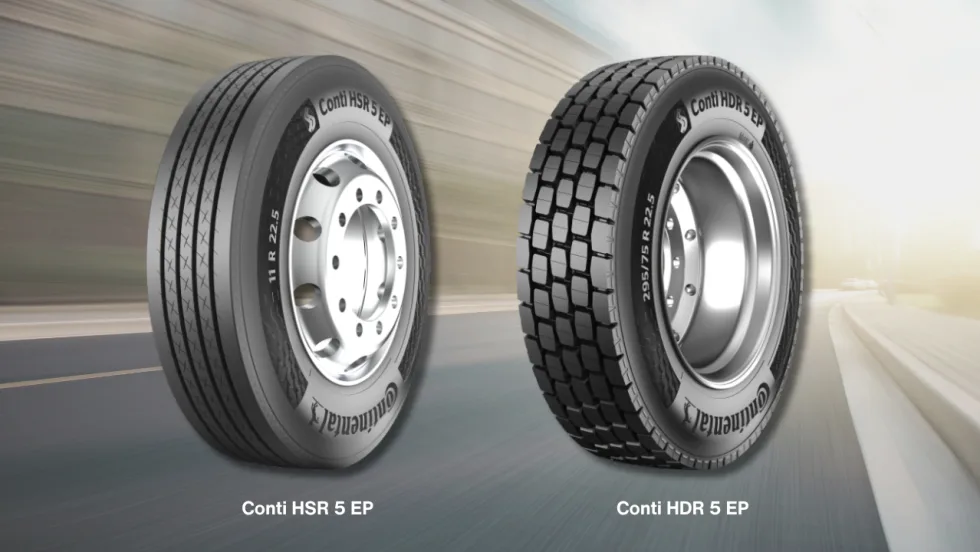
Continental Introduces New Regional Truck Tires
Continental says its new Generation 5 steer and drive tires for regional operations offer longer tread life, with estimated mileage gains of 22% and 19%, respectively.
Read More →
How AI Can Help Your Techs’ Efficiency
The technician shortage isn't going away, and no single fix can close the gap on its own. Trent Broberg makes the case that AI's real job in the shop is protecting the billable hours and job satisfaction of the techs you already have, not asking them to work faster.
Read More →


Color Match Smarter: Tools That Restore & Perform
For fleet managers and collision repair professionals keeping heavy-duty trucks on the road, getting the color right the first time isn't just about appearance — it's about efficiency, turnaround time, and bottom-line results. Discover how today's digital color tools are transforming the repair process from guesswork to precision.
Read More →
Wrong Repair Prompts Recall of Freightliner, Western Star 4x2 Trucks
DTNA is recalling more than 2,400 trucks that received an incompatible software fix instead of the hardware repair required to address brake valve corrosion.
Read More →
Truck Drivers Need More Than Another Alert
Fleets have more visibility into truck health, safety events, and driver activity than ever. The next challenge is turning all that information into useful guidance for the person who has to decide what to do next.
Read More →
The Maintenance Checks Trucking Fleets Should Prioritize Before Fall Freight Picks Up
Making it through August isn’t the same as being ready for the next several months of operation. Find out what systems may have suffered from summer heat and need to be checked out before fall.
Read More →
What Three Fleets Are Doing Differently When Buying Truck Parts in 2026
With freight improving but costs still climbing, fleet maintenance executives explain how they're balancing price, quality, and supplier relationships.
Read More →
Paccar Recalls 2027 Trucks Built This Summer for Possible Electrical Problem
The nearly 6,000 Kenworth and Peterbilt trucks in the recall could potentially lose engine power, among other things.
Read More →
Could New Engine Oils Mean Longer Drain Intervals?
New CL-4 and FB-4 engine oils are coming in 2027. Foodliner wants to know whether they could support longer oil drains, but it won’t change its maintenance schedule without data from its own trucks.
Read More →