




Brokers Feel Pinch of Labor Shortage
Brokers and third-party logistics providers are feeling the labor squeeze along with the trucking industry, according to Robert Voltmann, president and CEO of the Transportation Intermediaries Association.


Robert Voltmann, president and CEO of the Transportation Intermediaries Association, details changes and challenges in the third party logistics and freight brokerage business during TMW Systems’ user conference. Photo: Jim Beach

Robert Voltmann, president and CEO of the Transportation Intermediaries Association, details changes and challenges in the third party logistics and freight brokerage business during TMW Systems’ user conference.Photo: Jim Beach
NASHVILLE -- Brokers and third-party logistics providers are feeling the labor squeeze along with the trucking industry, according to Robert Voltmann, president and CEO of the Transportation Intermediaries Association.
Speaking at a session on 3PL at TMW Systems’ annual Transforum user conference here Sept. 23, Voltman said the capacity crunch due to the driver shortage would make it more difficult for brokers and third-party logistics providers going forward. And, he said, these companies are also having trouble finding good employees. When he asked how many of the brokers in the audience were having difficulty finding workers, virtually every one raised their hand.
Noting that the 3PL industry had grown to a $160 billion per year industry, Voltmann said there were “tons of employment opportunities” within the 3PL segment but that, “it seems personnel is one of the big problems in the industry – finding people.”
He noted that the transportation industry has changed dramatically over recent years and that brokers and 3PLs “have turned what was a cost center for shippers into a profitable business.” Voltmann said that most shippers invest in their products and not in the technologies that move that product, while trucking companies, brokers and other logistics providers have made the investment in technology to drive cost out of the supply chain. He likened what transportation companies do to the back side of a dam – it does all the work but does so out of sight.
Recent trends that will help transportation grow, according to Voltmann, include the renaissance in gas and oil production due to the advent of fracking technologies. As a result, foreign firms are locating manufacturing facilities in the U.S. to take advantage of the relatively cheap energy this boom has provided, and the goods those manufacturers produce will need trucks to get to market.
In another trend, retailers and others are beginning to put distribution centers closer to their customers to meet the demands for same-day delivery.
Along with the driver shortage, infrastructure is also a problem with capacity – if trucks can’t travel at normal speeds because the highways are deteriorated or congested, that hurts capacity. “The only answer right now is you have to raise the gas tax,” he said. Voltmann said he believed that if the current gas tax had been indexed to inflation when passed in 1992, “we would be in better shape,” but that the current tax is “inadequate to meet the cost of pouring concrete.” He admitted it was unlikely a fuel tax could pass the current Congress.
Agreeing with others who had spoken at the conference, Voltmann said the regulatory burden was also constraining trucking capacity. New hours-of-service rules have had a much greater impact on the industry than anticipated, he said. And a number of proposed rules, such as the electronic logging device mandate and another possible rule to raise insurance requirements, could cause problems for the industry.
He also spoke about the changes for brokers that were included in the MAP 21 transportation bill passed two years ago. Voltmann said that bill changed rules back to the way they had been – simple rules that said brokers were brokers and carriers were carriers.
But he said the new rules were necessary because some carriers were taking loads and then flipping them to someone else without accepting the financial and other responsibilities required of brokers. “That’s OK if in that flipping, you are still responsible for it” and responsible for the guy delivering the load.
Those changes to the brokerage rules have been controversial, with small brokerage firms and some trucking companies saying the increased bonds MAP 21 required were forcing them out of business. But Voltmann argued that the lines between carrier and broker should be clear: “If you accept a load as a carrier, you have a responsibility,” he said. “If you want to put it on someone else’s truck and don’t pick it up first, you are a broker. If you put it on your own truck, you are a motor carrier.”
More Fleet Management
What Will ATA’s New Leader Bring to Trucking's Table?
Incoming President and CEO Mark Colson’s record in Alabama offers clues about his priorities and approach following Chris Spear’s abrupt departure as the head of the American Trucking Associations.
Read More →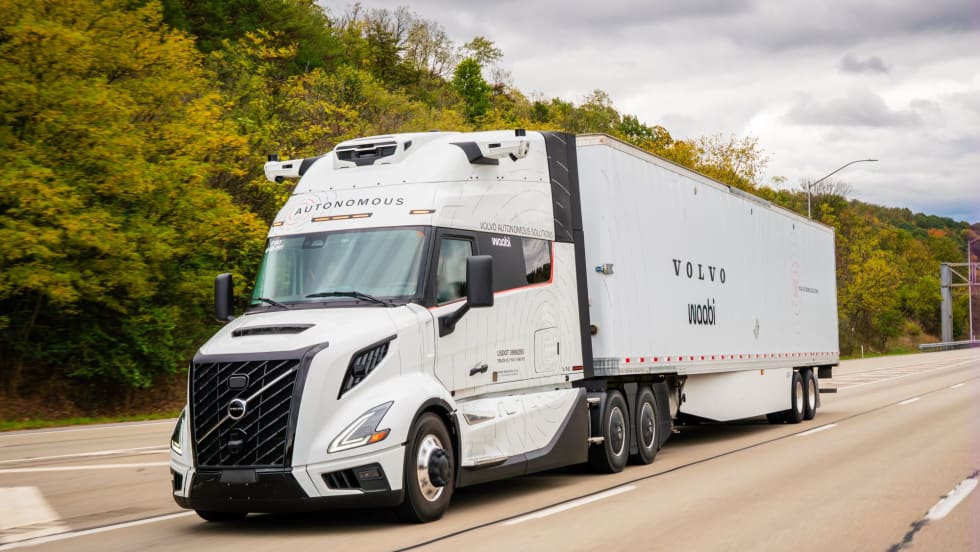
Volvo, Waabi Start Commercial Autonomous Operations in Texas
Volvo VNL Autonomous trucks, powered by the Waabi Driver, are hauling freight directly to third-party facilities for a customer in Texas.
Read More →
Samsara Launches Custom AI Agent Builder
Agent Studio lets fleets create AI tools for hours-of-service monitoring, reporting and driver support, including agents that communicate by phone.
Read More →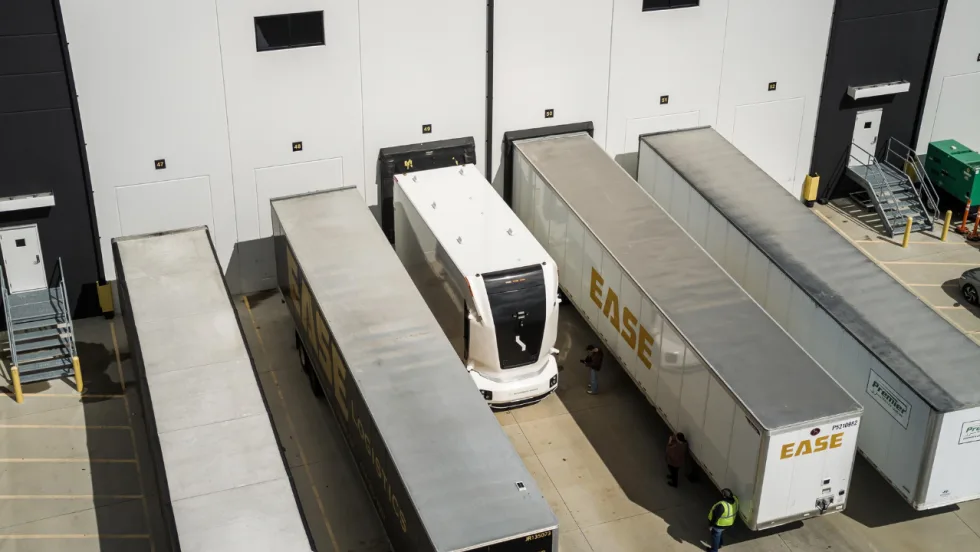
Einride Driverless Electric Trucks Begin Daily Freight Operations in Ohio
Two cabless electric trucks are hauling freight between EASE Logistics facilities in Marysville, Ohio, as part of a multi-state truck automation project.
Read More →
Geotab Links Fleet Card to Vehicle Data
The new card combines fuel discounts with telematics-based purchase controls. Geotab’s analysis also points to potential savings from choosing lower-priced fuel stops.
Read More →
How MFA Helps Protect Trucking Fleets
Multi-factor authentication adds protection when passwords are stolen. Here’s how it works and where fleets should start.
Read More →
How Better Freight Data Helps Trucking Teams Get Ahead of Disruption
Trucking and logistics teams have plenty of data. The problem is getting the right information in front of the right people soon enough to act. Better-connected data can help teams spot trouble earlier and make smarter decisions before small problems become big ones.
Read More →
Trimble: Taking Artificial Intelligence in Trucking Beyond Faster Tasks
At Insight 2026, Trimble executives argued that fleets may need to redesign workflows to get more from AI as it introduced new products and enhancements. AI’s value will depend on how fleets combine automation with their people's knowledge.
Read More →
Build a bulletproof fleet: Uniting ELDs and dash cams for total compliance
An ELD can prove compliance, but it cannot always prove what happened on the road. Discover how uniting accurate ELD data with AI-powered dash cam video can help your fleet strengthen compliance, defend against liability, protect drivers and reduce operational costs.
Read More →
Nominations Open for HDT Emerging Leaders
Heavy Duty Trucking is looking for accomplished trucking fleet professionals under 40 who are making an impact and helping lead the industry forward.
Read More →