




Report: Truck Speed Limiters Improve Highway Safety in Ontario
Speed-related, at-fault collisions involving large commercial vehicles fell by a whopping 73% after mandatory speed limiter legislation took effect in Ontario, according to a study by the Ontario Ministry of Transportation.

Speed-related, at-fault collisions involving large commercial vehicles fell by a whopping 73% after mandatory speed limiter legislation took effect in Ontario, according to a recent study by the Ontario Ministry of Transportation.
The year-long study conducted between 2014-2015 examined data from pre- (2006-2008) and post- (2010-2012) speed limiter legislation by using fatal, injury and police reported property damage collisions on high-speed highways. It also looked at MTO enforcement officers’ large vehicle driver speed data, among other real-world data.
The Ontario Trucking Association, a strong proponent of mandatory speed limiters, said that although speed limiter opponents believed slowing down large trucks would lead to a dangerous speed differential and cause more collisions with passenger cars and other vehicles, the study concluded there is no evidence that has happened. “Moreover, the study also dispelled the myth that in a speed limiter environment, drivers adjust their driving behavior to compensate for any perceived time lost as a result of driving slower,” the OTA said in a release.
The percentage of truck drivers struck in the rear stayed the same from pre- to post legislation (10.03 % of total collisions 2006-2008 and 10.47% 2010-2012), while the rate increased for other drivers (18.6% 2006-2008; and 21.3% 2010-2012).
Going forward, the study suggests some recommendations to raise compliance and realize the full benefits of the speed limiters, including increased enforcement and enhancing the electronic control module readers available to enforcement officials.
The study could give ammunition to supporters of a proposed speed-limiter rule in the U.S. that appears to be stalled.
After a decade-long push by trucking and safety advocates, last August the National Highway Traffic Safety Administration and the Federal Motor Carrier Safety Administration jointly proposed a rule that would require that heavy-duty vehicles be equipped with speed-limiting devices — but did not lay out what speed they should be limited to. Final comments on the proposal were due on Dec. 7, and more than 5,400 comments were filed.
The fate of the speed limiter proposal is unclear under the less-regulation focus of the Trump administration. Shortly after taking office in January, President Trump issued an executive order calling for killing two existing rules for every new federal rulemaking.
One trucking coalition was quick to lobby Secretary of Transportation Elaine Chao to prioritize the speed limiter proposal for the regulations chopping block (along with the electronic logging device mandate). Signing that letter were the Owner-Operator Independent Drivers Association, the National Association of Small Trucking Companies, and stakeholder groups, such as the National Pork Producers Council and the Petroleum Marketers Association of America.
On the other hand, the Alliance for Driver Safety & Security (aka the Trucking Alliance) also wrote to Chao, urging her to proceed with a number of safety initiatives, including the speed limiter proposal, saying it “strongly believes that excessive large truck speeds are critical factors in the severity of injuries and fatalities in large truck accidents.” The Alliance “supports a truck-speed limiter rule in which the maximum speed setting is no more than 65 mph.”
More Safety & Compliance

A Camera Isn't a Safety Program. Here's What Brokers Are Screening for Now
Footage alone may not be enough to pass broker vetting processes. Here's what counts as a defensible safety program now.
Read More →
Marijuana and Trucking’s Drug-Testing Dilemma
Marijuana is getting stronger, laws are changing, and drug tests still can’t reliably establish impairment. What does that mean for truck drivers and the fleets that employ them?
Read More →
PrePass, Kodiak Connect Driverless Trucks to Roadside Enforcement
The system will allow enforcement agencies to verify Enhanced Inspection information and decide whether Kodiak’s autonomous trucks can bypass roadside screening sites.
Read More →

From One Generation to the Next: How Mentorship Builds Safer Truck Drivers
After three decades in trucking, Harold Perry shares what he's learned about driver safety, mentorship, and helping the next generation build confidence behind the wheel.
Read More →
FMCSA Pauses Biennial-Update Enforcement Amid Motus Transition
Carriers whose updates were due on or after June 1 have more time, while FMCSA works to stabilize its new registration system and warns of phishing sites impersonating its new carrier registration system, Motus.
Read More →
ZF Expands Commercial Vehicle Push in North America
ZF is expanding its North American commercial-vehicle presence with new transmission applications, electrification, trailer technology and autonomous-driving systems.
Read More →
Truck Drivers Need More Than Another Alert
Fleets have more visibility into truck health, safety events, and driver activity than ever. The next challenge is turning all that information into useful guidance for the person who has to decide what to do next.
Read More →
Tesla Wants a Self-Driving Semi. Are Cameras Enough?
Could Tesla’s camera-only autonomous driving technology work on an 80,000-pound Semi? In this commentary, HDT's Deborah Lockridge takes a look at Tesla, Cybercab, and how autonomous trucks see the road.
Read More →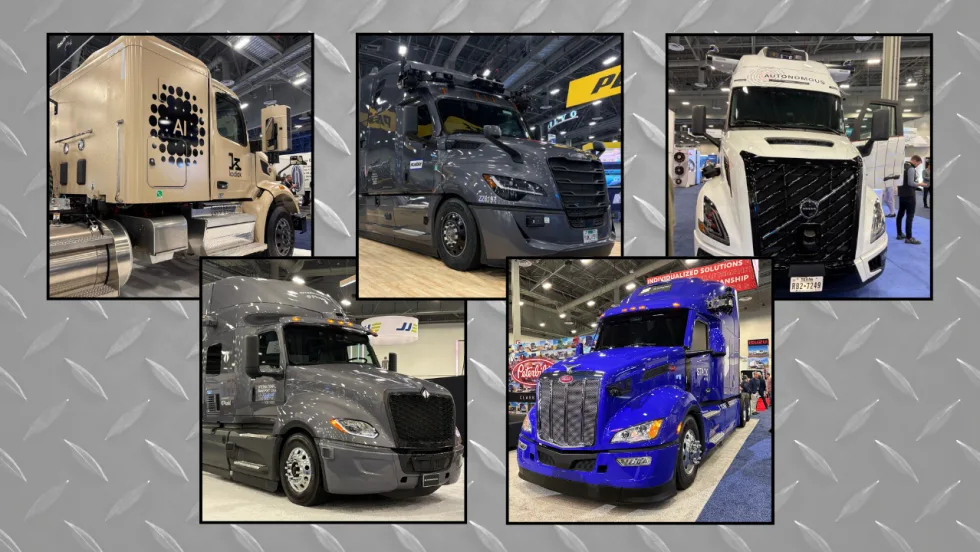
What DOT’s Automated Vehicle Strategy Means for Trucking
The U.S. Department of Transportation issued a new automated-vehicle strategy that outlines plans for driverless-truck regulations, cross-state freight corridors, and federal safety standards.
Read More →
NYC Expands Speed, Pedestrian Safety Tech Across Fleet
New York City is expanding intelligent speed assistance and pedestrian-alert systems across its municipal fleet, moving the technologies from pilot programs into vehicle procurement and retrofit requirements.
Read More →