




FMCSA Refocusing Attention in Safety Audits
HNI recently held a workshop called FMCSA Safety Audit Requirements and How to Prepare, featuring FMCSA and Wisconsin State Patrol officials talking about new policies and procedures in place
HNI recently held a workshop called FMCSA Safety Audit Requirements and How to Prepare, featuring FMCSA and Wisconsin State Patrol officials talking about new policies and procedures in place.
It was brought to our attention that not only is FMCSA's auditing process changing, but so are the techniques used by the auditors.
With CSA being the most common reason for a visit from FMCSA, most carriers will not receive a "full compliance review" but instead will receive a "focused review." This is usually listed at a "non-ratable review." That means the inspector cannot issue a satisfactory rating -- but he or she can reduce a fleet's rating to conditional or unsatisfactory.
This will occur if they discover a violation (or violations) during the review which in a full compliance review would cause the carrier to receive a conditional or unsatisfactory rating (for instance, hours of service violation that results in a pattern of non-compliance or more than 10% for any one type of violation).
Another interesting thing was how FMCSA is focusing on best practices and procedures internally so inspectors are more effective at ensuring compliance.
For instance, take the Maintenance Basic and DVIRs. With the information gathered from CSA, the FMCSA is looking at the percentage of defects in the maintenance area vs. the number of inspections. If done correctly, common sense would dictate that the percentage of defects uncovered in the DVIR process should have similar results to those uncovered during a roadside inspection.
The reality is that the DVIR process shows a significantly lower percentage of defects than those discovered during a roadside inspection. This is telling us that drivers are either not listing defects or that they do not understand the DVIR process.
Many drivers think that the DVIR process is a "post trip inspection" where you list what you discover during an actual inspection, whereas the regulations state:
396.11
a) Report required. (1) Motor carriers. Every motor carrier shall require its drivers to report, and every driver shall prepare a report in writing at the completion of each day's work on each vehicle operated...
And:
b) Report content. The report shall identify the vehicle and list any defect or deficiency discovered by or reported to the driver which would affect the safety of operation of the vehicle or result in its mechanical breakdown. If no defect or deficiency is discovered by or reported to the driver...
This means the driver is to fill out the report and list anything that he/she was aware of or was notified was wrong with the unit(s) that day!
So, what is a carrier to do? During the event, a number of people described their processes for ensuring DVIR completion and accuracy. Some ideas to consider:
1. Make sure your drivers are properly trained and that the culture of your company requires proper pre-trip and DVIR procedures, with no exceptions allowed.
2. Have a process in place that ensures that whenever a mechanic performs a repair that should have been listed on the DVIR but wasn't, the mechanic should immediately report this to the safety director.
3. Have someone assigned to notify the driver when there is a DVIR error, meet with him or her, and make sure he or she receives proper training (along with documentation) to ensure this does not happen in the future.
4. Use your supervisors as a check and balance. Get out there and make sure your drivers are doing thorough pre-trip inspections, and periodically do spot checks on the truck for any issues that may have been overlooked.
5. Have some fun and make it a challenge. Randomly put some sort of a sticker or marker on various locations on units that a driver will see if he/she does a pre trip inspection (Make sure you keep track and note where and when they were placed). Anyone who finds a sticker is to call in or stop by safety and report it. Each month have a drawing from those who turned in their stickers (if you didn't find all or missed one your disqualified for the month) and give away a prize. Contact drivers who do not call in and make them show you how they do pretrip inspections and make sure they understand that not doing them is not acceptable.
Best practices don't have to be complicated.
It's not just about CSA. We don't want people needlessly injured, roadside breakdowns (along with the roadside repair expenses), and customer service failures related to our equipment. We want to know when something is wrong. It's usually cheaper to fix something then to let it develop into a larger issue.
In short, it's worthwhile to develop a simple process that ultimately not only helps you to be compliant but also saves you money and improves your efficiencies over time.
Don Jerrell is associate vice president of HNI, an insurance and business advisory firm. Previously published in the HNI Steal These Ideas blog, used with permission.
Related Stories:
3/22/2012 How Do You Know Your Drivers Are Doing Proper Inspections?
4/30/2012 How Automated Pre-Tripping of Trailers Could Help Fleets with CSA
7/5/2012 Top 5 Vehicle Maintenance Violations
5/14/2011 CSA and the Maintenance BASIC
More Safety & Compliance

How Waste Connections is Using Data, Telematics, and AI
How do you manage and maintain more than 18,000 connected trucks? Data. Lots of it.
Read More →
Fleet Advantage: Top Logistics Fleets Outperform National Safety Benchmarks
Fleet Advantage's latest TRUST Safety Index found leading logistics fleets maintained significantly lower out-of-service rates and stronger safety scores than national averages, while highlighting persistent challenges related to tires, brakes, and unsafe driving behaviors.
Read More →
Why Fleet Data Matters More Than Ever at Waste Connections [Watch]
Waste Connections' Chuck Palmer explains how telematics, predictive maintenance, safety analytics, and AI help keep vehicles on the road and drivers safe in this episode of HDT Talks Trucking.
Read More →
Short Takes: How K&B is Using AI
Fleets need to "get on board the train" with AI, says Lance Evans of K&B Transportation in this HDT Talks Trucking Short Takes episode.
Read More →
Short Takes: Inside K&B’s Truck Safety Tech
Listen to learn how K&B Transportation uses cellphone-blocking technology, speed management systems, weather geofencing, bridge avoidance tools, and more to improve driver safety.
Read More →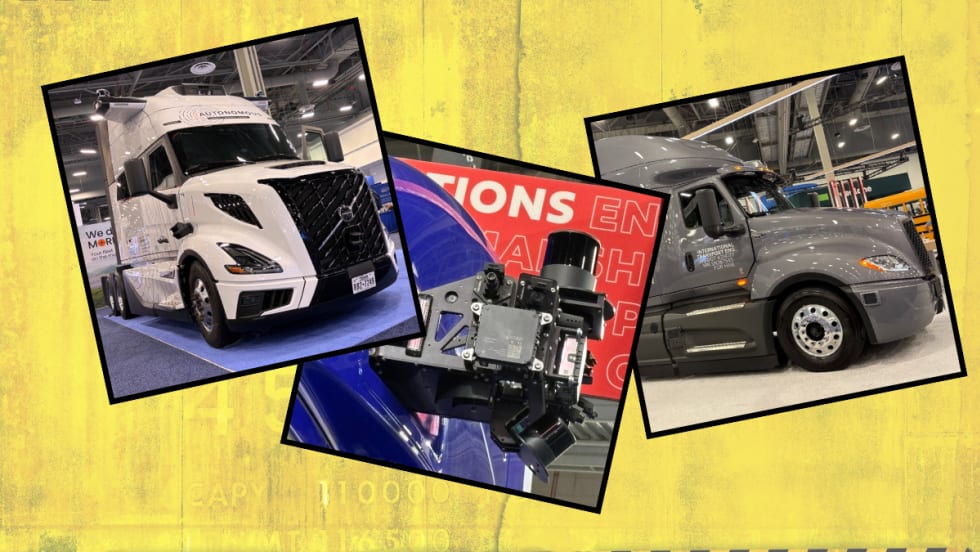
The Biggest Gap in Driverless Trucking Isn’t Tech. It’s Safety Validation
Nauto’s Stefan Heck says autonomous trucks are advancing quickly but proving they’re safe enough for large-scale deployment may be the industry’s hardest challenge.
Read More →
Truck Crash Rates Are Down. So Why Do Insurance Costs Keep Rising?
ATRI’s latest research points to litigation, social inflation, and soaring claims costs as key drivers behind record-high liability premiums for trucking fleets. But there are things motor carriers can do.
Read More →
FMCSA Removes More Than a Dozen ELDs from Registered List
The FMCSA continues its efforts to fight electronic logging devices that don't meet federal requirements, removing more than a dozen from the registered ELD list in May.
Read More →
How the Supreme Court Broker Liability Ruling Could Reshape Trucking’s Safety Landscape
The Supreme Court’s May 11 broker-liability ruling may not radically rewrite transportation law overnight. But industry experts say it will intensify pressure on brokers, carriers, and shippers to prove they are prioritizing safety.
Read More →
Recall of Fontaine Fusion Flatbeds Warns Owners Not to Use the Trailers
Some Fontaine Fusion flatbed trailer manufactured between February 2025, and March 2026 could have mainbeams weakened by hydrogen embrittlement because of a problem in the galvanizing process.
Read More →