




Expedited Carrier V3 Transportation Aiming for More Growth
V3 Transportation launched with “two laptops and two cell phones” in the first quarter of 2013. Now, according to founding partners Bob Poulos, CEO, and John Sliter, president, the expedited carrier ranks among the fastest-growing operations in its field and is poised for further growth.

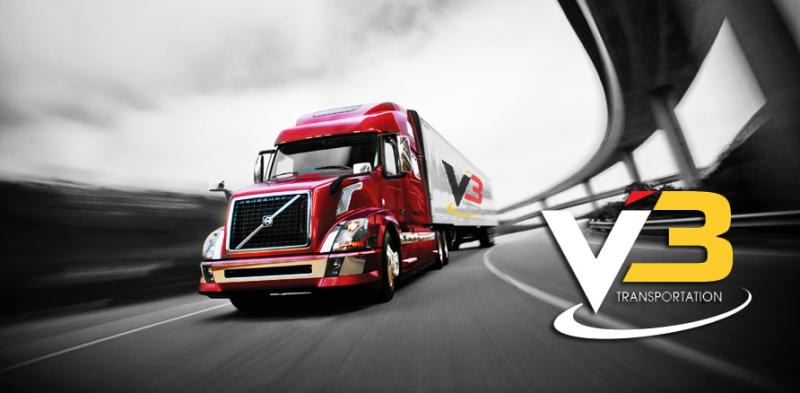
Expedited carrier V3 Transportation has bveen enjoying rapid growth since launching in the first quarter of 2013.
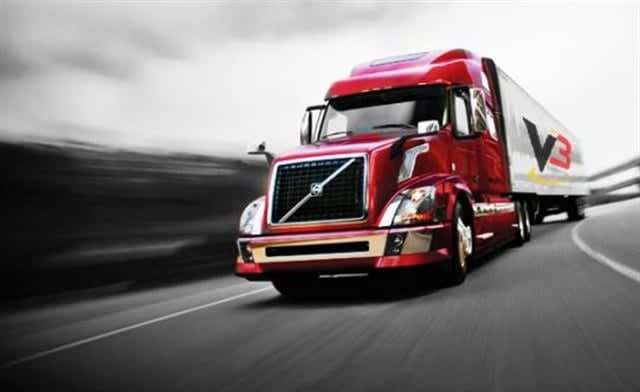
Expedited carrier V3 Transportation has bveen enjoying rapid growth since launching in the first quarter of 2013.
V3 Transportation held an open house on Aug. 5 to inaugarate its new headquarters facility in Seville, Ohio. The expedited carrier has enjoyed rapid growth since launching its operations with “two laptops and two cell phones” in the first quarter of 2013. Now, according to founding partners Bob Poulos, CEO, and John Sliter, president, the company ranks among the fastest-growing operations in its field and is poised for further growth.
The carrier, which was named an HDT Truck Fleet Innovator earlier this year, currently employs 48 in operational, customer service and other office positions to support a fleet of 153 trucks. Those are piloted by 192 owner-operator expedited drivers. By the end of 2016, the fleet of straight trucks, truckload tractor-trailers and Sprinter vans will number some 200, said Poulos in a media conference call held ahead of the open house.
V3’s previous headquarters’ location, in Brunswick, Ohio, was limited to 3,500 square feet. The new facility boasts 10,000 square feet of office space and more than 6,000 of shop space.
The Seville HQ was designed to be large enough to support the company’s growth over roughly the next three years, said Sliter.
Indeed, the company is looking to add 38 office employees in that time. “Based on our current growth, we’ll outgrow this building in three years,” said Poulos. “We’re already making plans to move into another building” at that point. “We plan to be a major player [in expedited] in the next three years,” he added.
According to Poulos, V3 has been growing “100% every year” since its launch. “Revenue is running at a rate of about $25 million this year compared to $12 million last year,” said Sliter.
Poulos said that it was “also a milestone year for us as former Panther II Transportation CEO Craig Amato has joined us as a partner.” Serving as senior advisor, Amato is involved primarily in V3’s growth initiatives.
“Our growth ahead will be organic as well as cold-start and will potentially include some acquisitions,” said Poulos. He noted that “in an industry dominated by [hauling for] auto manufacturers, we have been successful as well in some other markets, including the chemical and haz-mat space.”

New V3 Transportation headquarters in Seville, Ohio.
Poulos said that V3 is not engaged with e-commerce now, but is “carefully looking” at that sector for the future. “Inventory levels are high right now. But any bump in the road leads to instant demand for our service. Demand for expedited trucking is going to be high.”
“People are getting fed up with freight ending up on a truck with no insurance,” Amato remarked. “We’re guaranteeing quality service.”
As for acquisitions, Amato said they are investigating three such deals right now as well as looking into expanding with services for Canada and Mexico freight. “We want the ability to be more of a one-stop solution to our clients. That will definitely help our growth.”
The new V3 facility was built with drivers in mind. It boasts a driver lounge, showers, and 24-hour access to a kitchen. “It’s got everything needed to attract and retain owner-operators,” said Sliter, who noted that V3’s driver turnover rate is running at just about 36% this year.
Sliter said fleet growth for the balance of the year will focus on V3’s “bread and butter” straight trucks, especially those team-driven. “And we’ll be adding more haz-mat certified drivers. We pay for that certification. A lot of our competitors don’t have hazmat drivers. Offering that service benefits our growth plans.”
More Fleet Management
Volvo, Waabi Start Commercial Autonomous Operations in Texas
Volvo VNL Autonomous trucks, powered by the Waabi Driver, are hauling freight directly to third-party facilities for a customer in Texas.
Read More →
Samsara Launches Custom AI Agent Builder
Agent Studio lets fleets create AI tools for hours-of-service monitoring, reporting and driver support, including agents that communicate by phone.
Read More →
Einride Driverless Electric Trucks Begin Daily Freight Operations in Ohio
Two cabless electric trucks are hauling freight between EASE Logistics facilities in Marysville, Ohio, as part of a multi-state truck automation project.
Read More →

Geotab Links Fleet Card to Vehicle Data
The new card combines fuel discounts with telematics-based purchase controls. Geotab’s analysis also points to potential savings from choosing lower-priced fuel stops.
Read More →
How MFA Helps Protect Trucking Fleets
Multi-factor authentication adds protection when passwords are stolen. Here’s how it works and where fleets should start.
Read More →
How Better Freight Data Helps Trucking Teams Get Ahead of Disruption
Trucking and logistics teams have plenty of data. The problem is getting the right information in front of the right people soon enough to act. Better-connected data can help teams spot trouble earlier and make smarter decisions before small problems become big ones.
Read More →
Trimble: Taking Artificial Intelligence in Trucking Beyond Faster Tasks
At Insight 2026, Trimble executives argued that fleets may need to redesign workflows to get more from AI as it introduced new products and enhancements. AI’s value will depend on how fleets combine automation with their people's knowledge.
Read More →
Build a bulletproof fleet: Uniting ELDs and dash cams for total compliance
An ELD can prove compliance, but it cannot always prove what happened on the road. Discover how uniting accurate ELD data with AI-powered dash cam video can help your fleet strengthen compliance, defend against liability, protect drivers and reduce operational costs.
Read More →
Nominations Open for HDT Emerging Leaders
Heavy Duty Trucking is looking for accomplished trucking fleet professionals under 40 who are making an impact and helping lead the industry forward.
Read More →
Why Private Fleets Are Taking More Freight
Private fleets are putting their own trucks on demanding customers and high-cost lanes as companies seek greater control over service, costs, and capacity.
Read More →